
On a fog-choked night off the California coast, a California Air National Guard helicopter crew threaded through darkness and low cloud to reach a stricken passenger on a cruise ship. The mission, launched to save a 79-year-old woman more than 100 miles offshore, pushed the 129th Rescue Wing into what commanders formally labeled a high-risk operation, a rare designation that underscored the stakes for both patient and crew. By the time the aircraft turned back toward land, the team had pulled off a complex hoist over a fogbound deck and delivered the woman to advanced medical care.
The rescue highlighted how a unit better known for combat search and rescue can pivot on short notice to civilian emergencies at sea. It also offered a vivid look at the specialized training, equipment, and judgment required to fly into marginal weather at night, hover over a moving ship, and trust that a cable, a harness, and a small team of pararescuemen will be enough to bridge the gap between life and death.
Fog, distance, and a race against time offshore
The emergency began when the crew of the Ruby Princess reported that a 79-year-old passenger had become unresponsive more than 100 miles from the California shoreline. At that distance, a quick turn back to port was not an option, and the ship’s medical staff faced the limits of what they could do without a hospital. The call for help was routed to the Air Force Rescue Coordination Center, which in turn tapped the California Air National Guard’s 129th Rescue Wing, the state’s primary aviation unit for long-range maritime rescues.
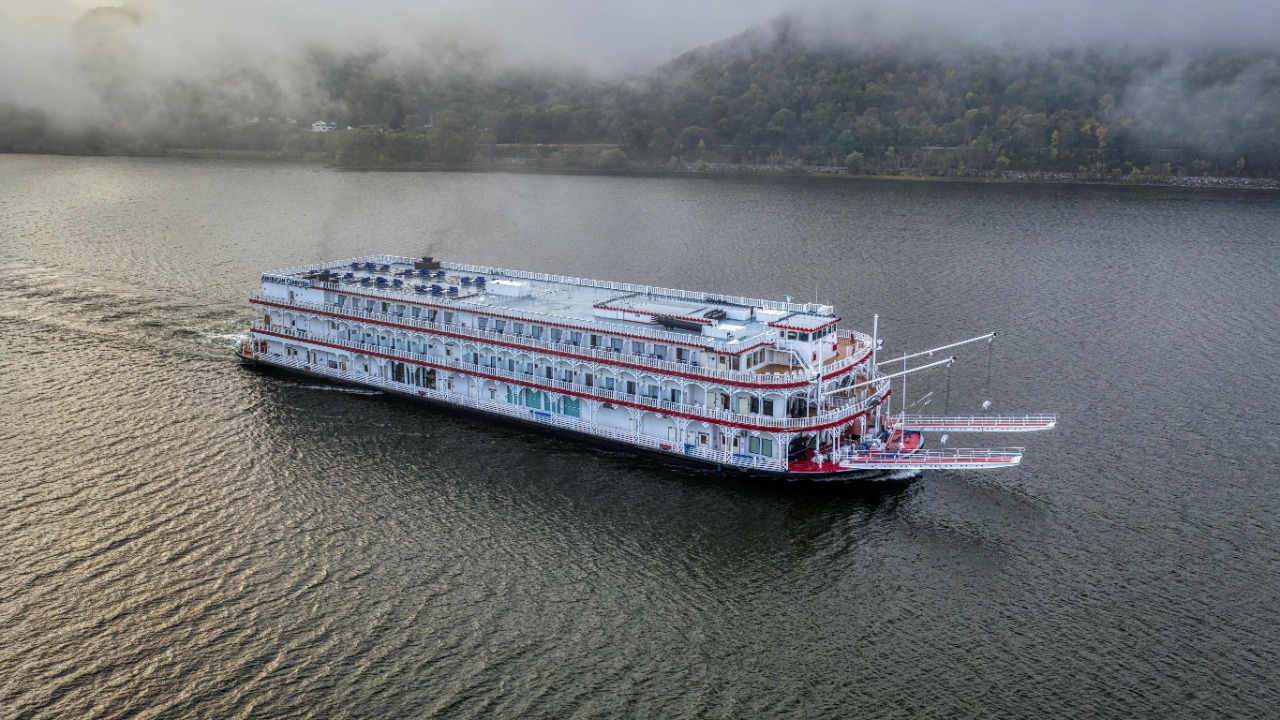
By the time the 129th Rescue Wing launched its helicopter and support aircraft, night had fallen and a thick layer of fog had settled over the Pacific, wrapping the Ruby Princess in low visibility that complicated navigation and any attempt to hover over the vessel. Photos later released by the California Air National Guard showed the ship’s lights diffused into an eerie halo by the moisture in the air, a visual reminder of how little margin for error the pilots and pararescuemen had as they closed in on the target more than 100 miles offshore.
A rare “high-risk” mission call
Before the helicopter ever left the ramp, commanders had to decide whether the conditions justified sending a crew into what they formally categorized as a high-risk mission. Col. Ben Copley, a helicopter pilot with the 129th Rescue Wing, later explained that the mission was approved as a high-risk mission “going out the door,” a label he described as “pretty rare” for the unit. That designation reflected the combination of night operations, heavy fog, long distance over water, and the need to hover close to a large moving ship, all while relying on a hoist to move a patient who could not climb or walk.

High-risk status does not mean the mission is reckless, but it does trigger additional scrutiny and planning, including a deliberate review of weather, fuel margins, alternate landing options, and crew experience. In this case, leadership concluded that the woman’s condition and the ship’s distance from shore justified accepting the hazards. Copley’s comments, shared through official Guard reporting, underscored how unusual it is for the 129th Rescue Wing to formally label a mission this way, even though the unit routinely trains for difficult scenarios.
Executing a precision hoist over a fogbound deck
Once overhead, the helicopter crew had to translate that planning into precise flying over a ship that was both moving and partially obscured by fog. The pilots used their instruments, ship-provided navigation data, and visual cues from the Ruby Princess’s lights to establish a stable hover position. Below them, pararescuemen prepared the hoist, a powered cable system that would lower them to the deck and then lift the patient into the aircraft. The fog that made the ship look otherworldly in photos also meant that depth perception and visual references were degraded, increasing the workload for both pilots and hoist operator.
Pararescue specialists, often called PJs, train specifically for this kind of insertion, combining advanced medical skills with the ability to operate in confined, unstable environments. On the Ruby Princess, they had to coordinate with the ship’s crew, secure the 79-year-old woman in a rescue litter, and manage the swing and spin that can occur when a hoist line moves between a pitching deck and a hovering helicopter. Official accounts from the Rescue Wing describe how the airmen used their extensive medical kits to stabilize the patient before and during the lift, turning the cabin into a flying emergency room as they began the long transit back toward a hospital.
The 129th Rescue Wing’s specialized role
The California Air National Guard’s 129th Rescue Wing is structured specifically to handle missions that combine long distances, difficult environments, and urgent medical needs. Based in Mountain View, the wing operates rescue helicopters and fixed-wing aircraft, along with pararescue and support personnel, under a mandate that covers both combat search and rescue and civilian emergencies. Its official site outlines a portfolio that ranges from recovering downed aircrew to responding to distressed mariners, with crews on alert to launch when the Air Force Rescue Coordination Center or other agencies request help through secure HTTPS channels.
In the case of the Ruby Princess, that structure allowed the wing to assemble a team that could fly far offshore at night, locate a single vessel in a wide expanse of ocean, and then deliver advanced care en route to a medical facility. Reporting on the mission notes that the airmen’s training and equipment, including their hoist systems and medical gear, were decisive in bridging the gap between the ship’s infirmary and a fully equipped hospital. The same official account that identified the patient as a 79-year old cruiser also emphasized that the wing treats every alert as a potential life-or-death event, even when the environment adds layers of complexity.
What this rescue reveals about modern air-sea response
The fogbound hoist from the Ruby Princess illustrates how modern air-sea rescue depends on a tight weave of coordination, technology, and human judgment. The Air Force Rescue Coordination Center had to quickly assess the ship’s report, match it with the 129th Rescue Wing’s capabilities, and authorize a mission that commanders already knew would be classified as high risk. Once airborne, the crew relied on navigation systems, communications links, and their own experience to find and hold position over the cruise ship, while pararescuemen turned a narrow slice of deck into a workable staging area for a critically ill passenger.
At the same time, the mission shows how military rescue units increasingly serve as a backstop for civilian emergencies that exceed the reach of local resources. The California Air Guard Team Makes High, Risk Night Rescue account of how the airmen Reached a Woman on a Fog Covered Cruise Ship highlights that the same skills honed for combat extractions can be redirected to save a tourist far from shore. As Air Force Lt leaders involved in the operation noted in post-mission comments, labeling a sortie as high risk is uncommon, but when a 79-year-old patient is stranded on a fog-covered cruise ship more than 100 miles offshore, the calculus shifts. The successful outcome, with the woman hoisted aboard and flown to a hospital, underscores how that calculated risk can pay off when specialized crews, clear authority, and disciplined planning align under pressure.