
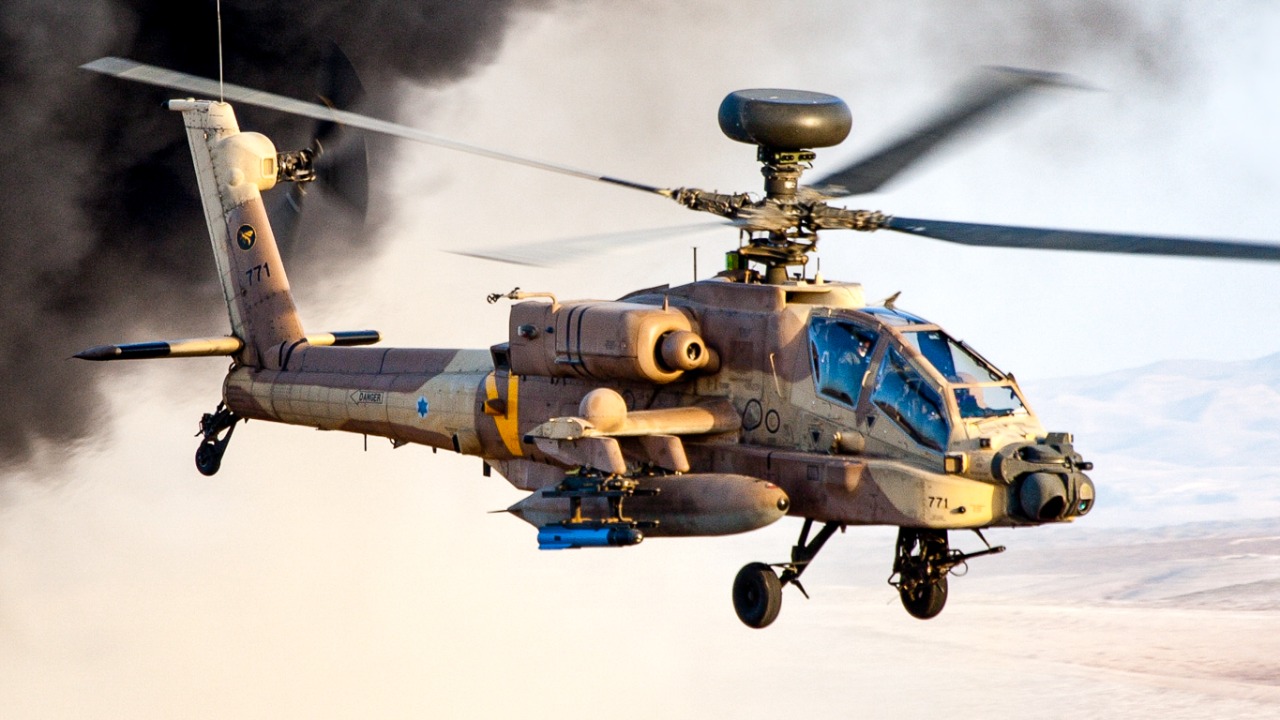
The AH-64 Apache has spent decades at the center of modern battlefields, earning a reputation as a machine that terrifies opponents and reassures the troops beneath it. Its mix of survivability, firepower, and relentless modernization has turned what began as a Cold War project into a symbol of air‑ground dominance. That enduring combat record is why the helicopter is still regarded as battle tested and battle approved by those who plan with it and those who face it.
Far from being a relic, the Apache has evolved into a platform that blends heavy armor, precision weapons, and advanced sensors into a single, tightly integrated system. From the first Apaches delivered to the Army in early 1984 to the latest upgrades, each generation has reinforced the same basic truth: when an Apache arrives overhead, the tactical balance on the ground changes immediately.
From Cold War Concept to Battlefield Fixture
The Apache’s fearsome reputation is rooted in how quickly it became the benchmark for attack helicopters once it entered service. The first apaches were delivered to the Army in early 1984, and from the outset the apache was described as easily the most formidable attack helicopter the world had seen. Its designers built it to hunt tanks, survive punishing fire, and operate at night and in bad weather, capabilities that were rare in rotary‑wing aviation at the time.
That early promise translated quickly into operational reality. The AH‑64 Apache has seen action in numerous conflicts, including Operation Desert Storm and the wars in Iraq and Afghanistan, where its ability to locate and destroy armored and irregular targets made it a staple of coalition operations. Over time, that record of performance has made the Apache not just a weapons system, but a fixture of modern military planning.
Survivability That Inspires Confidence
Fear on the battlefield is not created by firepower alone; it is reinforced when a platform repeatedly survives situations that should have destroyed it. The U.S. Army’s AH‑64 Apache has built a reputation as one of the world’s most advanced and resilient attack helicopters, a machine that has often been exposed to enemy ground fire and surface threats yet kept flying. That resilience has proven essential in combat situations, where crews know that the airframe, systems, and armor are designed to absorb punishment and still bring them home.
The Apache is designed with survivability in mind, with engines and vital systems shielded and redundant so it can continue flying even after sustaining damage. The apache is heavily armored, with crew seats and critical components protected to increase the chance of surviving a crash or direct hit. That combination of shielding and redundancy means that even when the helicopter is damaged, it often remains controllable, reinforcing its image as a platform that is as hard to kill as it is dangerous.
Firepower That Shapes the Fight
What truly cements the Apache’s fear factor is the way it delivers precise, overwhelming firepower in support of ground forces. The Apache is equipped with a mix of weapons that allow it to engage everything from infantry to heavily armored vehicles, including the AGM‑114 family of missiles and a powerful 30 millimeter cannon. One pilot recalled, “We fired on the enemy with a 30 millimeter Hellfire (missile). As a pilot, I have confidence I was going to make a difference with every round,” a description that captures how the hellfire missile and gun combination shapes engagements.
But by far the most famous and impressive bit of weaponry on the Apache is its M230 electrically cycled, 30 millimeter chain gun, a weapon that allows the crew to bring accurate, sustained fire to bear while maneuvering. The Apache was designed to combine its cannon with guided missiles, providing flexibility to engage both point targets and dispersed formations. The Apache is equipped with this integrated suite so it can rapidly shift from suppressing infantry to destroying armor, and the U.S. Army’s AH‑64 Apache has built a reputation as one of the world’s most advanced and lethal attack helicopters precisely because of that versatility.
Psychological Impact and “Show of Force” Presence
The Apache’s effect on a battlefield is not limited to the targets it destroys; its very presence can alter enemy behavior. Even when not engaged in combat, the presence of Apaches provided a ‘show of force’ that often deterred enemy action, according to soldiers. The sound of rotor blades, the sight of the sensor turret scanning, and the knowledge that precision weapons can arrive without warning all contribute to a psychological pressure that is hard to quantify but easy to observe.
That intimidation factor is reinforced by how ground troops and adversaries alike talk about the platform. The Boeing AH‑64 Apache is frequently described as the most feared attack helicopter in history, known for its agility, firepower, and advanced avionics that are designed to dominate the battlefield. The Boeing AH Apache has become shorthand for overwhelming close air support, and that reputation alone can deter movement, delay attacks, or force adversaries to disperse, all before a single shot is fired.
Modernization, Networking, and the Future of Fear
The Apache’s continued relevance is not accidental; it is the result of deliberate modernization that keeps the helicopter ahead of emerging threats. Built to win today, designed to win tomorrow, the latest upgrades focus on Increased Range and Endurance so the aircraft can go farther, stay on the battlefield longer, and carry more weapons. The modernized built apache can bring unmatched lethality and networking, using improved engines and digital links to share data and drive common situational understanding across the force.
Those upgrades extend to sensors and weapons as well. The Apache is equipped for AGM‑114L Longbow Hellfire missiles, enabling it to engage targets in poor visibility and from behind cover. The Apache is the most feared attack helicopter in history in part because it keeps integrating such systems, and the Feb Apache analysis that describes it as a terrifying machine to ground forces remains accurate as these enhancements roll out. As Jan and Nov updates highlight, the Apache is equipped with capabilities that allow it to dominate both today’s fights and those still on the horizon, ensuring that its silhouette will continue to inspire respect and apprehension wherever it appears.