
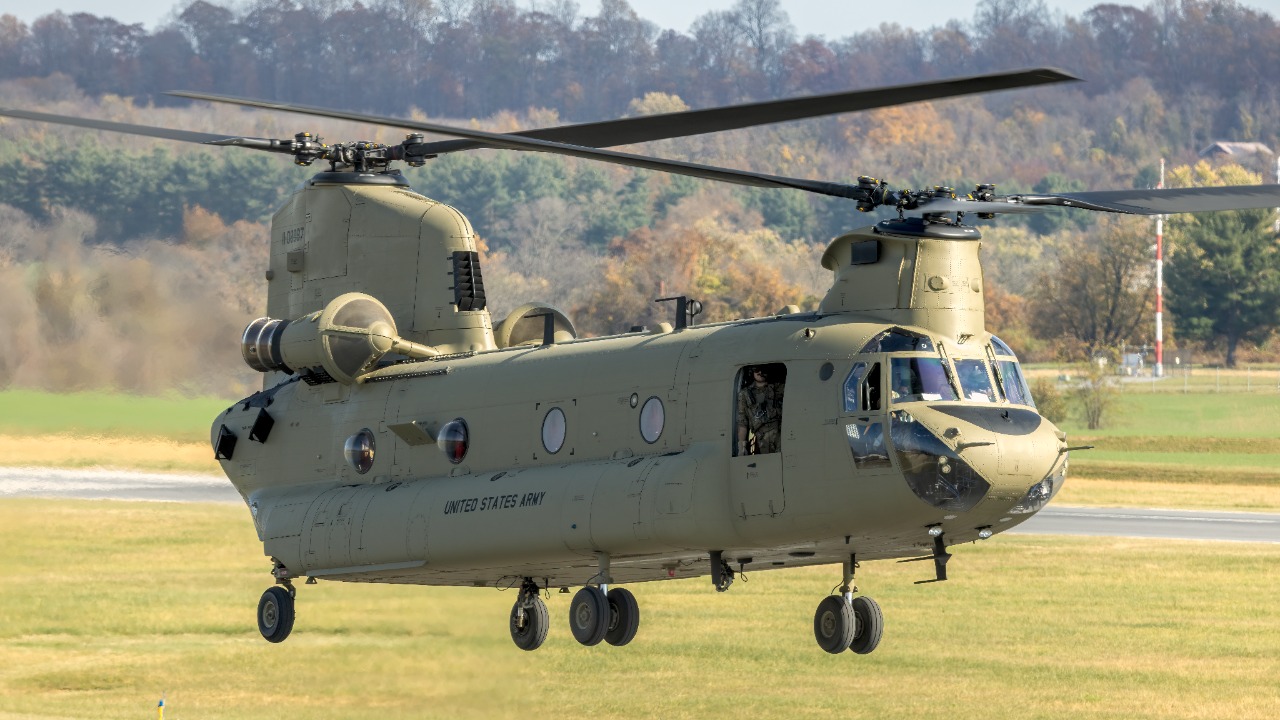
The Chinook has spent decades proving that heavy-lift aviation can be both rugged and remarkably adaptable, earning its reputation in combat zones and disaster areas alike. From its tandem rotors to its cavernous cabin, every line of the aircraft reflects a singular purpose: move more people and equipment, faster, in conditions that would ground lesser machines. That battle tested record now underpins a new generation of upgrades and missions that keep the helicopter central to modern operations.
What began as a response to the demands of the Vietnam era has matured into a global workhorse that governments describe as a national asset and communities see as a lifeline. The Chinook’s heavy-lift legacy is no longer just about brute strength; it is about the confidence commanders and civilians place in an aircraft that has repeatedly delivered when the stakes were highest.
From Vertol experiment to heavy-lift benchmark
The Chinook story starts with a design that broke from convention, pairing two large rotors in tandem to maximize lift and stability rather than relying on a single main rotor and tail. That configuration, developed by American Vertol and refined into the production airframe, allowed the helicopter to become one of the heaviest lifting Western helicopters. The Boeing CH platform, identified in its core transport variant as the CH-47, was built around that lift margin, giving planners a way to move artillery, vehicles, and large groups of troops in a single sortie rather than piecemeal over multiple flights.
That early engineering gamble has aged into a durable standard. Industry accounts describe passing major milestones as routine for the Boeing CH family, with the Chinook’s first flight in 1961 now receding into history even as the airframe continues to shoulder front-line tasks. The Boeing CH lineage, including the CH, the later CH-47F and special operations derivatives, has turned what began as a bold experiment into a benchmark that other heavy-lift concepts are still measured against, reinforcing why the Chinook name remains synonymous with raw lifting power.
Battlefield workhorse and multi-domain enabler
On the modern battlefield, the Chinook is less a niche asset than a central logistics node, moving everything from artillery pieces to fuel bladders in support of dispersed units. The Boeing CH family, including the widely used CH-47 Chinook and specialized special-operations variants, gives commanders options for both conventional and special operations missions that demand speed and payload in contested environments. The ability to sling heavy artillery or vehicles externally while carrying troops internally allows a single sortie to reshape a tactical situation, whether inserting an assault force or extracting casualties under fire.
Strategists looking ahead to multi-domain operations have been explicit that heavy lift remains a critical enabler even as new rotorcraft concepts emerge. Analyses of future force design note that, with the Army not planning a heavy-lift program under Future Vertical Lift while it focuses on other efforts, the existing Chinook fleet must be modernized to meet mission needs that now include multi-domain operations. That reality has pushed planners to treat the helicopter not as a legacy platform waiting to be replaced, but as a core system that must be integrated into new concepts for joint fires, distributed logistics, and rapid reinforcement across theaters.
Block II upgrades and global deployments
The most visible expression of that modernization is the CH-47F Block II program, which aims to increase range, payload, and survivability without sacrificing the aircraft’s proven handling. The U.S. Army has highlighted how army accelerates capability to the Force with a Rapid Fielding Effort for Chinook Block II, underscoring the urgency of getting upgraded aircraft into operational units. That rapid fielding approach reflects a recognition that the helicopter’s heavy-lift margin is central to sustaining dispersed formations, particularly as adversaries target fixed supply hubs and predictable logistics routes.
Technical changes underpinning the Block II configuration include redesigned fuel tanks and structural enhancements that increase usable payload and endurance. Descriptions of the CH 47F Block II Chinook expanding heavy-lift capabilities point to strengthened fuselage sections and systems updates that allow crews to exploit the full potential of the airframe. Visual briefings on the Boeing CH-47F Block II Chinook present it as a next-generation heavy-lift option, signaling that the manufacturer and operators see it as more than a minor refresh. In parallel, operational updates note that the U.S. Army has received its fifth and sixth production CH-47F Block II Chinook, confirming that the 47 series continues to roll into service as planned.
Humanitarian lifeline and civilian adaptation
The Chinook’s reputation has never been confined to combat, it has also become a symbol of rapid relief in the wake of natural disasters and humanitarian crises. Operators in The Asia and the Pacific have emphasized how the region’s diverse terrain, from coastal deltas to high mountain valleys, demands aircraft that can deliver heavy loads into austere landing zones, a role the Asia Pacific heavy-lift fleets have repeatedly filled. Commentators have noted that the missions crews perform with these 12-ton heavy-lift helicopters are remarkable, as the aircraft appears capable of handling an unusually wide range of military and humanitarian tasks, a point underscored in detailed profiles that continue to surprise even seasoned observers.
That versatility has encouraged a broader Adaptation to Civilian Use, with operators pointing out that, While primarily known for its military role, the adaptation of the Chinook into civilian applications highlights its engineering excellence and unwavering reliability. In India, for example, the IAF received its first CH-47F (I) Chinook heavy-lift helicopter at the Mundra port in Gujarat, with officials describing the platform as a national asset once it began operating from bases after its arrival in Feb, a milestone noted in regional updates that referenced the IAF and its Chinook fleet. Aviation enthusiasts have also remarked that the CH-47 Chinook is one of those rare military machines that appears to defy the normal rules of aging, a sentiment echoed in retrospectives that describe the Boeing CH-47 Chinook as a legend still going strong at 60, with the Chinook name now shorthand for a heavy-lift champion that has earned its place in both military planning documents and public imagination.