
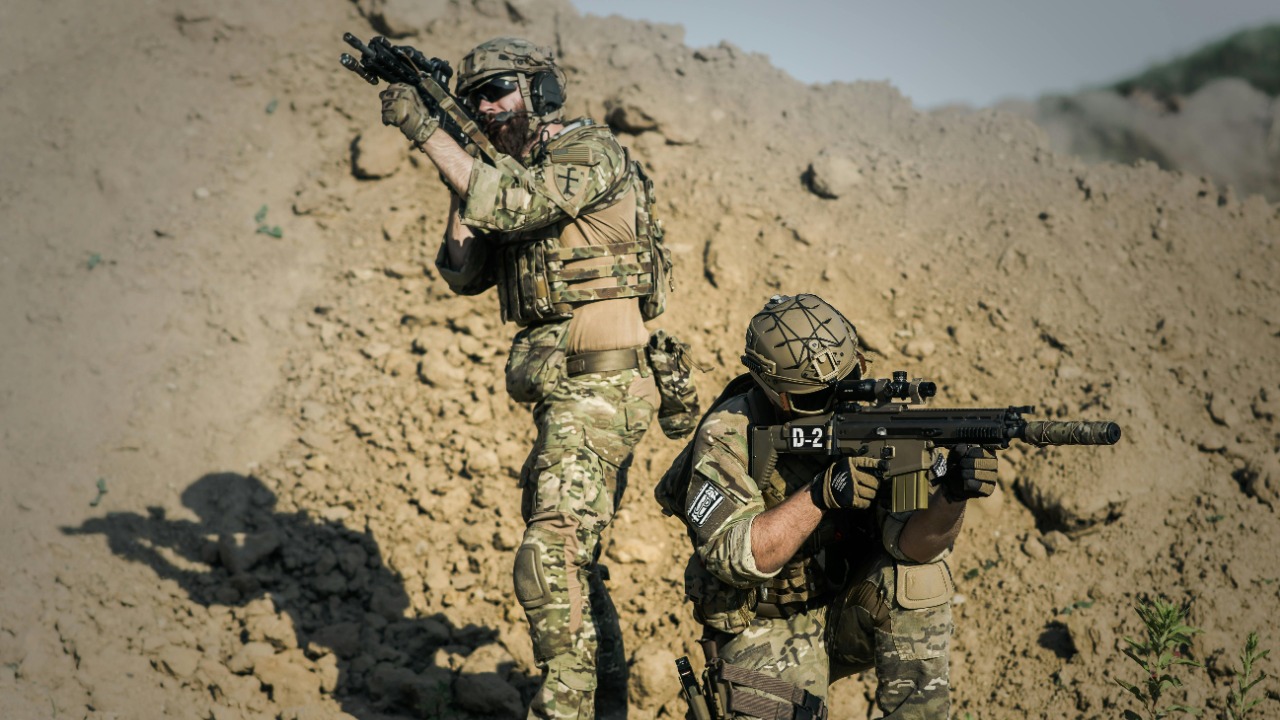
Across more than a century of industrial warfare, a handful of battle rifles have done more than arm soldiers. They reshaped tactics, altered the balance of power and became cultural shorthand for entire eras of conflict. Their reputations were not built in marketing copy or museum displays, but in mud, snow and jungle where reliability and firepower meant survival.
From early bolt actions that defined World War I to Cold War workhorses that still appear in modern conflicts, these rifles earned their status through performance under fire. Each one reflects a specific moment in the evolution of infantry weapons, tracing a line from simple “firesticks” to sophisticated systems that changed how wars are fought.
The bolt-action foundations of modern warfare
The story of legendary battle rifles begins with the great bolt actions that turned industrial-age armies into precision killing machines. The Mauser Model 1898 set the template, pairing a strong, controlled-feed action with a powerful cartridge that influenced countless later designs. Its German descendants, the Gewehr 98 and Kar98k, proved in two world wars that a well-designed bolt rifle could deliver accuracy, durability and battlefield dominance, helping define the era when long-range marksmanship and trench warfare ruled the battlefield.
On the other side of the lines, the Lee Enfield SMLE gave the United Kingdom and its Commonwealth forces a different kind of edge. Its smooth action and 10 round magazine allowed trained riflemen to fire with a speed that surprised opponents armed with slower designs, a reality that still shapes how historians assess early twentieth century Firearms and their impact on tactics. The Lee Enfield SMLE, explicitly cited among classic battle rifles, stands out in modern rankings that highlight how the United Kingdom leveraged its rapid fire to offset numerical disadvantages, underscoring why it remains a touchstone in discussions of twentieth century infantry weapons.
M1 Garand and the leap to semi automatic fire
The leap from bolt action to semi automatic fire transformed infantry combat, and no rifle symbolizes that shift more than the M1 Garand. Adopted by the United States as its first standard issue semi automatic service rifle, the M1 gave American troops a rate of fire that outpaced the bolt action weapons still carried by many adversaries. General George S. Patton’s famous description of it as “the greatest battle implement ever devised” captured how profoundly this eight shot, en bloc fed rifle changed the tempo of engagements in World War II and beyond.
Analysts who track the evolution of small arms often point to the M1 Garand as a bridge between early “firesticks” and the modern era of high capacity, magazine fed rifles. Its role in shifting infantry doctrine is frequently cited alongside broader discussions of how Legendary Rifles That Changed the Face of War pushed militaries to rethink everything from squad organization to logistics. By proving that a rugged, semi automatic service rifle could survive front line abuse while delivering decisive firepower, the M1 Garand set expectations that every subsequent battle rifle would be measured against.
AK 47, SOVIET LEGEND and global icon
If one rifle defines the second half of the twentieth century, it is the AK 47. Designed by Mikhail Kalashnikov, this gas operated, rotating bolt rifle combined simplicity, low production cost and forgiving tolerances that allowed it to function in mud, sand and neglect that would cripple more delicate designs. Its 7.62×39 cartridge, stamped receiver variants and curved magazines became visual shorthand for revolution and insurgency, while its sheer ubiquity turned it into a fixture in conflicts from Africa to Southeast Asia.
Modern assessments of battle rifles routinely place the AK 47 at or near the top, noting how it anchors lists of Top 10 Battle Rifles and continues to influence newer designs. One detailed profile describes the AK 47 as a SOVIET LEGEND, stressing that The AK is Known worldwide for toughness, simplicity and a reliability that has truly stood the test of time, a reputation earned in countless low intensity conflicts and conventional wars alike. That battlefield record is mirrored in Vietnam era accounts, where observers note that, Meanwhile, the AK47 rifle became an icon of Vietnamese guerrilla warfare, valued for reliability in harsh and contaminated environments, simple design and ease of use and maintenance, a combination that made it ideal for irregular forces fighting better equipped opponents.
The AK 47’s impact extends far beyond the battlefield. Analysts of political violence and culture argue that What began as a simple tank commander’s idea has likely had a greater impact on world history than any other single design, with the rifle now referenced in all forms of media, from national flags and propaganda posters to films, video games and hip hop lyrics. That cultural saturation reinforces its battlefield legend, turning a practical tool of war into a symbol of resistance, state power and, in some regions, everyday life.
The FN FAL and the Right Arm of the Free World

While the AK 47 armed the Soviet Union and its allies, the FN FAL emerged as the signature battle rifle of Western aligned forces during the Cold War. Chambered in 7.62x51mm NATO and built around a robust gas operated system, the Belgian designed rifle offered controllable automatic fire and reliable semi automatic performance in a package that could withstand harsh climates from African bush to Arctic cold. Its adoption by more than 90 countries earned it the nickname “Right Arm of the Free World,” a reflection of how widely it was issued to frontline troops.
Contemporary evaluations emphasize that The FN FAL combined Reliability, Firepower and Legacy in a single platform, with modern manufacturers still highlighting its effectiveness in diverse combat conditions and its enduring appeal among both military and civilian users. That reputation is reinforced by its presence in curated lists of influential rifles, where the FAL appears alongside other Cold War icons as a benchmark for full power battle rifles. Its performance in conflicts such as the Falklands War and various African Bush Wars showed how a 7.62 NATO rifle could deliver reach and stopping power that lighter intermediate caliber weapons sometimes lacked, keeping it relevant even as assault rifles gained ground.
M16, G3 and the shift to modern infantry rifles
As the Cold War matured, the definition of a battle rifle evolved toward lighter, higher capacity weapons that blurred the line between traditional full power rifles and what are now called assault rifles. The M16, developed in the United States, epitomized this shift. Built around a small caliber, high velocity 5.56×45 cartridge and a lightweight, aluminum and polymer construction, it was the product of an effort to bring infantry rifle features in line with the realities of modern combat, including the need for controllable automatic fire and reduced soldier load. Analysts note that the M16’s design, with its detachable box magazine and direct impingement gas system, represented a decisive break from earlier wood and steel rifles.
Historical rankings of influential infantry weapons consistently highlight the M16’s role in redefining expectations for accuracy, ergonomics and modularity, with one assessment of top rifles stressing how the platform’s evolution into the M4 and other variants has kept it central to Western doctrine. That same analysis of top 10 infantry rifles underscores how the M16’s combination of light recoil and high capacity magazines changed the way small units maneuvered and delivered suppressive fire, particularly in jungle and urban environments where volume of fire could be more decisive than raw power.
Alongside the M16, the Heckler & Koch G3 offered a different path, retaining a full power 7.62mm cartridge while adopting modern materials and a roller delayed blowback system. Used by West Germany and many other nations, the G3 proved accurate and reliable enough to serve not only as a standard service rifle but also as a designated marksman platform decades after its introduction, including in Afghanistan. Its presence in discussions of Greatest Firearms and influential service rifles reflects how it bridged the gap between traditional battle rifles and more specialized precision weapons, showing that a well executed 7.62 design could remain relevant even as lighter calibers gained favor.
From battlefield legends to enduring influence
What unites these rifles is not just technical innovation but the way they reshaped the conduct of war. Analysts who trace the arc from early “firesticks” to modern carbines describe a progression in which each generation of weapons forced new tactics, from massed bolt action volleys to dispersed fire teams built around automatic rifles. Surveys of From Firesticks to Firepower highlight how rifles like the M1 Garand, AK 47 and FN FAL did not simply slot into existing doctrines but compelled armies to rethink training, logistics and even political strategy as their capabilities spread worldwide.
Their influence also extends into civilian culture and technology. Enthusiast communities that celebrate Legacy designs like the FN FAL or classic bolt actions often focus on preserving original rifles and producing faithful replicas, a trend mirrored in markets for Vietnam era and World War II themed equipment. Retailers who specialize in period correct gear note that, Meanwhile, Vietnamese conflict replicas and other themed products remain popular because they evoke specific rifles and the soldiers who carried them, while World War II collections emphasize how changing tactics and technology shaped the course of military operations.
Even as newer platforms and calibers emerge, the core qualities that made these rifles legendary remain benchmarks for designers and soldiers alike. Reliability in adverse conditions, sufficient firepower for the mission and ergonomics that let ordinary conscripts fight effectively are still the criteria by which new weapons are judged. Whether in the hands of a World War II infantryman cycling a bolt action, a Cold War conscript firing a full power battle rifle or a modern soldier carrying a lightweight carbine, the lineage of these combat proven designs continues to define what a battle rifle must be.