

From Pacific islands to modern training ranges, a handful of carbines have earned reputations that outlast the conflicts they were built for. Shooters still gravitate to these compact rifles not out of nostalgia alone, but because battlefield track records and hard use on civilian ranges keep proving the same point: some designs simply work when it matters.
Today’s most trusted carbines range from mid‑century surplus to modular 21st‑century platforms, yet they share common traits of reliability, manageable recoil, and practical accuracy that make them enduring favorites among combat veterans and serious enthusiasts alike.
The M1 Carbine’s stubborn grip on shooters’ trust
Few rifles divide opinion like the M1 Carbine, yet it remains one of the most frequently cited “real world” favorites among people who have actually carried it. Enthusiasts highlight its light weight, soft recoil, and fast handling, which make it easy to keep on target in rapid strings and approachable for smaller‑statured shooters. One reviewer describes it as a favorite recreational semi‑auto rifle and notes that the same qualities that make it fun on the range also made it a troop favorite in service, particularly its combination of low weight and overall reliability in the field, as seen in detailed range reports on the M1 Carbine.
That affection is not just a modern range phenomenon. Commentators looking back at its military career point out that the United States kept large stocks of M1 Carbines after World War II, a sign that the platform was considered useful long after the original production rush ended. Discussions of its global footprint emphasize that the US military had “a bunch of M1 carbines in stock” in the postwar years and that the design continued to circulate worldwide, reinforcing its status as a practical fighting carbine rather than a historical curiosity, a point underscored in analyses of how the rifle was loved or hated.
At the same time, the M1 Carbine has become a lightning rod for criticism, especially in online debates that question its stopping power and reliability. Some commentators note that it has become popular to “trash” the platform, asking why there is so much hate for the M1 Carbine and challenging what they see as exaggerated stories about failures in combat. That backlash, captured in discussions framed around Why So Much Hate for the Carbine, has ironically helped solidify its cult following: owners who run the rifle hard with appropriate ammunition and maintenance often report that it performs more like a handy defensive carbine than the underpowered relic its detractors describe.
FN’s SCAR family and the modern “battle‑proven” label
In the contemporary market, few carbines lean as heavily into the “battle‑proven” identity as the FN SCAR series. FN America, LLC, the United States arm of FN Herstal, promotes its FN Rifles as some of the world’s most battle‑proven firearms, highlighting a long history of supplying military, law enforcement, and commercial customers worldwide. That institutional pedigree, rooted in FN Herstal’s role as a global leader in small arms, gives the SCAR line a credibility that many shooters factor into their buying decisions, especially when they are looking for a rifle with a direct connection to professional use, as reflected in FN’s own positioning of its Rifles.
The FN SCAR program’s path through special operations procurement has been complex, but it has still cemented the rifle’s reputation among civilian shooters. Reporting on the Special Operations Forces Combat Assault Rifle notes that the SCAR, including the SCAR‑L variant, was formally adopted for special operations use in the early 2010s, even as later decisions limited how widely some versions were fielded. That mixed procurement history has not stopped the heavier‑hitting SCAR 17S from becoming a favorite among enthusiasts who want a 7.62 NATO carbine with real deployment lineage. Range operators describe the SCAR 17S as a modular and reliable platform that appeals to shooters specifically because they are looking for a battle‑proven firearm with strong accuracy and versatility, a reputation reinforced by hands‑on experience with the SCAR 17S and by historical accounts of the SCAR program.
AK‑pattern workhorses that refuse to retire
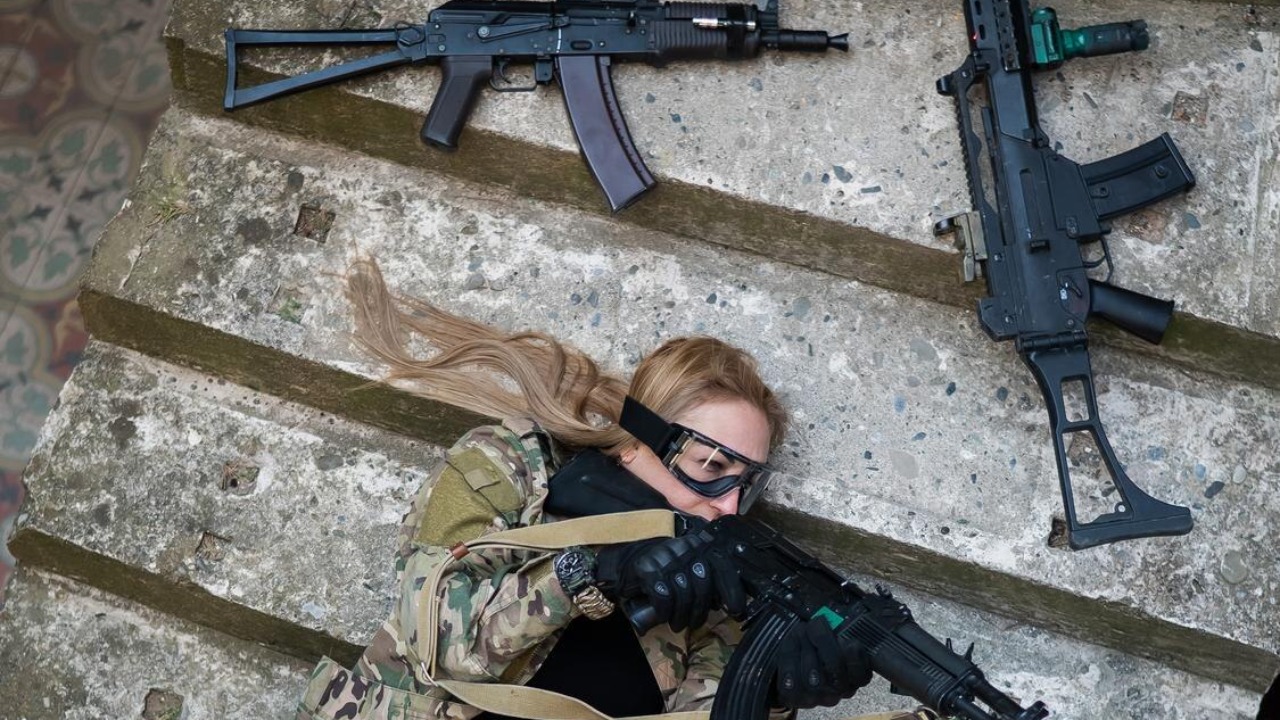
Beyond Western designs, AK‑pattern carbines remain a default choice for shooters who prioritize rugged function over refinement. Reports on Century Arms AKs, for example, describe how many AK enthusiasts have run thousands of rounds through these rifles and still rely on them despite the availability of more polished imports. That kind of long‑term, high‑round‑count use is exactly what cements a carbine’s battlefield reputation in civilian hands, because it mirrors the abuse rifles see in service. Commentators acknowledge that some shooters still swear by imported AKs, but they also note that domestic builds have matured into dependable options in their own right, a point made in practical guides to what you need to know about Century rifles.
That trust is not blind. The same reporting stresses that AKs, including Century Arms examples, still demand regular cleaning and attention to basic maintenance to keep running at their best. The platform’s reputation for shrugging off dirt and neglect can encourage unrealistic expectations, but experienced owners tend to treat that as a margin of safety rather than an excuse to ignore care. When shooters who have burned through case after case of ammunition still reach for an AK when reliability is non‑negotiable, it reinforces why this family of carbines continues to be seen as a battle‑tested staple rather than a budget compromise, a sentiment summed up in the simple observation that, as one guide puts it, “Well, many AK enthusiasts have run thousands of rounds” through these rifles and still rely on them, with that “Well” framing a broader defense of the platform’s durability.
AR‑pattern precision and the rise of high‑end battle carbines
On the AR side of the house, the market has split between entry‑level rifles and high‑end carbines that lean into combat credibility. Comparisons between premium models like the SR‑15 and more mainstream offerings such as the Smith and Wesson M&P 15 highlight how differences in materials, features, and function translate into performance under stress. Analysts note that if a shooter takes an SR‑15 and compares it directly to a Smith and Wesson M&P 15, the contrast in how they function and what they are built from becomes obvious, reinforcing the idea that not all AR‑15s are created equal when the stakes are high, a point made explicit in breakdowns of high‑end AR‑15s.
That same logic carries into the larger‑frame AR‑10 world, where shooters weighing a .308 AR against legacy battle rifles like the M1 Garand often end up favoring modern carbines with better ergonomics and optics support. In one discussion, a user identified as thatARMSguy “Highly recommend a Daniel Defense DD5,” describing it as very reliable and accurate while also noting that it is not as heavy as many expect. That kind of first‑hand endorsement, which emphasizes reliability and manageable weight in the same breath, shows why rifles like the Daniel Defense DD5 have become go‑to choices for shooters who want a .308 platform that can serve double duty as a precision tool and a hard‑use carbine, a view captured in recommendations that Highly rate the Daniel Defense line as Very capable.
Pistol‑caliber carbines and the blurred line between range toy and fighting tool
Pistol‑caliber carbines occupy a more controversial place in the “battle‑proven” conversation, yet some models have earned serious respect from shooters who value control and modularity over raw power. Overviews of the best pistol‑caliber carbines highlight options like the Sig Sauer MPX K, praised for its ergonomics, and the Smith & Wesson M&P FPC, noted as a standout folding PCC. Those write‑ups frame these guns as optimized for fast handling, compact storage, and compatibility with common handgun calibers, which makes them attractive for home defense and training even if they lack the long‑range punch of rifle cartridges, as seen in rankings of Best Pistol Caliber Carbines that single out the Sig Sauer MPX for Best Ergonomics and give the folding nod to Smith.
Critics, however, argue that pistol‑caliber carbines can represent the worst of both worlds, offering neither the concealability of a handgun nor the terminal performance of a rifle. Chris Baker, speaking to an audience of liberal gun owners, lays out this tension by explaining why pistol‑caliber carbines, or PCCs, can be seen as either the best or worst compromise depending on the user’s needs. His analysis underscores that while PCCs shine in low‑recoil, high‑control roles and can be easier to run for newer shooters, they are not a one‑for‑one replacement for a 5.56 or 7.62 battle carbine, a nuanced view captured in his discussion of pistol caliber carbines and their tradeoffs.
Ammo, sidearms, and the ecosystem that keeps battle carbines relevant
Behind every enduring carbine is an ammunition supply that keeps it practical to shoot. Vintage military surplus ammunition, often referred to as Vintage milsurp ammo, maintains reliable performance because it was produced to stringent military standards, and its continued availability helps keep older service rifles and carbines in regular rotation. Analysts note that this combination of consistent performance and rugged reliability attracts both collectors and enthusiasts, who rely on surplus stocks to feed platforms like the M1 Carbine and various AKs without breaking the bank, a dynamic described in overviews of Vintage ammunition.
Sidearms also shape how shooters think about “battle‑proven” gear, because many of the same criteria apply. The Makarov pistol, for example, has remained popular among military personnel and law enforcement agencies worldwide for decades, with commentators emphasizing that these guns have been widely used and that their simple design and utility still make them appealing today. That long service life mirrors the trajectory of classic carbines, where straightforward operation, durable construction, and a steady supply of compatible ammunition keep older designs in active circulation. When observers note that “They have been popular among military personnel and law enforcement agencies worldwide for decades now” and that this utility continues to make them appealing, they are describing the same ecosystem of trust and familiarity that keeps battle‑tested carbines in regular use, as seen in historical reviews of how They remain relevant.
Ultimately, the carbines shooters still swear by share more than just famous names. Whether it is an M1 Carbine that survived World War II stockpiles, an FN SCAR 17S with special operations lineage, a battered AK that has eaten thousands of rounds, or a high‑end AR that outclasses basic Smith and Wesson builds, each platform has earned its place through a mix of battlefield history, modern validation, and an ecosystem of ammunition and accessories that keeps it practical. That combination of proven performance and ongoing support is what turns a rifle from a passing trend into a trusted companion when conditions are at their worst.