
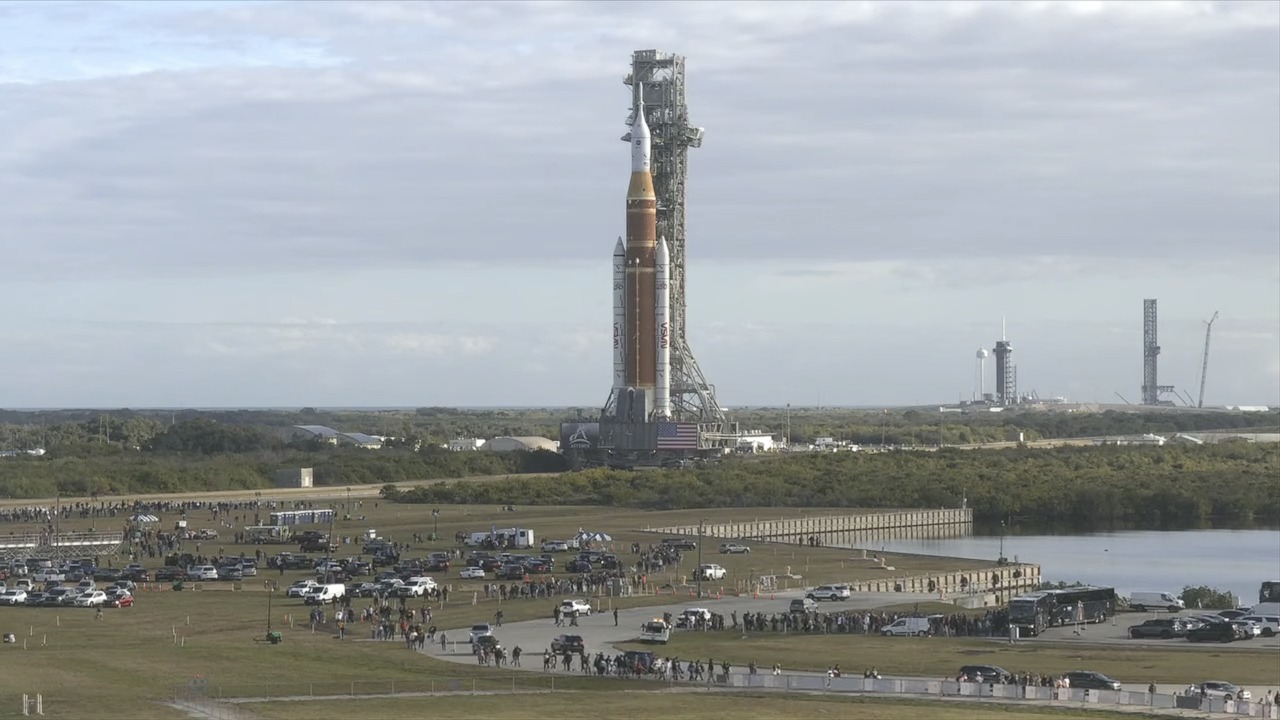
NASA’s plan to send astronauts around the Moon on Artemis II is facing fresh uncertainty as engineers prepare to roll the Space Launch System back to its hangar for helium system checks. The rollback, ordered after a flow issue in the upper stage, is expected to push a tentative March launch target into April at the earliest and could slip further if repairs prove complex. The setback shows how even minor hardware glitches can ripple through a tightly choreographed schedule for the first crewed lunar mission of the Artemis era.
Leaving the pad so soon after a successful fueling test also underscores NASA’s preference for caution over calendar pressure. Artemis II is designed as a proving flight for the Orion spacecraft and the massive rocket that will carry four astronauts around the Moon and back, and managers appear willing to trade schedule ambition for confidence in every valve and line.
Helium glitch forces a retreat from the pad
After a full tanking rehearsal of the Space Launch System, controllers identified a helium flow problem in the rocket’s upper stage that could not be cleared while the vehicle remained at the launch complex. NASA decided to roll Artemis II away from the pad to protect the hardware and give technicians direct access to the affected system, a move that requires disconnecting ground lines and securing the mobile launcher before the slow crawl back to the Vehicle Assembly Building. Public updates described how First Motion Set would take the SLS (Space Launch System) and Orion spacecraft off the pad and into the cavernous integration building for detailed inspections.
The helium issue centers on the upper stage, which uses the gas to pressurize propellant tanks and operate critical valves during ascent. A separate report explained that NASA will rollback Artemis 2 to repair a helium flow problem at the rocket’s upper stage, with the Vehicle Assembly Building identified as the work site for that troubleshooting. Live coverage of the move described how NASA is rolling the 2 moon rocket back to the hangar after only a short stay at the pad, underscoring that the anomaly was serious enough to merit a full retreat rather than a quick fix on location.
From February ambitions to an April launch window
Artemis II was originally targeted for a February launch, with mission planners already discussing how winds and other conditions could shape the exact day within that window. An overview of What Is Artemis, Launch Date, Crew, and NASA, Next Moon Mission Explained described how the February opportunity had already slipped and how any new date would depend on the wind forecast and the readiness of both rocket and spacecraft. With the helium glitch now confirmed, that earlier optimism has given way to a more cautious stance that points to April as the first realistic chance to fly.
Independent assessments have echoed that shift, noting that a helium pressurization problem in the Artemis SLS upper stage has already delayed the mission once and is now likely to push the schedule again. One analysis framed the situation as sending humans around in February, then March, and now maybe April 2026, with the helium issue judged significant enough to merit a rollback rather than a workaround. Another timeline-oriented report described how pad access structures, referred to as the Pad platforms, had to be removed ahead of the retreat, adding further days to the schedule and stretching the mission from its original February window into March and beyond, as detailed in the discussion of Pad access platforms and their impact on preparations.
Inside the rollback and repair campaign
The rollback itself is a carefully choreographed operation that starts at the launch complex and ends inside the Vehicle Assembly Building, where technicians can reach every part of the Artemis II SLS and Orion stack. NASA outlined how it targets Artemis II on Wednesday, describing a side view of the Artemis II SLS (Space Launch System) rocket and Orion spacecraft that will carry astronauts around the Moon and back to Earth once the helium system is cleared. Weather has already affected the schedule for this move, with one briefing, labeled The Brief, noting that NASA delays Artemis due to weather as managers weigh wind limits for the slow journey along the crawlerway.
Once inside the hangar, engineers will isolate the helium lines and valves in the upper stage to identify the root cause of the flow restriction or leak. A live social media update from a science museum described how NASA’s Artemis II rocket is being pulled from the launch pad just one day after a successful fueling test of the Space Launch System, highlighting that the wet dress rehearsal did its job by exposing a subtle problem before crewed flight. At Kennedy Space Center, visitors have been tracking the mission through official event pages that describe the NASA Space Launch SLS Artemis II stack and its role in advancing deep space exploration, a reminder that every additional day in the Vehicle Assembly Building is part of a larger effort to send humans safely beyond low Earth orbit.
What the delay means for astronauts and the Artemis program
The helium setback lands hardest on the four astronauts assigned to Artemis II, who have spent months training for a mission that will take them around the Moon and back without landing. Their schedule is tightly coupled to hardware readiness, and each slip forces adjustments to simulator runs, medical clearances, and public outreach plans. A detailed feature by Jackie Wattles, attributed as By Jackie Wattles and marked with figures such as 55 and 46 in its update line, described how a new problem throws four astronauts’ impending moon journey into uncertainty and pushes the previous launch date off the table until engineers can certify the helium system.