
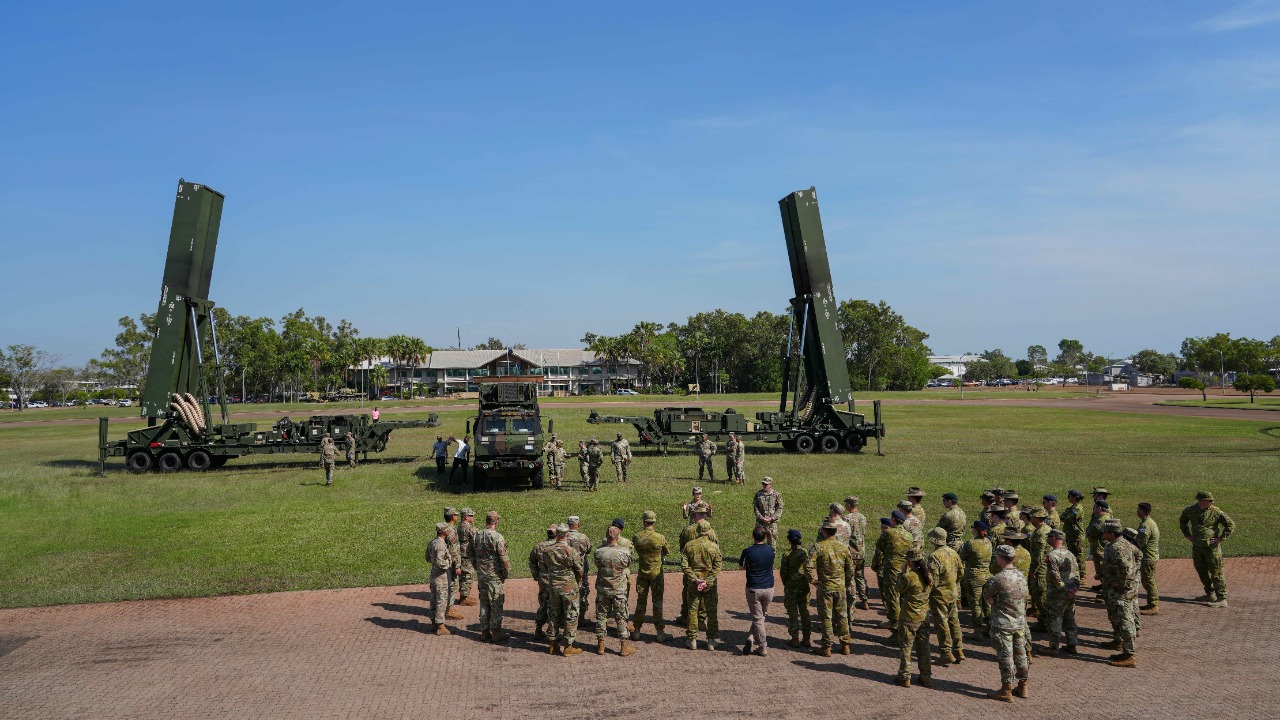
The Army’s decision to stand up another unit for its Dark Eagle hypersonic missiles marks a deliberate shift from experimental prototypes to an operational strike network that can reach deep into contested regions. By moving a second formation into the field, the service is signaling that long range hypersonic fires are no longer a distant promise but a capability it expects to integrate into real war plans. I see this as a pivotal moment in how the United States intends to deter peer adversaries and reassure allies in Europe and the Indo Pacific.
Building a force around Dark Eagle
The latest activation fits into a broader effort to create a dedicated force structure around Dark Eagle rather than treating it as a boutique technology. Earlier, the Army activated Bravo Battery, 1st Battalion, 17th Field Artillery Regiment, a move described as a significant advancement of its military capabilities and a clear signal that the service is organizing real combat units around the system, not just test teams, as highlighted when the Army stood up Bravo Battery. I read the new activation as the next logical step, creating depth in the order of battle so that Dark Eagle is not a single point of failure but part of a layered long range fires enterprise.
Reporting on the latest move describes the Army activating another unit that will operate the new Dark Eagle hypersonic missile, with coverage framed around a Jan update that invited viewers to Watch a Live briefing and Try to understand how this capability will be used in a future fight, language that underscores how the service is still educating both its own ranks and the public about what a hypersonic strike formation can do, as seen in the description of the Army’s effort to activate another unit. I view that communication push as part of the activation story itself, because it shows the Army trying to normalize Dark Eagle as a standard tool in the long range fires kit rather than an exotic one off asset.
What hypersonic batteries bring to the battlefield
To understand why these new units matter, I start with the physics. Hypersonic systems, capable of flying at speeds greater than five times the speed of sound, or Mach 5, compress decision timelines for both the attacker and the defender and make traditional missile defenses far less reliable. The Army has been explicit that its Long Range Hypersonic Weapon batteries are built around that speed and maneuver advantage, describing how hypersonic systems at Mach 5 and above provide a combination of speed, range, and precision that conventional ballistic missiles cannot match. In my view, that performance is what turns a single battery into a strategic asset, because it can hold high value targets at risk far from the front line.
Dark Eagle is the Army’s specific implementation of this concept, and its technical parameters explain why the service is investing in multiple units. The system is described as a long range hypersonic weapon with a 1,700-mile reach and a glide body that travels at Mach 5 speed, giving each missile the ability to strike deep command nodes, air defense hubs, or logistics chokepoints from well outside many adversary anti access envelopes, as detailed in analysis of the 1,700-mile range and the Mach performance. I see that combination of distance and speed as the core reason the Army is willing to build entire batteries, and eventually battalions, around the weapon rather than folding a few launchers into existing artillery units.
From first fielding to a growing inventory
The new activation also builds on a sequence of earlier fielding steps that moved Dark Eagle from concept to reality. The first US Army unit equipped with a battery of hypersonic missiles received its systems in December, with reporting noting that the first formation to get Dark Eagle was a key milestone for the Army’s hypersonic systems and that Soldiers of the 110th Brigade Shot Down Shahed Using Shrike FPV Drone were also part of the broader narrative about how modern units blend unmanned systems and long range fires, as described in coverage of Soldiers of the first Dark Eagle battery. I interpret that initial fielding as proof that the Army could train crews, integrate the weapon into its command and control networks, and sustain it in a real unit environment.
Subsequent program updates have sketched out how many batteries the Army expects to field and how they will be distributed. One detailed assessment noted that while certain figures do not specify that the Dark Eagle battery of each long range fires battalion will be fielded concomitantly with other elements, the Army Materiel Command spokesperson still outlined a path in which multiple batteries populate each formation over time, a nuance captured in the discussion of how While the figures are not fully synchronized, the intent is clear. I read the latest activation as evidence that the Army is following that roadmap, even if the exact pacing between battalions and batteries remains staggered.
Timelines, ranges, and the second battery
The Army has been open about its plan to add a second Dark Eagle battery, and the new unit activation aligns with those earlier timelines. Over the summer, officials indicated that The US Army was preparing to field its second Dark Eagle battery by the middle of the 2026 fiscal year, describing it as part of a broader effort to deploy a second Hypersonic Weapon unit and to ensure that Field Second long range hypersonic fires are available to multiple theater commanders, as laid out in reporting on how The US Army would expand the inventory. In my assessment, the current activation suggests that schedule is holding, which matters because it gives planners confidence that Dark Eagle will be available in more than one region at once.
Technical details about the batteries themselves also help explain why the Army is treating each activation as a strategic event. Analysts have noted that Every Dark Eagle battery consists of four mobile launchers, a battery operations center, and associated support vehicles, and that the missiles can reach Mach 5 speed and a 1,700-mile range while the launchers are designed to move quickly after firing to avoid counterattacks, as described in assessments of how Every launcher is built for shoot and scoot tactics. I see those design choices as central to the Army’s concept of operations, because they allow a relatively small number of launchers to survive in a high threat environment and keep generating combat power.
Multi domain task forces and allied signaling
The organizational context for these batteries is just as important as their hardware. The Army has been building multi domain formations that combine long range fires, air and missile defense, cyber, and space effects, and it has already outlined a plan for five multi domain Task Force units. Reporting on deployments to Europe noted that of the five multi domain Task Force formations planned to be formed by the US Army, the 2nd group is earmarked for operations in Germany and that this structure is expected to integrate medium range missiles and other long range systems as part of the 2026 fiscal year posture, as described in analysis that began with the reminder to Recall how the Task Force and MDTF concept would evolve. I interpret the new Dark Eagle unit as a building block for those multi domain task forces, giving them a kinetic punch that matches their sensing and electronic warfare reach.