
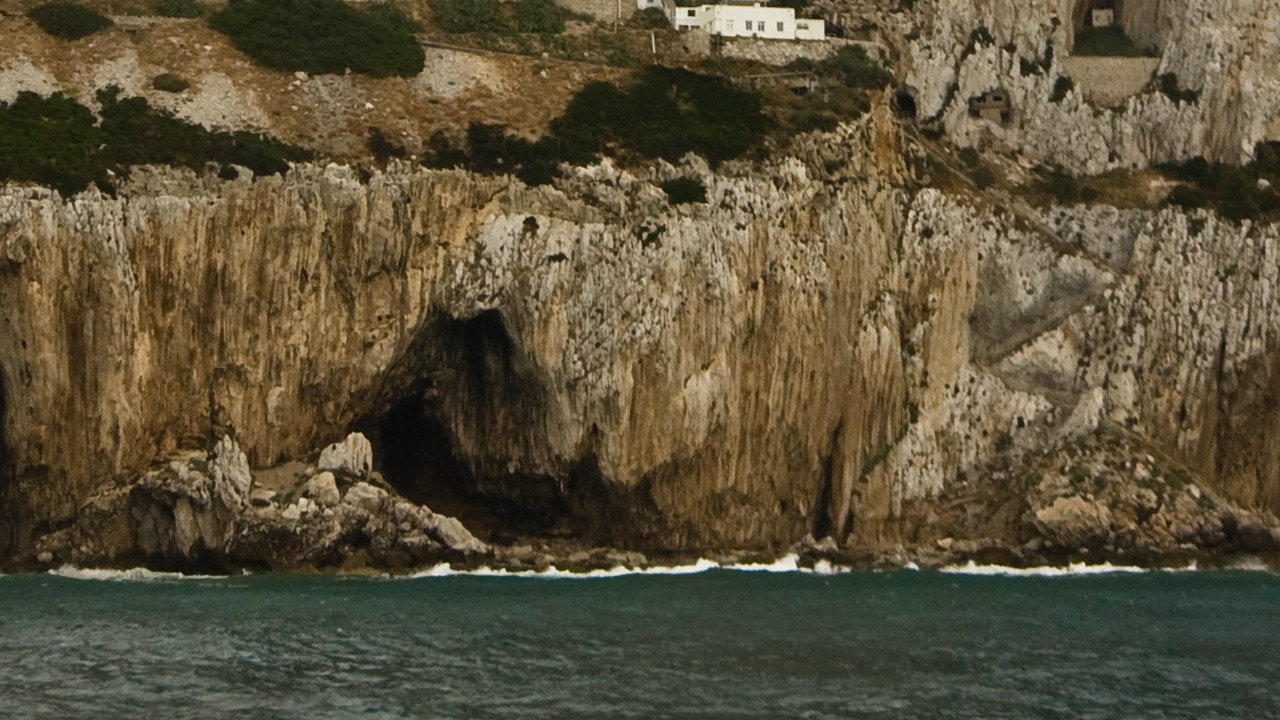
A hidden chamber in the cliffs of Gibraltar, sealed off for roughly 40,000 years, has been opened and is already reshaping how I understand the final chapters of Neanderthal history. The space, preserved behind ancient sand and rock, has yielded traces of hearths, tools, and even animal remains that appear to have been carried inside with purpose. For archaeologists, it is a once in a lifetime snapshot of a vanished world, frozen at the moment our close relatives were retreating to their last refuges.
The secret chamber in the Rock of Gibraltar
The discovery sits within the dramatic limestone of the Rock of Gibraltar, where sea facing caves have long attracted archaeologists searching for traces of early humans. I picture the team inching through Gorham’s Cave system, already famous for deep archaeological layers, before realizing that a roofed void above them had been completely cut off by sediment for tens of millennia. Reports describe a 13 metre chamber that was sealed so thoroughly that even tiny fragments of the outside world struggled to intrude, which is why researchers speak of a context undisturbed since Neanderthals last walked away.
Accounts of the excavation describe how the chamber was blocked by sand and rock that had to be carefully removed, grain by grain, to avoid collapsing the fragile interior. One report notes that the space was Sealed off for 40,000 years, a figure that gives a sense of the deep time involved and the care required to enter without destroying the very evidence that makes it valuable. I find it striking that the same cliffs that now overlook a busy shipping lane once sheltered small bands of Neanderthals, and that the geological stability of this headland has turned it into a natural archive of their final days.
Evidence of Neanderthal life frozen in place
What makes this chamber so compelling to me is not only its age but the density of clues to daily life that appear to have survived. Along the surface of the cave chamber, researchers have described hearths, stone tools, and cut marked bones that point to repeated occupation by Neanderthals rather than a single fleeting visit. One detailed account notes that along the walls and floor, traces of activity are preserved in situ, suggesting that the chamber may have served as a hideout or special activity area for groups already under pressure at the edge of their range, a pattern echoed in analysis of Neanderthals elsewhere in the complex.
Archaeologists working in Gibraltar have long argued that this peninsula was one of the last refuges of the species, and the new chamber appears to strengthen that case. One report on the wider site stresses that Gorham’s Cave in Gibraltar is thought to be one of the final strongholds where Neanderthal groups held on as their numbers declined worldwide, and the sealed chamber fits neatly into that narrative. Another account of the 40,000 year old sealed cavern in Gibraltar notes that the evidence inside is consistent with material found nearby in 2017, reinforcing the idea that this was a coherent Neanderthal landscape rather than an isolated shelter, a point underscored in coverage of the 40,000 year old sealed cavern.
Objects that hint at symbolism and sea connections
Beyond the basic signs of shelter and subsistence, I am struck by the hints of more complex behavior emerging from the chamber. One account from the dramatic cliffs of Gibraltar notes that a large marine shell was found deep inside, in a part of the cave that has no direct access to the shoreline. The report suggests that this object was carried there, possibly by Neanderthals, hinting at symbolic behavior or at least a deliberate choice to bring a striking item from the sea into a dark interior space. For me, that single shell complicates older caricatures of Neanderthals as purely practical beings, and instead suggests minds capable of attaching meaning to unusual objects.
The chamber also reinforces how closely these communities were tied to the coastal environment that wrapped around the Rock of Gibraltar. Reports on the wider discovery emphasize that the cave complex faces the sea and would once have overlooked rich marine and terrestrial resources, a setting that helps explain why Neanderthal groups may have persisted here longer than in harsher inland regions. One detailed account of the site notes that the cave was sealed off for 40,000 years and that what was found has “changed human history”, a bold claim that, in my view, reflects how these coastal traces are forcing researchers to rethink the cognitive and cultural capacities of our extinct cousins.
Why this sealed cave matters for human history
As I weigh the different reports, I keep returning to the idea that this chamber functions as a time capsule for a pivotal transition in human evolution. One detailed account of the Gibraltar complex notes that Archaeologists have identified the site as a key Neanderthal stronghold, and the sealed chamber adds a pristine layer to that story, untouched by later human activity. Another report on the broader project, framed under the banner “Archaeologists Opened Hidden Cave Sealed for” and “Years” and “What They Found Inside Left Them Stunned”, stresses that the finds are already prompting fresh debate about the significance of the recent discovery, a reaction captured in coverage that labels the work as News for how we frame the human story.
Local officials have also recognized the stakes. In one account of the secret chamber, Minister John Cortes is quoted as saying that these are exciting finds that open a new chapter of Gibraltar’s rich history, and that researchers are hopeful the new work will deepen understanding of both Neanderthals and early modern humans in the region. Another report, framed around how Neanderthal groups used Gorham’s Cav system as their numbers declined, underlines that this is not an isolated curiosity but a crucial piece of a larger puzzle. For me, the sealed chamber is a reminder that even after decades of excavation in famous sites, entire rooms of our shared past can still lie hidden behind a wall of sand, waiting for the moment when a careful trowel and a patient eye bring them back into the light.