
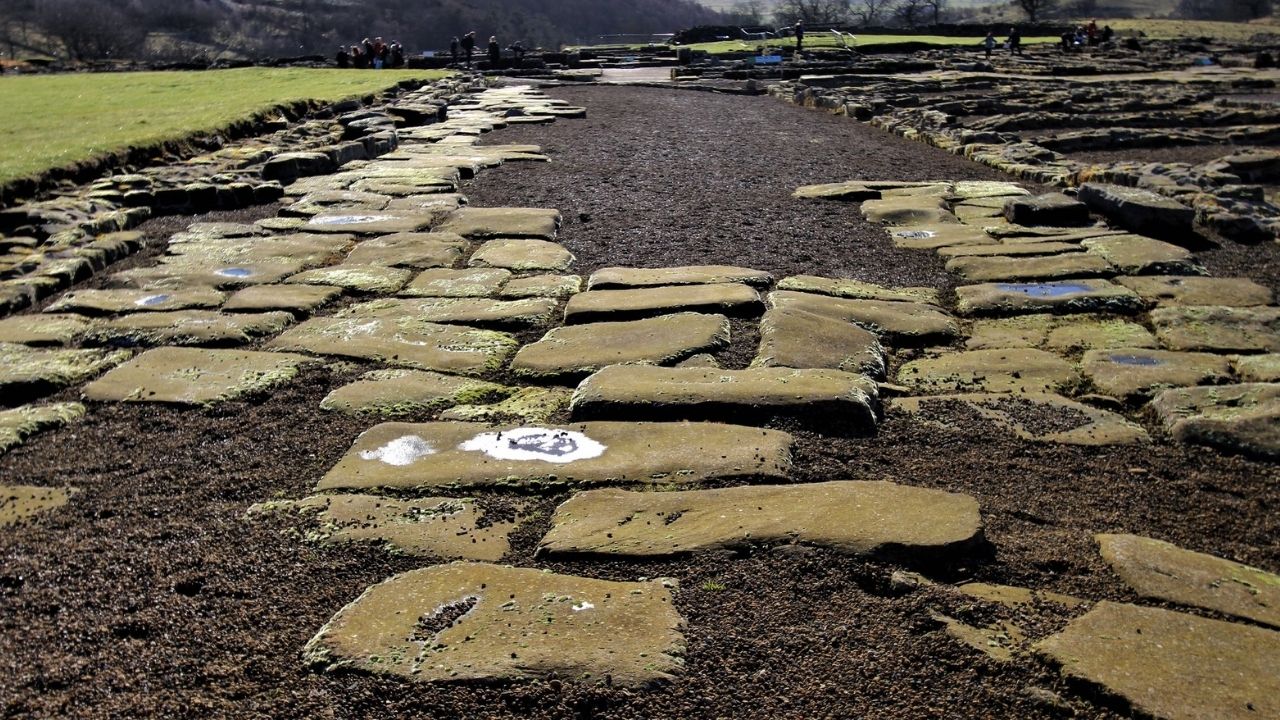
In a quiet gravel pit in central Switzerland, heavy machinery paused when stone lines began to emerge from the earth in geometric precision. What initially looked like a single ancient Roman wall has unfolded into one of the most significant Roman-era finds in the Alpine region in a century, revealing a sprawling complex that has startled even seasoned specialists. The discovery offers a rare opportunity to reassess the extent of Roman presence north of the Alps.
The discovery sits on the edge of a modern industrial landscape yet speaks to a 2,000-year-old world of trade, power and belief. The scale of the masonry, the quality of the finds and the strategic position above the surrounding lakes and valleys together suggest that this was no backwater outpost. Instead, the site forces me to reconsider how deeply Roman culture penetrated what is now Switzerland, and how much of that story still lies hidden beneath quarries, fields and forests.
The gravel pit that became an archaeological sensation
The setting could hardly be more prosaic: a working gravel quarry near Cham in the Canton of Zug, a place better known for logistics hubs than lost antiquities. When construction work exposed the first courses of stone, archaeologists quickly realized they were looking at the remains of the walls of a Roman building complex built around 2,000 years ago, not a lone structure but a dense arrangement of rooms and corridors. Local authorities described the find as a ‘sensation,’ reflecting the unusually large footprint of masonry preserved beneath the gravel.
Specialists have emphasized that such a discovery in this part of central Switzerland is “extraordinary,” particularly because the remains include substantial stone walls rather than the more fragmentary traces that often survive in Alpine soils. Reports from the excavation describe the remains as part of a larger complex whose exact function is still under debate, with possibilities ranging from a villa to a religious or administrative center. For now, the combination of robust construction and rich small finds has convinced me that this was a high-status site, not a marginal farmstead.
What the 2,000-year-old walls reveal about Roman power in the Alps
From a broader perspective, the most striking aspect is how the complex reframes the Roman footprint in the Alpine heartland. Archaeologists have stressed that these are 2,000-year-old remains in the Swiss Alps, a region where large masonry complexes of this kind have not been unearthed for roughly 100 years. The site near Cham shows that the Roman Empire invested in substantial stone architecture deep inside what many still imagine as a rugged frontier, suggesting a more settled and integrated landscape than older narratives allow.
Accounts from the dig describe how the walls form part of a multiroom building complex, with carefully laid foundations and interior divisions that point to planned construction rather than ad hoc expansion. One report notes that in the Alpine region of central Switzerland, Cham, Switzerland now joins a very short list of sites where such extensive Roman stonework has survived. For me, that rarity underscores how much the empire’s northern infrastructure remains underdocumented, not because it was absent, but because it has been masked by later land use and the patchy nature of Alpine excavation.
Objects in the rubble: clues to life and belief on the Roman frontier
The walls alone would be remarkable, yet the small finds emerging from the trenches are what allow me to glimpse the people who once moved through these rooms. Archaeologists working on the site have recovered fine tableware, coins and personal ornaments, including what has been described as part of a jewellery setting and a delicate blue glass bowl, items that speak to wealth and long-distance trade. One account notes that archaeologists also uncovered imported ceramics and other luxury goods, the sort of assemblage that would be at home in a prosperous provincial center rather than an isolated Alpine farm.
These artefacts tie the site into wider networks that stretched from the Mediterranean to the northern frontiers. Reports emphasize that the complex belongs to the early Roman Empire, and that its finds illustrate the reach of Roman trade networks into the Alpine region of central Switzerland. Another analysis highlights the Ruins of these 2,000-Year-Old buildings as unusually well preserved, which in my view makes the associated material culture all the more valuable for reconstructing daily life, religious practice and social hierarchy on this stretch of the frontier.
Rewriting Switzerland’s Roman story from Äbnetwald to the wider Alps
What elevates the find from important to transformative is the way it forces a reassessment of Roman-era Switzerland as a whole. Officials have described the emergence of the ancient masonry near Äbnetwald as an Roman archaeological sensation, noting that the elevated location offers a commanding view over the surrounding landscape. That vantage point, combined with the scale of the complex, suggests to me a site that monitored movement along key routes, perhaps blending residential, economic and cultic functions in a way typical of provincial hubs.
Other accounts of the excavation describe a Large Roman building in a Swiss gravel pit, part of a building complex featuring various rooms that illustrates the reach of Roman trade networks into the Alpine interior. Coverage of the project has repeatedly referred to an excavation in a gravel quarry in central Switzerland that uncovered a building complex with various rooms, and to a new Switzerland “archaeological sensation” that could reveal the full extent of Roman influence in the region. One summary notes that the ancient Roman wall in Switzerland was immediately labeled an archaeological sensation, a phrase that, for once, feels proportionate. As I weigh these converging reports, I am convinced that the walls at Cham will become a reference point for any future discussion of how Rome reshaped the Alpine world, both materially and imaginatively.