
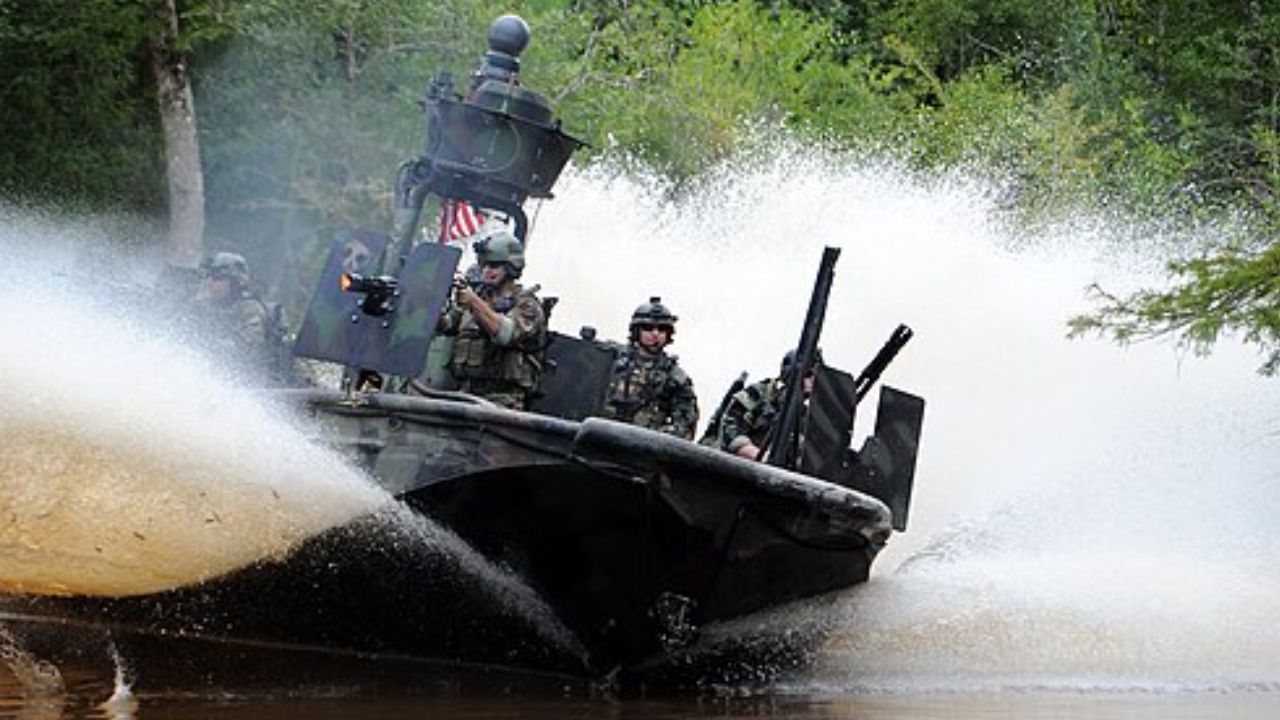
America’s most famous special operations missions are often told as single-night dramas: a helicopter crossing a border, a door forced at the right moment, a hostage moved to a waiting aircraft. In practice, the moments the public remembers are the last link in a long chain of intelligence, planning, coordination, and political authorization. From the Abbottabad raid that targeted Osama bin Laden to hostage recovery attempts and other high-value target operations, U.S. Special Operations Forces (SOF) are frequently chosen when leaders want speed, discretion, and a smaller on-the-ground presence than conventional options typically require.
These missions also highlight a persistent tension for the force. SOF remain in demand for counterterrorism and crisis response even as the Pentagon emphasizes great-power competition with China and Russia. The point is not to treat every headline raid as a universal template, but to examine what conditions repeatedly correlate with tactical success—and what those patterns suggest about readiness, oversight, and future force design.
The missions the public associates with SOF
Public attention clusters around a limited set of operations: the Abbottabad raid, hostage recovery missions, and other high-value target raids conducted in denied or politically sensitive environments. These missions are typically described through the lens of elite assault forces such as Navy SEALs (including DEVGRU) and Army Delta Force (1st SFOD‑D), with support that can include the 75th Ranger Regiment and specialized aviation associated publicly with the 160th Special Operations Aviation Regiment.
But much of SOF’s reputation is also built through less visible work that does not fit neatly into a single-night narrative: counterterrorism advising, partner training, and targeted operations enabled by persistent intelligence and local access. Army Special Forces (Green Berets) and Marine Raiders (MARSOC) are often central to those advisory efforts, while Air Force Special Warfare—Pararescue Jumpers (PJs), Combat Controllers (CCT), and Tactical Air Control Party (TACP)—provide capabilities that can be critical when a mission shifts unexpectedly or requires tight integration with air support.
Why these operations matter—and what they do not guarantee
The strategic appeal of SOF is straightforward. They offer a way to apply force quickly with a relatively low footprint, which can be politically attractive and operationally useful when time is limited or the environment is sensitive. The speed and discretion of SOF can also serve a signaling function: demonstrating reach and an ability to act with precision, often at night and over long distances.
That said, the public record also supports a caution that is easy to overlook in raid-focused storytelling: tactical success does not automatically translate into lasting political stability or a sustained reduction in terrorism. Even when a mission achieves its immediate objective, the broader effects depend on factors well beyond the objective area.
The ecosystem behind the operators
High-profile missions often center on the assault force, but outcomes frequently hinge on the support structure around the team. Intelligence fusion—drawing on agencies such as CIA, NSA, and DIA and, where available, partner contributions—shapes target development, timing, and risk decisions. Persistent ISR (including drones and manned aircraft), technical surveillance, and other collection methods can refine what a team is walking into, even if specifics remain classified.
Equally important is the access and sustainment architecture that makes short-notice operations possible: aerial refueling, contingency medical support, diplomatic overflight permissions, and basing arrangements. Aviation is a recurring linchpin, particularly specialized SOF rotary-wing platforms and crews built for night operations, difficult terrain, and compressed timelines. The raid may be the visible point of contact, but it rests on logistics, intelligence, and policy choices that are mostly out of sight.
What tends to make high-profile missions work
Across the most frequently cited SOF “success story” missions, several themes recur. First is intelligence quality and integration—not simply collecting information, but turning it into an actionable picture that commanders and policymakers trust enough to accept the risk. In missions like Abbottabad, public accounts have consistently emphasized that feasibility depended on intelligence assessments and decision-making under uncertainty.
Second is preparation and mission design. Rehearsals, contingency planning, and disciplined execution are risk controls, not theatrics. Teams plan for the possibility that a helicopter cannot land as intended, that access points are blocked, that the target is not where expected, or that resistance is heavier than anticipated. Night operations, stealthy insertion methods, and tight communications are part of reducing exposure and buying time when plans change.
Third is joint and interagency integration. Even when a single unit receives most of the attention, these operations commonly depend on multiple services and agencies: assault elements, aviation, intelligence, communications, medical support, and sometimes conventional quick reaction forces. The more those pieces are aligned before the mission launches, the more resilient the operation tends to be when reality diverges from rehearsal.
What the “success” label can obscure
Famous raids are sometimes treated as self-contained proof that the SOF model always delivers. A more grounded reading is that some operations rely on intelligence that is incomplete or debated and that even flawless execution can produce mixed results. Removing a high-value individual can disrupt a network, but it can also accelerate adaptation, succession, or dispersion—changing the threat rather than ending it.
There are also persistent concerns tied to the environments in which these missions occur: civilian harm, sovereignty, and questions of international law. When operations take place in politically sensitive settings, decision-makers weigh operational risk against diplomatic fallout and escalation dynamics. The more routinely SOF is used for discrete problems, the more oversight and accountability become part of the capability discussion rather than an afterthought.
The readiness cost of being a default option
SOF’s post‑9/11 increase in operational tempo and authorities produced extensive experience, but it also created strain. High deployment cycles, continuous training, and repeated exposure to trauma can wear down people and units over time. The human side—injuries, burnout, and long-term impacts on operators and families—can be a limiting factor even in formations built for demanding work.
There are resource costs as well. Keeping aviation crews, ISR coverage, communications, medical support, and global access arrangements ready for short-notice missions requires sustained investment and competes with other priorities. As the Pentagon emphasizes great-power competition, SOF faces a balancing act: meeting counterterrorism and crisis-response demand while preserving time and capacity to train for peer-threat environments where access may be harder, systems more contested, and assumptions about communications and air superiority less reliable.
What changes in a great-power era—without leaving counterterrorism behind
The near-term reality is not an either/or choice between counterterrorism and great-power competition. SOF will likely remain attractive for politically sensitive missions because speed, discretion, and a smaller footprint retain value in a peer-focused strategy. But pressure to prioritize may increase, with leaders weighing which tasks truly require elite units and which can be addressed through partner capacity, intelligence cooperation, or conventional support.
If the recent era of high-profile missions has a consistent lesson, it is that successful operations are engineered. They depend on policy authorization, confidence built through intelligence work, disciplined planning, and a deep bench of joint enablers—ISR, communications, aviation, refueling, and medical support—that must be trained, funded, and protected. The most visible moments may belong to the operators on the objective, but what makes those moments possible is the system behind them.