
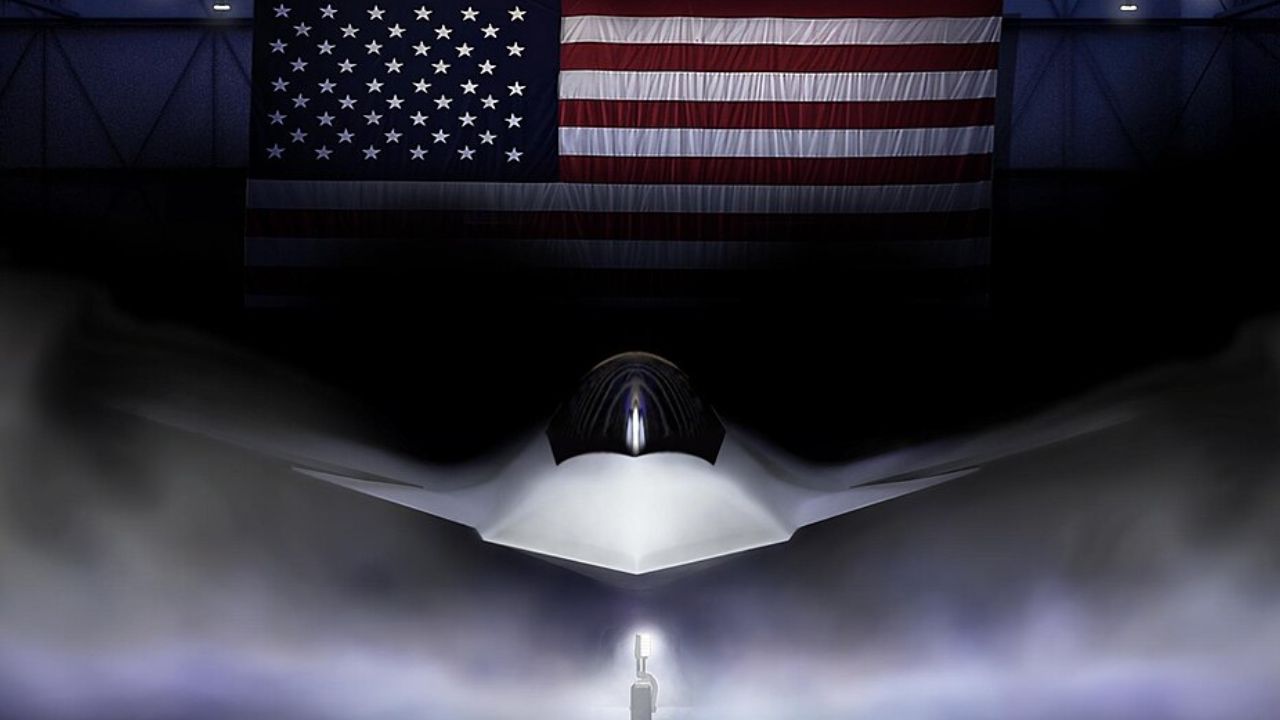
America’s experimental aircraft programs have long had a paradoxical purpose: fly just enough to answer a specific question, then fade from view before most people learn the designation. In the U.S. system—driven primarily by the U.S. Air Force and, historically, NASA and its predecessor NACA—many of the most important airframes were never intended for full-rate production. They were built to test a narrow idea in the real world: an aerodynamic concept, a stealth-related shaping approach, high-speed or high-altitude behavior, advanced flight controls, or new materials and manufacturing methods.
That is why so many U.S. experimental and “black” prototype stories feel like incomplete chapters. Some programs were acknowledged testbeds; others remain only partially declassified and are frequently discussed alongside rumor. The common thread is less mystery than method: using flight test to buy down uncertainty before committing to an operational fleet.
Built to answer questions, not to go to war
The experimental ecosystem is broader than the famous X-plane label. It includes DARPA/USAF/NASA demonstrators, contractor prototypes, and classified aircraft that never transitioned to operational squadrons. The primes historically associated with this work include Lockheed (Skunk Works), Northrop/Grumman, Boeing/McDonnell Douglas, and General Dynamics, typically supported by specialized research partners and government labs.
The logic is straightforward. Simulation and wind tunnels are essential, but they do not fully replicate the combined effects of airflow, structure, propulsion integration, sensors, and software in a maneuvering aircraft. When designers push into unfamiliar territory—new control laws, unconventional inlets, low-observable shaping tradeoffs, or novel structures—the most reliable validation still comes from an instrumented airframe in flight. In that sense, many experimental programs are not “failed acquisitions” so much as deliberate learning efforts with a small number of aircraft and a short public footprint.
Why they disappeared: budgets, priorities, and risk
Many “forgotten” programs did not vanish because they were useless. They ended because the problem they were built to explore became less urgent, too expensive to pursue further, or crowded out by nearer-term priorities. Shifts in threat assessments, internal competition, and political and budget pressure can close a program even when the technical work is productive.
Risk matters as well, both in safety and in program management. Accidents can halt a test effort. More commonly, a prototype reaches a point where the data collected is judged sufficient, and continuing to fly adds more cost and exposure than value. In other cases, a demonstrator proves a concept but not a practical path to an affordable, maintainable, and producible aircraft—especially when materials or manufacturing approaches are not ready for scale.
What the prototypes delivered: lessons that carried forward
The value of these aircraft is often indirect. A limited-run demonstrator may validate a control approach that makes an unstable design flyable, refine methods for integrating sensors and software, or prove out manufacturing techniques relevant to low-observable features. Those lessons can then be absorbed—quietly—into later aircraft and upgrades that do enter service.
This is where public debate often gets distorted. “Never entered service” does not automatically mean “failed.” It can also mean the program accomplished its job: it reduced uncertainty and informed later decisions. The U.S. advantage in areas such as fly-by-wire control laws and low-observable fabrication is widely associated with sustained experimentation, not any single program in isolation.
Examples that illustrate the pattern (not a definitive list)
Publicly discussed categories include NASA/NACA-era X-planes and later DARPA/USAF testbeds aimed at specialized challenges: high-speed and high-altitude regimes, unconventional aerodynamics, VTOL concepts, and signature management. Many flew short test schedules, generated extensive data, and then ended for the simple reason that the objective was knowledge, not a production contract.
Alongside these are prototypes that remain partly classified. The responsible way to discuss them is to separate what is supported by official statements or declassified records from what rests on unverified reporting. Claims about specific operational use or extraordinary performance may circulate, but without documentation they should be treated as speculation.
Why it matters now: NGAD, collaborative combat aircraft, hypersonics—and time
Today’s modernization push—Next-Generation Air Dominance (NGAD), collaborative combat aircraft, continued work on hypersonics, and a broader focus on great-power competition—puts a premium on rapid learning. The U.S. cannot assume a long, linear development cycle will produce a flawless platform on the first try. It needs a steady cadence of prototypes and flight demonstrators that expose problems early, when they are cheaper to correct.
Seen through that lens, older “forgotten” programs are not just nostalgia. They reflect an institutional approach: build small, test hard, learn quickly, and move on. If that pipeline slows because of budget uncertainty, risk aversion, or industrial bottlenecks, the U.S. risks leaning too heavily on incremental upgrades while others iterate more aggressively on new designs.
The industrial reality: prototyping competes with readiness
Experimentation is not free. Money for demonstrators competes with readiness needs: depot maintenance, spare parts, training, and modernization of existing fleets. When budgets tighten, prototypes can look like optional add-ons because their output is measured in lessons learned rather than aircraft delivered.
But the cost of skipping that learning can show up later inside major programs: redesigns, delays, and expensive retrofits. Put simply, it can be cheaper to learn with a few aircraft than to discover problems after a fleet is already being built.
What you don’t build still shapes what you field
Experimental programs rarely create stockpiles. They produce a handful of airframes—sometimes only one—and their “inventory” is mostly data, validated models, and engineering confidence. That matters because production decisions depend on whether industry and government believe a design can be manufactured reliably and sustained at scale.
Low-observable work illustrates the point without turning it into a myth. Stealth is not one technology; it is a combination of shaping, materials, coatings, and repeatable manufacturing and maintenance practices. Demonstrators that refine those processes can make future systems more practical—if the lessons are captured and carried forward into programs that do reach the force.
When success still gets buried
Even technically strong prototypes can be erased by timing and bureaucracy. A demonstrator may prove its narrow point but arrive as doctrine changes, or it may lose out to a competing effort that better fits the service’s preferred concept of operations. Some ideas work in flight test yet struggle against basing realities, sustainment constraints, or operational tradeoffs that only emerge when people try to turn a concept into a fleet.
Public narratives often swing between two extremes: the prototype as secret “wonder weapon,” or the prototype as embarrassing dead end. The more useful truth is usually simpler: a focused test campaign answered a question, and the program ended because it was never meant to be more than that.
The case for a sustained flight-test pipeline
If the United States wants to preserve airpower advantages, it has to keep flying high-risk ideas—even when they are not obvious to the public. That requires stable experimental funding across the Air Force and NASA (and, where relevant, the Navy) so prototyping is treated as a continuing function rather than a discretionary luxury. It also requires an industrial base that can build small batches quickly, even when there is no immediate promise of a production line.
The cultural shift matters too: accepting that not every prototype becomes a program of record, and recognizing that this outcome can still represent success. The real measure is whether lessons are transferred into fielded systems—manned or unmanned—and whether leaders can clearly explain what was learned. In an era shaped by NGAD ambitions, collaborative combat aircraft concepts, and pressure to iterate faster, America’s “forgotten” experimental aircraft remain a reminder that air dominance is built as much on test ranges and in hangars as it is in operational squadrons.