
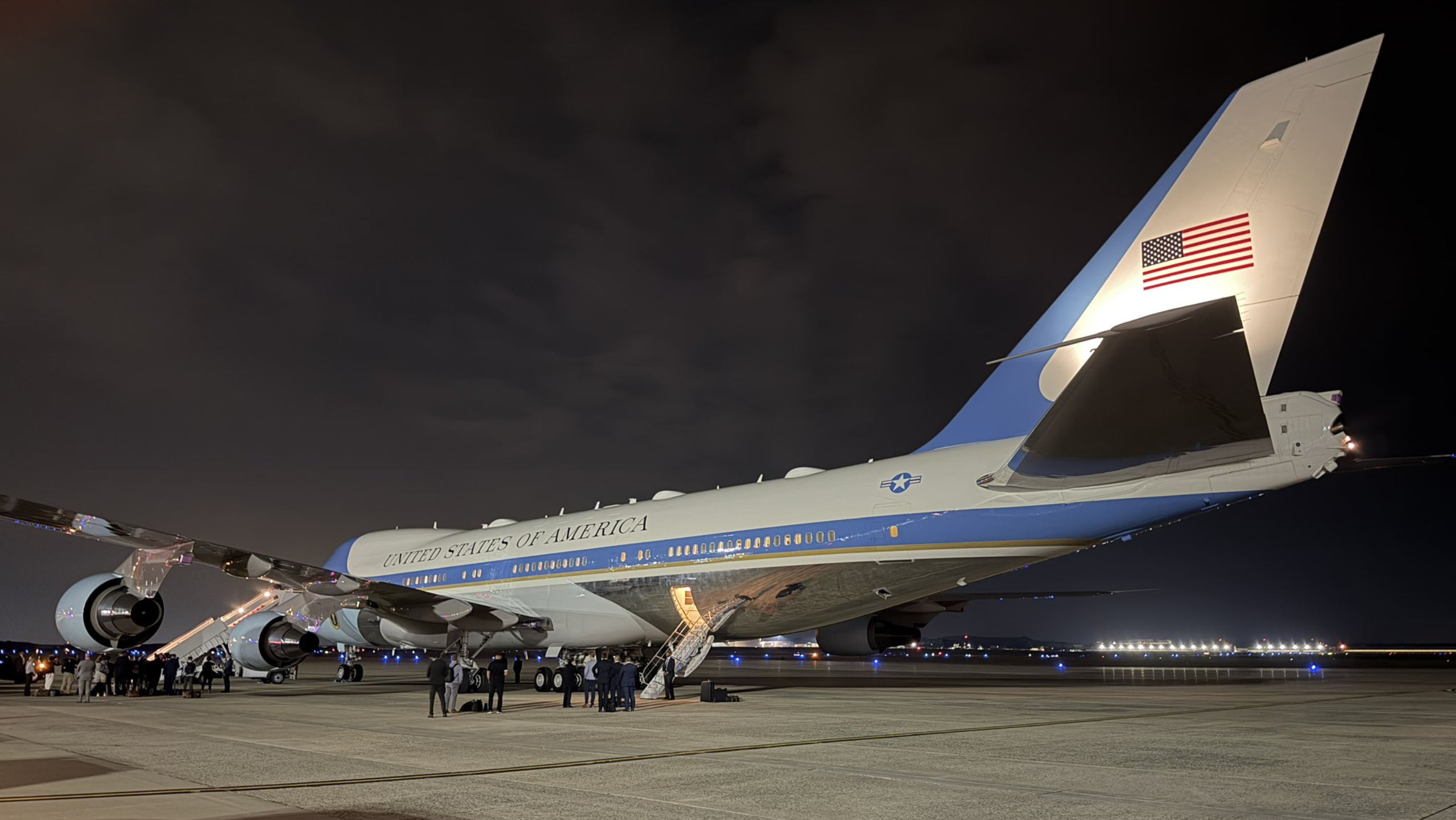
Monica Crowley, the State Department’s chief of protocol, said on X on June 18, 2026, that she was aboard Air Force One on what she described as its final flight. “I was honored to be aboard Air Force One last night on its final flight,” Crowley wrote. “For nearly 40 years, it carried every President since George H.W. Bush. It wasn’t the most modern plane, but it was cozy. And every flight with President Trump was incredibly special. Farewell and thank you, SAM 2900. You served all of us well.”
Crowley’s post was one of several from senior White House officials marking what appeared to be the retirement of the aircraft, formally designated VC-25A with tail number 92-9000. White House Communications Director Steven Cheung wrote, “‘Well done, good and faithful servant.’ The Last Ride,” while Deputy Chief of Staff Dan Scavino posted that he had been “fortunate to fly around the world on this iconic plane for 5 1/2 years — of the 35 years it has been serving U.S. Presidents.”
The Air Force’s Response
Despite the staffers’ farewell messages, the Air Force has not announced that the aircraft is being retired. According to The War Zone, an Air Force spokesperson said the aircraft will remain part of the executive airlift fleet. Asked specifically whether both of the current VC-25A aircraft would stay active, the spokesperson said, “yes.” The Air Force’s proposed budget for fiscal year 2027 states that ongoing modifications to the VC-25A aircraft are intended “to extend the service life until the VC-25B aircraft are fielded,” and both the Air Force and a recent Pentagon budget have scheduled the planes’ eventual retirement for 2029.
The discrepancy between the White House staffers’ framing and the Air Force’s official position left open questions about what Thursday’s flight actually represented. The Air Force’s clarification echoed an earlier report from NBC News the previous week describing the VC-25A’s status as still active, even as plans for the incoming Bridge aircraft accelerated. Officials have not said whether 92-9000 will continue flying domestic or lower-profile missions, or whether it will be placed in a standby or backup capacity going forward.
What Happens Next
The aircraft’s apparent final mission as the primary Air Force One comes as a different plane prepares to take over those duties on an interim basis. The so-called “Bridge” aircraft — a former Qatari government Boeing 747-8 donated to the United States and now undergoing modification for presidential transport — is expected to debut as early as July 3, ahead of a planned 250th anniversary event at Mount Rushmore. The Bridge aircraft had previously been registered as N7478D and had been on the market for roughly five years before the Qatari government donated it.
The eventual permanent replacements for the current fleet are two purpose-built VC-25B aircraft, modified Boeing 747-8 jets currently under construction. The Air Force expects to take delivery of the first VC-25B in mid-2028, years later than originally planned. The program has faced repeated delays and cost growth since it was first announced during Trump’s first term, when he pushed to accelerate delivery of new presidential aircraft.
The Aircraft’s History
The VC-25A bearing tail number 92-9000 entered service in 1990, during the administration of President George H.W. Bush, and has carried every president since. The jet is a variant of the Boeing 747-200B and has flown six presidents over nearly four decades. Its sister aircraft, tail number 82-8000, is the older of the two planes currently in the fleet and has recently undergone a major overhaul, positioning it to potentially take 92-9000’s place in the rotation.
The aircraft experienced a mechanical issue earlier this year that drew attention to the fleet’s age. In January, 92-9000 suffered an electrical fault shortly after departing for the World Economic Forum in Davos, Switzerland, forcing Trump to complete the trip aboard a backup Boeing C-32A instead.
The Qatari “Flying Palace”
The Bridge aircraft taking over interim Air Force One duties has drawn its own scrutiny. The jet is valued at roughly $400 million and was accepted as a gift from the Qatari government, which had been trying unsuccessfully to sell the aircraft for about five years before donating it for U.S. government use. The arrangement drew criticism from ethics watchdogs when it was first announced, given the size of the gift and Qatar’s position as a foreign government with extensive business and diplomatic interests in Washington. The Air Force has said the aircraft is undergoing modifications, including security and communications upgrades, before it can be used for presidential travel.
Trump’s Long Push for a New Plane
Trump has pressed for years to replace the aging VC-25A fleet faster than the standard defense acquisition process typically allows. During his first term, he negotiated directly with Boeing in an effort to lower the cost of the VC-25B program, at one point threatening to cancel the contract entirely over cost disputes. The VC-25B jets were originally expected to enter service years ago, but the program has been repeatedly delayed by supply chain issues, the need for extensive security and communications modifications, and continued disputes over cost growth, pushing the expected delivery of the first finished aircraft to 2028.
Earlier Generations of Air Force One
The presidential aircraft fleet has gone through several transitions before this one. The VC-137C jets that served as Air Force One from the 1960s through 2001 included SAM 26000, which first flew in 1962 and carried eight presidents from Kennedy through Clinton, including transporting President Kennedy’s casket back to Washington after his assassination in 1963. Its successor, SAM 27000, flew President Reagan more often than any other president and was decommissioned in 2001, taking its final flight just three days before the September 11 attacks. The transition to the 747-based fleet now in use took place in 1990, a year after Reagan left office; he never personally flew aboard the newer jets he had ordered.
It remains unclear precisely what role the current VC-25A aircraft, including 92-9000, will play once the Bridge aircraft enters service. Analysts have suggested the planes could be reassigned to Air Force Two duties or kept on standby as backup aircraft, particularly given that the Bridge aircraft’s more limited modifications and defense systems may restrict it from some international missions. The Aviationist noted that whether Thursday’s flight represents the immediate retirement of 92-9000 from U.S. Air Force service, or simply a shift to a backup role, remains officially unconfirmed.