
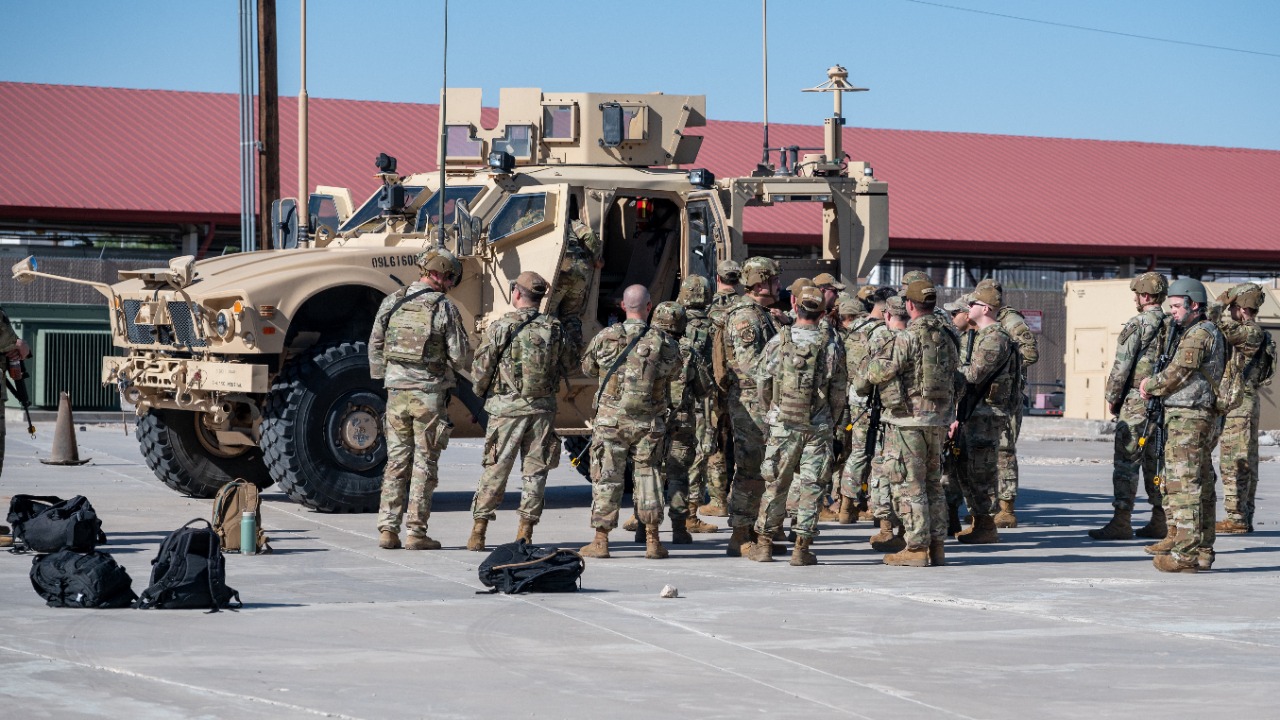
The Air Force is quietly reviving a deployment rhythm that would feel familiar to anyone who served during the GWOT era, but the context and mechanics are far more complex. Instead of massive, predictable rotations into a single combat theater, airmen are being organized into smaller, tailored teams expected to disperse across contested regions and still keep fragile home bases running. The result is a force that looks expeditionary on paper, yet faces new strains that the old model never had to solve.
At the center of this shift is a bet that tighter, prebuilt teams can move faster and survive better in a fight against a peer adversary, while still answering day‑to‑day demands from combatant commanders. That bet comes with tradeoffs, from potential gaps in base support to a training system that is still catching up to the new tempo. The Air Force is trying to capture the focus of GWOT deployments without repeating their blind spots, and the early evidence suggests that balance will be difficult to achieve.
From GWOT rotations to expeditionary task forces
The most visible change is the move away from ad hoc individual taskings toward standing expeditionary formations that cycle through readiness phases together. Under the new construct, airmen are grouped into units that train, certify, and deploy as cohesive teams, echoing the rotational predictability that defined GWOT-era combat zone tours while aiming to avoid the churn of last‑minute fills. The Air Force has framed this as an evolution of how it deploys, with the Air Force describing a deliberate shift in the way units prepare to “pack up and head out” rather than relying on just‑in‑time sourcing.
A key element of this evolution is the creation of air task forces that blend operations, maintenance, and support into modular packages. At Scott Air Force Base, the service launched the ATF model built around teams of roughly 400 Airmen who train at two to four separate bases before converging at the start of a deployment cycle. That construct is designed to give commanders a ready‑made, scalable force package that can plug into different theaters, a clear departure from the more fragmented sourcing that characterized many GWOT rotations.
GWOT-style centralization, new theaters, and USSOCOM’s warning
Behind these structural changes sits a familiar logic: centralize deployment decisions to feed a global rotation. During the GWOT period, a centralized process managed by USSOCOM was built to sustain combat zone rotations at scale, and that mindset still shapes how high‑demand units are tasked today. The difference is that the Air Force now expects to operate in a world where the primary challenge is not a single insurgent theater but a dispersed contest with a state adversary such as China.
The Air Force has stated that in a major war against such an adversary, airmen will need to operate from isolated bases without the dense infrastructure that supported GWOT hubs. That expectation drives the emphasis on expeditionary task forces that can set up flight operations, sustain themselves, and then move again, a concept reflected in descriptions of an expeditionary future where teams are built to establish and run austere locations. Yet the critique from special operations circles is that the centralized process born in the GWOT era is now outdated and insufficient for today’s world, suggesting that simply scaling up that model for a China scenario risks repeating old mistakes in a far less forgiving environment.
GAO flags the home-front cost of new deployment cycles
While the new deployment architecture promises more coherent teams at the front, independent oversight has raised alarms about what is left behind. The GAO has reported that the Air Force does not know how many personnel its bases need to keep operating when large groups of airmen are away under the new wing deployment construct. That gap in analysis means installations could be pushed below safe or sustainable manning levels just as deployed units are expected to perform at peak tempo, a risk that did not loom as large when GWOT-era deployments were more narrowly focused on specific career fields.
In a separate assessment, the United States Government Accountability Office detailed Actions Needed to improve the new process for Preparing Units, highlighting that the Expeditionary model still lacks clear metrics and feedback loops. Another review of Air Force Deployment Plans May Leave Bases Understaffed, GAO says. Changes in how the Air Force organizes, deploys, and trains to prepare for potential global threats could leave installations short of critical personnel. Together, these findings suggest that the price of more GWOT-style predictability for deploying units may be a creeping fragility at home stations that are already stretched by maintenance, training, and domestic mission demands.
Air task forces, AFFORGEN, and the next test of readiness
The Air Force is trying to manage these tensions through a broader force generation framework that sequences units through reset, training, and deployment phases. In public messaging on the AFFORGEN construct, the Air Force has emphasized that the way airmen deploy is evolving, with a more deliberate cycle intended to give commanders a predictable pool of ready forces. Air task forces are a central tool in that system, designed to provide modular, multi‑domain teams that can be tailored to specific missions while still fitting into a standardized rotation.
Reporting on how the new task forces will reshape deployments describes units that can set up flight operations, communications, and support functions in unfamiliar locations, then hand off or move as the campaign evolves. That ambition aligns with the Air Force’s expectation that future conflicts will require agile teams operating from isolated bases in a contested environment. The question now is whether the service can refine its Expeditionary processes, answer the GAO’s concerns about base manning and unit preparation, and adapt the GWOT-era instinct for centralized rotations to a world where the next deployment may look less like a fixed tour and more like a series of rapid, high‑risk moves across a much wider map.