
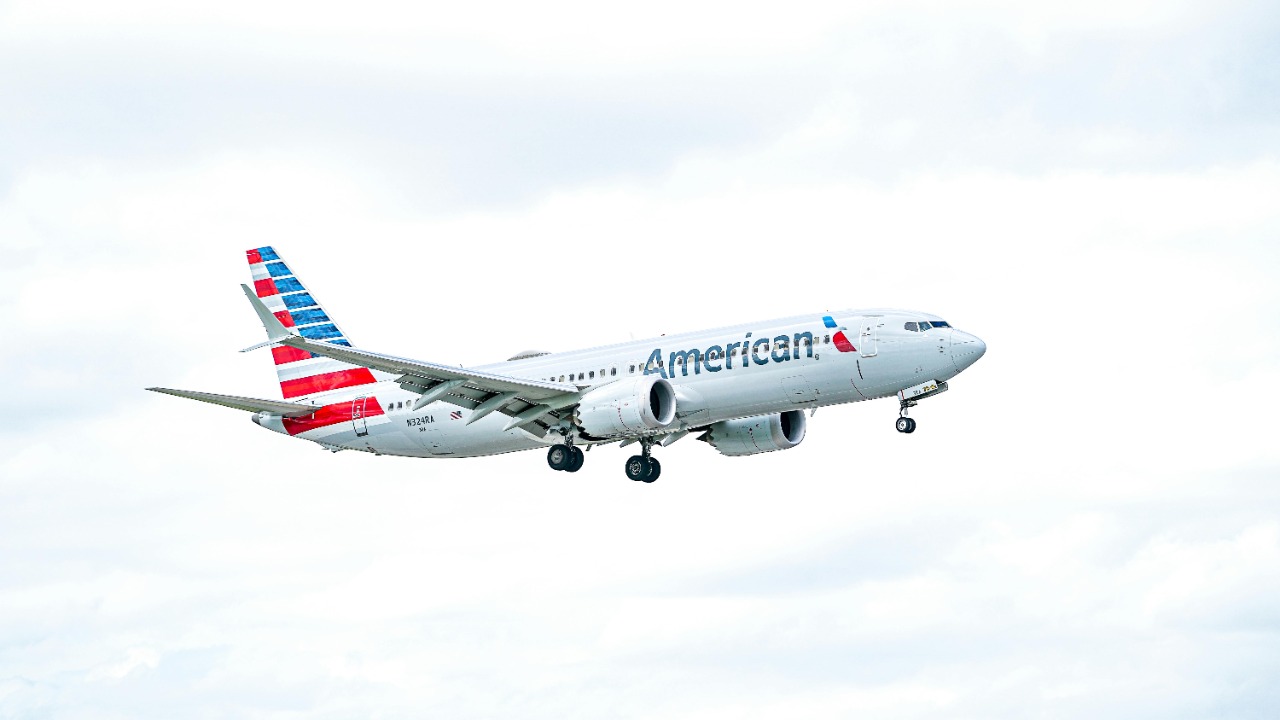
American Airlines is turning one of the most stressful moments in air travel, the mad dash to a tight connection, into a data problem that artificial intelligence can help solve. Instead of leaving late arriving customers behind, the carrier is now using an AI system to decide when it is smarter to briefly hold a departing flight so more people can still make it. The result is a subtle but meaningful shift in how a major U.S. airline balances punctuality with the basic promise of getting passengers where they are going.
In practical terms, this means some planes will now wait a few extra minutes at the gate when the numbers say it is worth it. The new approach, which American Airlines has been rolling out across more hubs, uses an internal tool to scan for at risk connections and recommend targeted holds that keep the broader schedule intact. It is a small change in minutes, but a large one in mindset.
How American’s AI decides when a plane should wait
The core of the strategy is a system that treats every tight connection as a dynamic puzzle rather than a fixed rule. Instead of relying only on static minimum connection times, American Airlines now uses an in house artificial intelligence tool called Connect Assist to scan the network for delayed inbound flights that are carrying customers who still have a realistic shot at making their next leg. The tool weighs how late the arriving aircraft is running, how far those passengers must walk between gates, and how many people are affected on each itinerary. It then recommends short, targeted holds on specific departures when the trade off looks favorable.
Reporting on the program describes Connect Assist as an AI system that sits alongside the airline’s existing scheduling expertise rather than replacing it. The technology is part of a broader effort in which On the operational side, American is scaling up data driven tools that flag customers at risk of missing flights so staff can intervene earlier. Connect Assist feeds its recommendations to the airline’s control centers and gate teams, who still make the final call on whether to hold a plane or push back on time.
From experiment to network wide expansion
What began as a limited test has now grown into a visible feature of American’s operation. The airline started by trying the concept at a small set of hubs, then decided the results justified a wider rollout. According to company briefings, American Airlines will hold flights for connecting passengers at more airports as Connect Assist proves its value. The carrier is expanding the use of the system, known internally as Connect, to additional hubs over time so that more travelers benefit from the same logic that early test markets saw.
Coverage of the expansion notes that this is not a blanket policy to delay every departure with a late inbound. Instead, American Airlines is expanding its Connect program in a measured way, focusing on airports where the network impact is most significant and where gate layouts make short holds especially effective. The airline frames the move as a way to help if you are running late, not as a license for chronic delay, and it continues to refine which routes and times of day are best suited to the strategy.
What passengers actually experience on the ground
For travelers, the most visible change is not the algorithm in the background but the message that appears on their phone. When Connect Assist recommends a hold and the operation agrees, affected customers receive a notification that their next flight is waiting and exactly how many minutes they have to reach the gate. One social media post from the airline explains that When a flight is briefly held, passengers are told in real time what is happening and how long the window will stay open, which can turn a panicked sprint into a focused, if brisk, walk.
Travel writers who have examined the system describe it as the kind of operational tweak that customers actually feel. Instead of discovering at the gate that a connection has already left, a traveler might see a message that the aircraft is being held for five or ten minutes so they can still board. That experience is backed by the AI logic that Connect Assist provides, which identifies tight connections and helps more passengers make their flights without the need for rebooking lines or overnight vouchers.
Balancing missed connections, delays, and fairness
Holding a plane is never a simple decision, because every extra minute at the gate can ripple through the rest of the schedule. American Airlines has acknowledged that the delicate dance is to help some passengers without creating new problems for others. Analysis of the program notes that How American Airlines decides which flights to hold depends on factors such as how many people are connecting, whether there are later options the same day, and how a short delay will affect crew duty limits and downstream legs. The airline’s own experts still set the guardrails, and the AI works within those constraints.
To keep the impact contained, the carrier is focusing on brief holds measured in minutes, not sweeping delays. One report on the rollout explains that the EXPANSION of the program includes airports such as Chicago O’Hare International Airport, identified by its code ORD, and Phoenix Sky Harbor International Airport, identified as PHX, where the network density makes each saved connection especially valuable. Another account notes that American Airlines Employs to facilitate tight flight connections in a way that aims to increase the number of customers who reach their destination on time, even if their first leg ran late.
What this signals about the future of airline operations
For me, the most telling aspect of Connect Assist is how quietly transformative it is. American Airlines is not using AI to dazzle passengers with a new app or a flashy cabin feature. Instead, it is embedding machine learning into the operational core, where a few minutes saved or spent can change the entire travel day. Company materials describe how American is scaling up a data driven tool launched earlier in the year to help customers at risk of missing flights, with plans to extend it to additional airports and add more functionality over time. That signals a long term commitment to algorithmic decision making in the control room, not a one off experiment.
The broader framing in consumer focused coverage is that this is Good News for because connections will be easier to make in some airports where long walks and tight banks have historically stranded travelers. One explainer notes that Connections Will Be to make because the tool can see when your arrival gate is far from your departure gate and still judge that a short hold is worthwhile. Another account emphasizes that American Airlines will hold flights for connecting passengers at more airports as the system matures, while a separate consumer guide explains How connections will be easier to make in some airports because of this and related tools. For an industry that has long treated on time performance as the only metric that matters, using AI to justify waiting for late passengers is a notable, and for many travelers welcome, recalibration.