
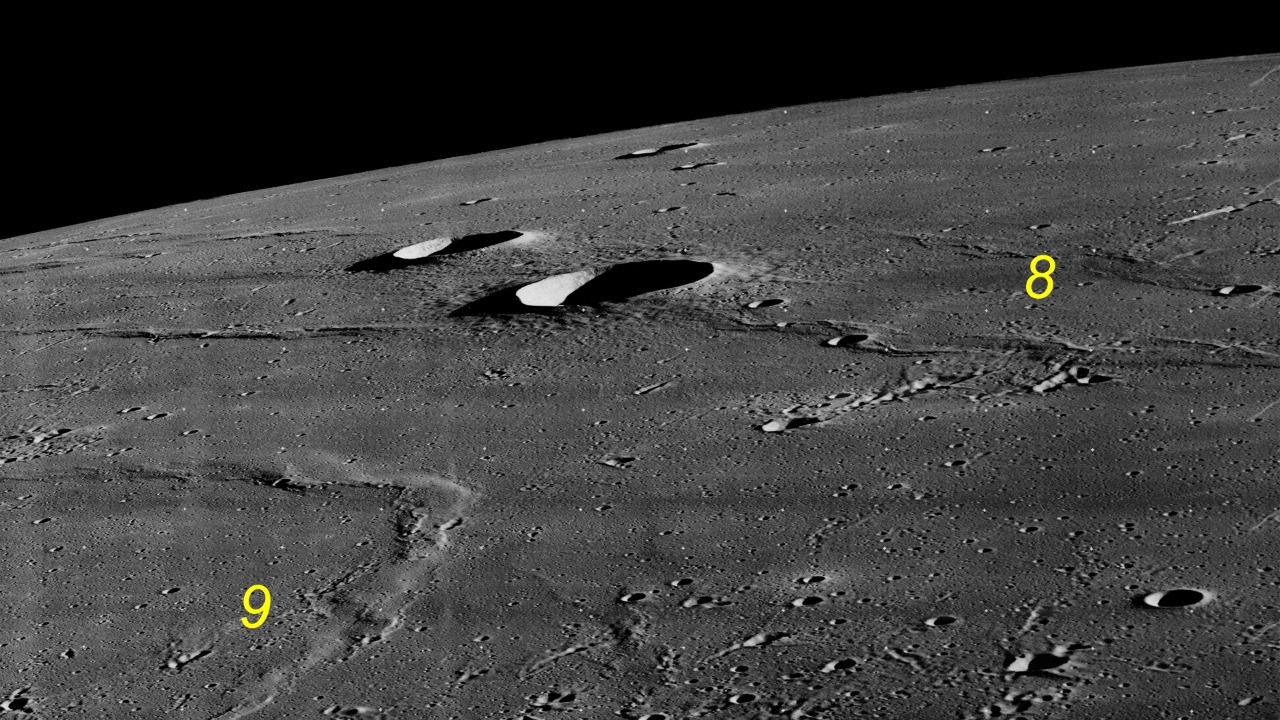
Sixty years after a small Soviet sphere survived a perilous descent and became the first spacecraft to soft-land on the Moon, scientists say artificial intelligence may finally have tracked down where it came to rest. The Luna 9 lander, long lost in grainy imagery and incomplete records, now appears to have left a subtle but telling signature on the lunar surface. If confirmed, the find would close one of space exploration’s lingering cold cases and show how machine learning can reopen chapters of history that once seemed permanently closed.
The reported discovery hinges on patterns so faint that human eyes struggled to agree on them, even when guided by decades of lunar cartography. By training algorithms on known landing sites and tasking them with scanning a vast stretch of the Ocean of Storms, researchers have highlighted a cluster of features that look suspiciously like scattered spacecraft hardware. The search has become a test of how far artificial intelligence can go in recognizing human handiwork in a place as harsh and unfamiliar as the Moon.
The mission that made the Moon feel close
When the Soviet Union sent Luna 9 to the lunar surface in February 1966, the mission rewrote expectations about what robotic explorers could achieve. The uncrewed probe survived a fiery descent, a braking engine burn, and what scientists believe were several bounces before coming to rest and transmitting the first high-quality images of the Moon taken from its surface. That moment helped turn a distant world into a tangible place for viewers on Earth who followed the mission’s progress through early space race coverage.
Despite that success, the exact landing site of Luna 9 remained uncertain for decades, with only broad coordinates and low-resolution maps to guide researchers attempting to match mission records to modern imagery. Recent analysis describes how this uncertainty persisted even as lunar mapping improved, leaving historians with a celebrated mission whose precise resting place was still missing from the catalog of confirmed landing sites.
How AI searched a 5×5‑kilometer puzzle
The new effort to lock down Luna 9’s location relied on an algorithm that could sift through subtle patterns in lunar imagery more consistently than human volunteers. Researchers trained the algorithm on photographs of sites where NASA’s Apollo missions had already landed, teaching it to recognize the telltale signatures of human activity such as disturbed regolith, hardware glints, and the geometry of equipment clusters. They then applied those lessons to the suspected Luna 9 region so the system could flag promising targets for closer inspection.
According to reporting on the project, the algorithm was trained on NASA Apollo images before being deployed over a 5×5-kilometer area in the Ocean of Storms where Luna 9 was believed to have landed. Within that grid, the system highlighted several candidates that matched the shapes and brightness patterns expected from spacecraft remnants, giving scientists a short list of locations to study in detail instead of forcing them to comb through every pixel by hand.
From unidentified object to likely lander hardware
Once the algorithm narrowed the field, human experts stepped back in to judge whether the flagged features could plausibly be Luna 9 hardware rather than random rocks or imaging artifacts. Dr. Pinheiro described the outcome cautiously, stating that the team has identified an artificial object on the lunar surface, and that the possibility this cluster represents the long-lost Soviet lander remains under active investigation as additional data and independent verification are conducted.
The visual evidence comes from LROC images that are not high enough in resolution to directly show the small Luna sphere, which is roughly two feet across, but do reveal a pattern of bright and dark spots that could be consistent with scattered components. Analysts studying these LROC images argue that the configuration resembles known landing sites where impact marks, descent stages, and deployed instruments form recognizable patterns that differ from natural geological formations.
A British‑led team and the stakes for future exploration
The work is being carried out by British researchers who have assembled an international team to cross check the algorithm’s findings and interpret the imagery. Reports describe how these British scientists used the system to identify artificial objects on the Moon that could mark the 1966 Soviet Luna 9 landing, and how they now see this method as a template for locating other historical hardware whose exact positions were never precisely recorded or have been obscured by the limits of earlier surveys.
In February, international researchers reported that they may have located the final resting place of the Soviet Union spacecraft that had been missing from detailed maps for 60 years, a claim that has attracted attention from lunar scientists and mission planners. Coverage of the study notes that the team, led by Lewis Pinault at University College London, published its results, and that their tool and AI system could be adapted to search for other lost spacecraft. Separate reports describe the Luna 9 probe as a Soviet lunar lander lost for 60 years that may have been identified with AI assistance after an algorithm scanned high-resolution lunar imagery of the target area, while another account highlights how artificial objects near the site underscore the growing importance of tracking legacy hardware on the Moon.