
In the early 1860s, the United States didn’t just feel divided—it was literally coming apart at the seams. State by state, the South seceded, a new Confederacy declared itself, and the country slid into a brutal civil war that would kill more Americans than any conflict before or since. Into that chaos stepped Abraham Lincoln, a tall, awkward, unexpectedly funny former Illinois lawyer who suddenly had to answer the biggest question imaginable: would the United States survive as a single nation?
Lincoln’s answer was simple to say and agonizing to carry out: the Union had to be preserved. Not because he was obsessed with maps or government paperwork, but because he believed democracy itself was on trial. If a nation “conceived in liberty” could be shattered whenever an election didn’t go someone’s way, what did that say about self-government anywhere?
A country splitting in real time
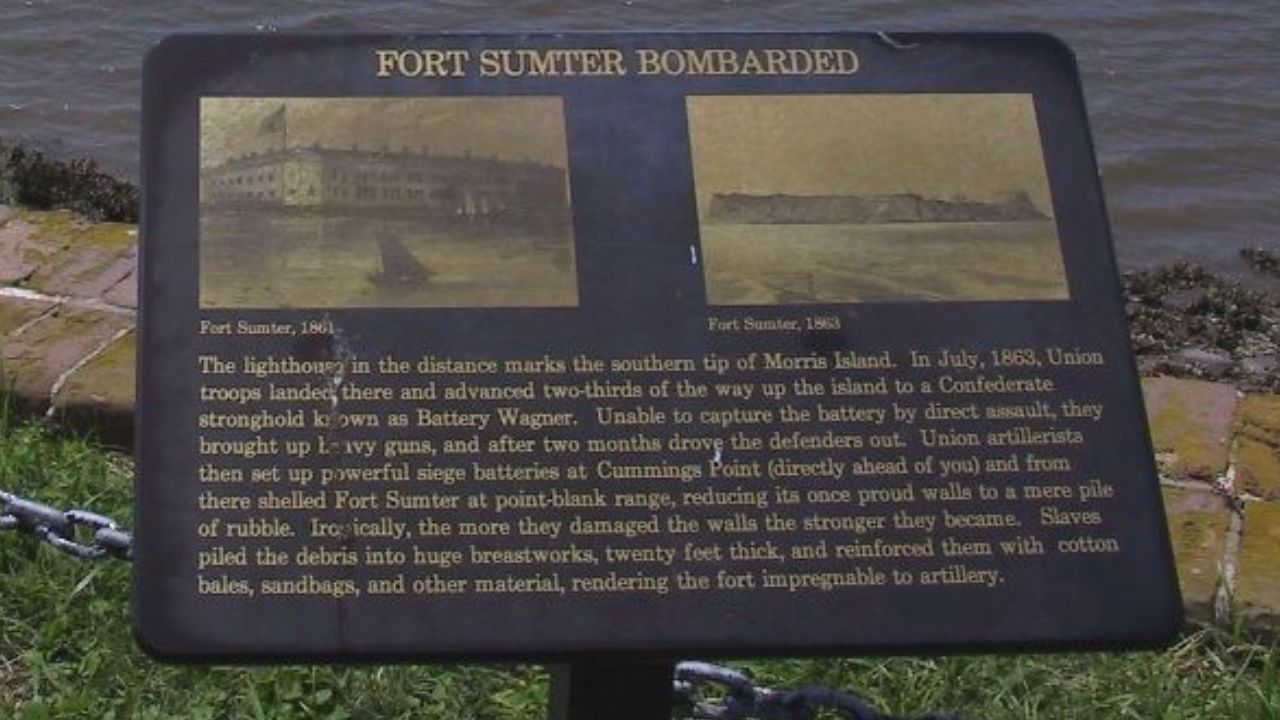
When Lincoln took office in March 1861, the crisis wasn’t theoretical. Several Southern states had already left, federal forts were under threat, and Washington, D.C., felt like it could be surrounded at any moment. The new president had barely unpacked before the first massive test arrived at Fort Sumter.
After Confederate forces fired on the fort in April 1861, Lincoln called for volunteers to suppress the rebellion. That decision didn’t “start” the war so much as confirm what many feared: the argument was no longer going to be settled with speeches and ballots. The Union’s survival suddenly depended on whether Lincoln could hold together not just an army, but the loyalty of a fractured public.
Lincoln’s big idea: the Union had to mean something
Lincoln wasn’t arguing that the Union was just a convenient arrangement. He treated it like the core framework that made American democracy possible—messy, argumentative, imperfect, but still worth defending. In his view, the Constitution created a perpetual union, and secession was essentially a legal fiction with catastrophic consequences.
That stance mattered because it set the tone for everything that followed. Lincoln didn’t present the war as conquest, and he didn’t frame it as revenge. He framed it as preservation: keeping the “whole” together so the American experiment didn’t collapse into a collection of rival regions and permanent instability.
Keeping loyal states loyal (which was harder than it sounds)
One of Lincoln’s most underrated accomplishments was holding the border states—especially Kentucky, Missouri, Maryland, and Delaware—inside the Union. These were slaveholding states with deep ties to the South, and losing them could’ve been strategically disastrous. Washington, D.C., for instance, would’ve been in serious trouble if Maryland had joined the Confederacy.
Lincoln walked a political tightrope: too aggressive on slavery early on, and he risked pushing these states away; too cautious, and he alienated abolitionists and Northern supporters who wanted faster moral action. He made compromises when he had to, applied pressure when it was necessary, and kept his focus on the central goal. It wasn’t always pretty, but it worked.
War leadership: learning on the job, painfully and publicly
Lincoln didn’t come into office as a military expert. He had limited wartime experience, and he relied on generals who often disappointed him—sometimes spectacularly. Early Union campaigns were filled with hesitation, miscommunication, and battles that ended with the public wondering if the North could actually win.
What made Lincoln effective wasn’t instant brilliance; it was persistence and adaptation. He read reports obsessively, asked relentless questions, and gradually learned what kind of leadership he needed from his commanders. By promoting Ulysses S. Grant, a general willing to fight and keep fighting, Lincoln signaled that the Union was done with half-measures.
The Emancipation Proclamation changed the war’s meaning
Lincoln is often remembered first as “the Great Emancipator,” and the Emancipation Proclamation is a big reason why. Issued in 1863, it declared freedom for enslaved people in areas still in rebellion. It didn’t immediately end slavery everywhere, but it transformed the conflict into a war not only to save the Union, but also to break slavery’s power where the Confederacy depended on it most.
It was also a strategic move. It discouraged European powers—especially Britain and France—from openly supporting the Confederacy, because backing a slaveholding rebellion became far harder to justify. And it opened the door for Black soldiers to fight for the Union, adding manpower and moral force to the cause.
Words that held the country together
Lincoln’s speeches didn’t just sound nice; they helped people make sense of suffering that could easily have felt meaningless. The Gettysburg Address, delivered after one of the war’s bloodiest battles, was only a few minutes long, yet it reframed the war as a struggle for a “new birth of freedom.” Instead of describing the nation as doomed, he spoke as if its best days could still be ahead.
Then there’s his Second Inaugural Address, delivered near the war’s end, which is striking for its lack of victory-lap energy. Lincoln acknowledged slavery as the war’s root cause and spoke about healing with “malice toward none.” In modern terms, it’s the rare political speech that doesn’t pretend pain is simple—or that winning erases responsibility.
Politics under pressure (and yes, there was plenty of criticism)
Lincoln governed in a time when people didn’t just disagree politely; they accused each other of destroying the nation. He faced intense attacks from Confederate sympathizers, radical abolitionists, and Northern critics who thought the war was going nowhere. Newspapers mocked him, rivals plotted against him, and even members of his own party doubted his judgment.
He also made controversial decisions, including suspending habeas corpus in certain cases and expanding federal authority in ways that sparked fierce debates. Supporters argued these were emergency measures to prevent sabotage and maintain order; critics warned of executive overreach. Lincoln’s legacy includes that tension—because saving a democracy during war can involve decisions that test democratic norms.
What “preserved the Union” really means
When the Confederacy collapsed in 1865, the Union wasn’t just stitched back together on paper. The outcome established that the United States was not a voluntary club that could be left whenever it got uncomfortable. It set a precedent: elections would be contested with votes and courts, not secession and armies.
Preserving the Union also created the conditions for the abolition of slavery through the Thirteenth Amendment. Lincoln didn’t live to see Reconstruction’s full, turbulent aftermath—he was assassinated in April 1865—but the nation he fought to keep intact had changed permanently. The United States emerged bloodied, mourning, and still full of conflict, yet still one country, with a clearer sense that freedom and union were bound together.
If Lincoln sometimes feels like a marble statue rather than a person, it’s worth remembering how human his predicament was. He worried, grieved, made mistakes, and carried a responsibility most leaders never face: holding a nation together while it tried to tear itself apart. And in America’s darkest chapter, he managed to preserve the Union—one hard decision, one stubborn principle, and one carefully chosen sentence at a time.