
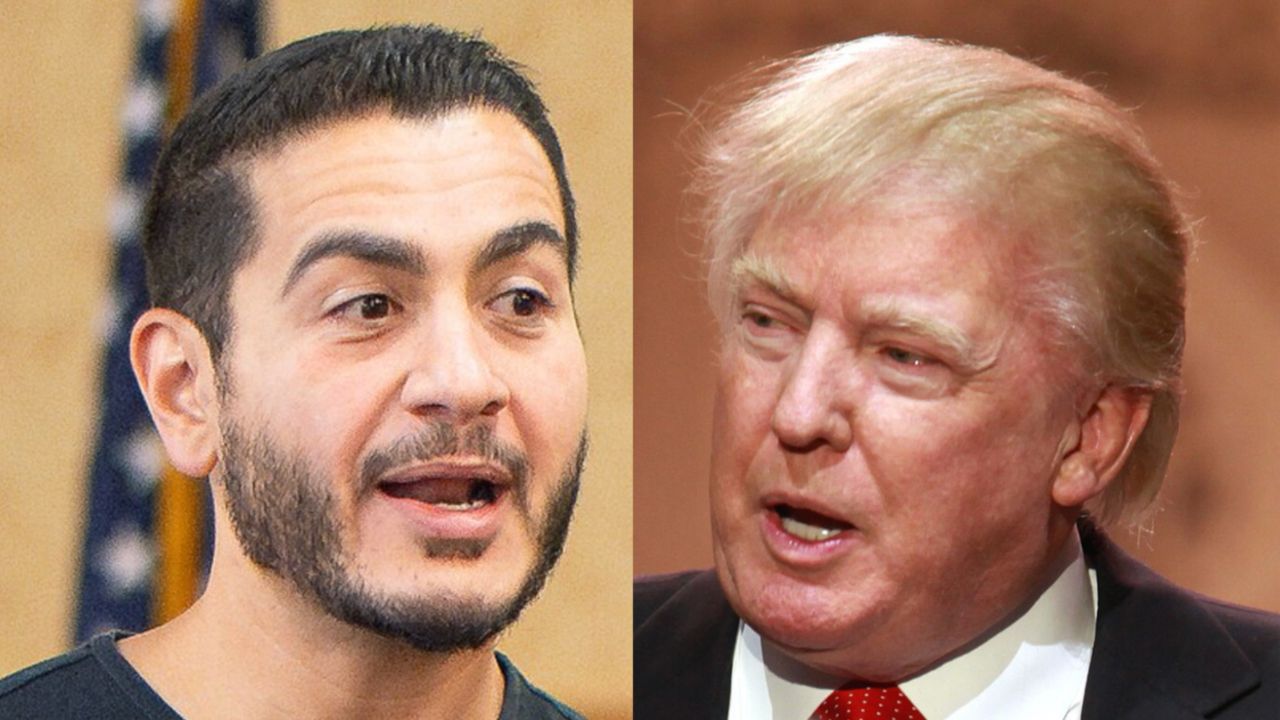
Michigan Democratic Senate nominee Abdul El-Sayed accused President Donald Trump on Monday of embracing Russia instead of ending the U.S. war with Iran that El-Sayed blames for punishing fuel prices. In the same post on X, he demanded to know whether his Republican opponent, Mike Rogers, backs Moscow too. The post came hours after Trump publicly defended his decision to ease sanctions on Russian diesel. That decision set off bipartisan backlash in Washington, 22 days before the Nov. 3 midterm elections.
El-Sayed published the post at 5:26 PM on Oct. 12, 2026. It read in full:
“Gas is $5/gallon. Rather than stop this immoral war in Iran which is causing it, Donald wants us to…start supporting Russia?
Tariffs on Canada but money for Russia. Jeez.
@MikeRogersForMI, do you support Russia, too?”
5:26 PM · Oct 12, 2026
What El-Sayed Said
The post makes three claims. First, it ties the price at the pump directly to the U.S.-Iran war, which he calls “immoral.” Second, it casts Trump’s Russia policy as a choice between ending that war and “supporting Russia.” Third, it contrasts the administration’s tariffs on Canada with what El-Sayed describes as “money for Russia.” The post ends with a direct question to Rogers, tagged by his campaign handle, asking whether he supports Russia as well.
The Diesel Deal Behind the Post
The post follows a sharp reversal in U.S. policy announced three days earlier. On Friday, Oct. 9, Trump said on Truth Social that he had struck a deal with Russian President Vladimir Putin after a phone call. Russia, he wrote, would immediately supply more than 300,000 tons of diesel, followed by 500,000 tons in November and 1 million tons shortly after. He said another 3 million tons would follow “within a short period of time.” The Treasury Department issued a temporary license the same day, easing sanctions on Russian diesel loaded onto tankers as of that Friday, with the sanctions not applying until April 2027. A Kremlin statement said the two leaders gave “significant attention to the prospects of resolving the Ukrainian crisis” and also discussed “the situation around Iran.” The White House did not immediately say who would pay for the fuel or when it would arrive. The announcement came as Trump envoy Steve Witkoff and Jared Kushner were meeting Ukrainian officials, and weeks after Trump signed a sweeping Russia sanctions law named for the late Sen. Lindsey Graham.
Criticism came quickly from both parties. Sen. Richard Blumenthal (D-Conn.), a co-sponsor of the sanctions law, called the move “a poorly concealed attempt to mitigate the havoc caused by Trump’s illegal war in Iran.” He said it “makes us complicit in Putin’s war against Ukraine.” A group of senators, including some Republicans, issued a statement calling the proposal unlawful and writing, “Enough is enough.” Ukrainian President Volodymyr Zelenskyy said Russia would repay the deal “with further terror and perfidy,” and described it as an investment in prolonging the war.
The next two days brought more news. On Saturday, Trump blamed Ukraine for soaring diesel prices and called for Zelenskyy to be replaced. On Sunday, he posted, “Effective immediately, there is an ENERGY CEASEFIRE in the War between Russia and Ukraine.” On Monday, Zelenskyy said there was no indication Russia was complying, and that missile and drone attacks on Ukrainian energy infrastructure had continued.
Trump doubled down Monday morning. “The European Union paid Russia 250 Billion Dollars for Energy, and the Fake News Media doesn’t want to get near that story,” he wrote on Truth Social. He added: “I made the right choice for the American People — ALWAYS, AMERICA FIRST!” White House spokesperson Davis Ingle responded to criticism of the president’s record by saying, “President Trump has consistently proven his doubters wrong.”
Gas Prices and the Iran War
The U.S. and Israel launched joint airstrikes on Iran on Feb. 28, starting the war El-Sayed cites in his post. AAA put the national average for gasoline at $2.98 a gallon the week before the war began. El-Sayed’s campaign said in September that Michigan’s statewide average had hit the $5 mark, with diesel at $6.79. The national diesel average now stands at about $6.28 a gallon, up from $3.67 a year ago, per AAA. Energy analysts have said the Russian diesel volumes would amount to a small share of U.S. demand. One estimate found that the October and November tranches combined would cover only about a day and a half of U.S. consumption.
The Canada Tariffs
El-Sayed’s reference to “tariffs on Canada” points to a trade war that hits Michigan directly. On July 20, Trump signed three proclamations under Section 338 of the Tariff Act of 1930 imposing 50% tariffs on certain Canadian goods. After trade talks collapsed, the tariffs took effect in late August on roughly $20 billion worth of Canadian products. On Aug. 24, Trump said on social media that tariffs on Canadian cars, trucks, auto parts and steel would rise to 50% starting Jan. 1, 2027. Prime Minister Mark Carney vowed to respond. A Michigan State University professor said the state’s economy is heavily dependent on cross-border trade.
El-Sayed’s Earlier Statements on the War and Gas Prices
The Monday post continues a message El-Sayed has pressed since the spring. In April, his campaign put ads at gas stations in Detroit, Inkster and Lansing. “Know why gas costs more? Trump’s war with Iran,” he said in the ad, adding that Trump “is spending $200 billion of your tax dollars on a war with no justification.” On the war’s six-month mark in August, he said, “This was a war that never should have been fought,” as the campaign reported Michigan gas averaging $4.22, up more than 39% since the war began. In September, after Michigan prices reached $5, he said, “Michiganders are now paying a staggering $5 a gallon for gas and $6.79 a gallon for diesel.”
He has also repeatedly targeted Rogers on the war. His campaign says Rogers called the conflict a “win-win-win” and said Trump was “absolutely right” to start it. In a September statement accusing Rogers of flip-flopping once gas hit $5, El-Sayed said, “I’ve been consistent from day one—this war is illegal, it is devastating for Michigan families, and it has to end.” In another release, he said he “of course” supports suspending the gas tax. The campaign said his priority was ending what it called an illegal war and the trade war with Canada.
Where El-Sayed Stands on Russia and Ukraine
El-Sayed has backed U.S. military aid to Ukraine. In an August televised interview after his primary win, he said Russia’s leader “clearly violated international law” by attacking a neighboring sovereign country. He contrasted that with what he called “unconditional” U.S. aid to Israel. His campaign website has framed support for Ukraine against the Russian invasion as being on the “right side of justice.”
A Feud With Trump That Keeps Escalating
Trump and El-Sayed have traded attacks since El-Sayed narrowly beat Rep. Haley Stevens in the August primary. Trump called him “a Communist loser who hates Jews and Israel” on Truth Social. Days later he posted a side-by-side image of himself and the first lady next to El-Sayed and his wife, captioned “Two VERY DIFFERENT America’s,” using El-Sayed’s full legal name, Abdulrahman Mohamed El-Sayed. El-Sayed responded by contrasting the two marriages in a televised interview.
The clash intensified last week. On the evening of Oct. 7, Trump called him “a RADICAL Extremist, Terrorist Sympathizer” on Truth Social, misnaming him “Mohammed,” and said he was “WRONG for Michigan, and WRONG for America.” El-Sayed answered at a Grand Rapids campaign event: “I think Donald might be struggling a little bit.” The two Senate candidates debated Oct. 8, and Trump posted afterward that Rogers had “completely obliterated” El-Sayed.
Rogers and the Race Ahead
Rogers’ campaign has expressed disapproval of the Russian diesel deal. Rogers is a longtime foreign policy hawk who has recently sought distance from Trump. It was not immediately clear whether he had responded to El-Sayed’s post. The race for the open seat, held by retiring Democratic Sen. Gary Peters, is pivotal to Senate control, and recent polling has generally shown El-Sayed with a narrow edge.