
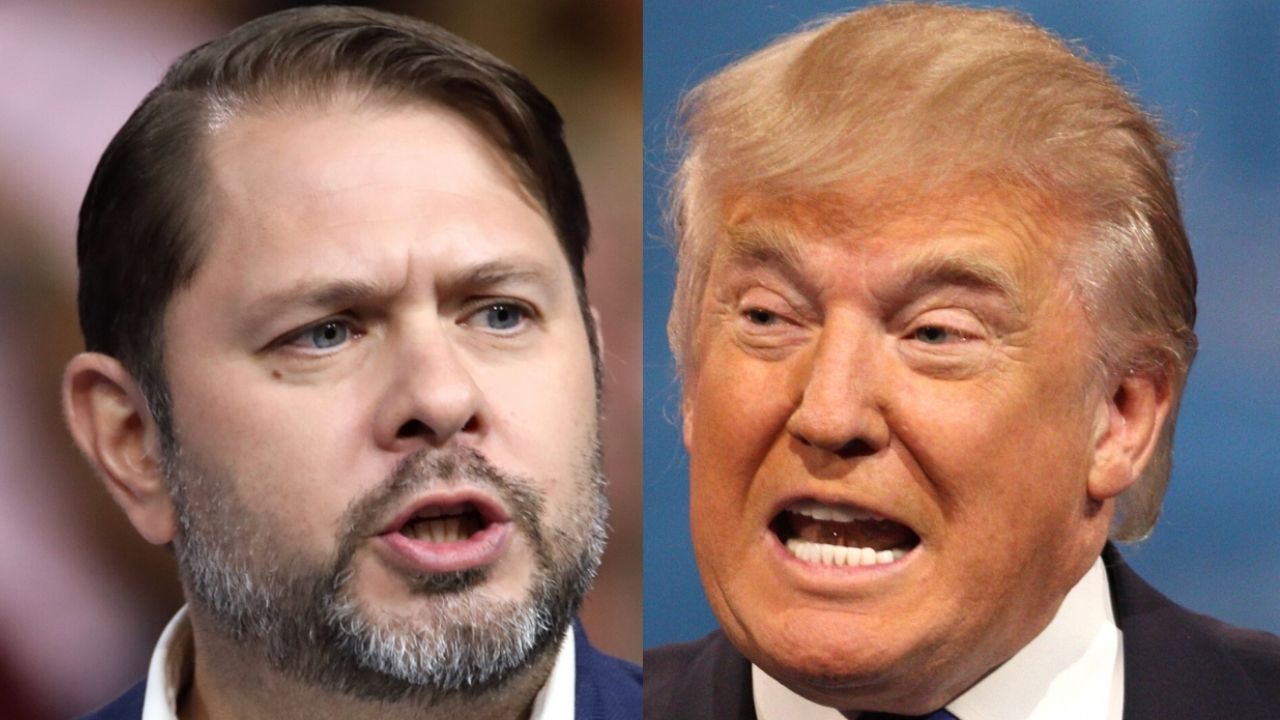
Senator Ruben Gallego (D-AZ) marked the six-month anniversary of the United States’ war with Iran on Friday with a pointed social media post declaring the conflict a failure that has cost American lives and squeezed household budgets without producing any strategic gain. The Marine Corps combat veteran, who served in Iraq, called for an immediate end to the war and the return home of U.S. service members still deployed in the region.
Gallego’s full post, published to X on Friday, August 28, 2026, at 1:42 p.m., read:
“We’re 6 months into a war that’s achieved nothing. 18 of our men and women in uniform have been killed, and the cost-of-living is crushing American families. It’s time to end this stupid war and bring our service members home.”
The post landed on the same day multiple news outlets marked the six-month mark of what the Trump administration initially dubbed “Operation Epic Fury,” the joint U.S.-Israeli military campaign against Iran that began on February 28, 2026. President Trump had predicted at the outset that the operation would last four to five weeks. Six months later, American forces remain engaged in the region, and the administration has pivoted from direct military strikes to what Treasury Secretary Scott Bessent has branded “Operation Economic Outcast,” a sustained sanctions campaign aimed at isolating Iran economically.
Gallego’s Friday statement is consistent with a pattern of criticism the senator has leveled at the war since its opening hours. On the day the conflict began, Gallego released a statement through his Senate office condemning what he called President Trump’s “illegal war with Iran,” invoking his own experience in Iraq with the Marine Corps’ Lima Company, 3rd Battalion, 25th Marine Regiment, a unit that suffered heavy casualties during that earlier conflict.
A Consistent Line Since the War’s Opening Days
In that early statement, Gallego argued that Trump had broken his own campaign promise to avoid “forever wars,” saying the administration had dragged the country into another prolonged conflict without congressional authorization or a clear long-term strategy. He joined Senator Tim Kaine’s War Powers Resolution effort in the war’s opening days, an initiative meant to require explicit congressional authorization before continued U.S. participation in hostilities against Iran. Gallego had also voted to advance a similar Kaine-led resolution the previous June, though that earlier measure fell short of the votes needed to advance despite bipartisan support.
The Arizona senator has continued pressing the administration on accountability throughout the conflict. In March, Gallego joined 45 Senate colleagues in a letter to the Department of Defense demanding answers about airstrikes on a girls’ elementary school in Minab, Iran, that reportedly killed at least 168 people, most of them children, during the war’s opening days. The senators emphasized in the letter that the war remains one waged without congressional authorization.
Framing the War as a Domestic Economic Burden
Gallego has increasingly tied his criticism of the war to its effects on everyday costs for American families, a theme that carried directly into Friday’s post. Speaking at the Center for American Progress’ IDEAS Conference in May, Gallego connected rising gas and grocery prices in Arizona directly to the war, arguing that the conflict was never planned or authorized by Congress and has not made the country safer.
That same argument surfaced again in early August, when Gallego told CNN’s Kaitlan Collins he opposed further Pentagon funding for the war effort unless Gulf states and Israel covered at least half the cost, arguing that American taxpayer dollars were being spent to protect other nations’ interests even as domestic safety-net programs faced cuts. Weeks later, on ABC’s “This Week,” Gallego again resisted a Trump administration request for $17 billion in additional military operational funding, telling host Martha Raddatz that he wanted the administration to define an “end goal” before any further funding discussion could proceed.
Casualties, Costs and an Undefined Mission
Gallego has repeatedly questioned whether the administration has ever articulated a clear objective for the war, a criticism echoed in his Friday post’s blunt assessment that the conflict has “achieved nothing.” In a July interview with KTAR News in Arizona, Gallego said the United States entered the war “on the basis of hope” rather than strategy, and warned that pursuing a conventional military victory would require American ground troops and cost tens of thousands of lives — an outcome he said he does not want. He described the United States, despite its status as a global superpower, as effectively held hostage by Iran’s control over oil supply and the broader economy.
The Friday post’s casualty figure — 18 U.S. service members killed — aligns with figures reported by international monitors tracking the broader human toll of the conflict. The International Maritime Organization reported this week that at least 19 seafarers have been killed since the war began, with more than 70 attacks recorded on international shipping in the Persian Gulf, and roughly 6,000 sailors remaining stranded aboard ships in the region as the Strait of Hormuz remains disrupted.
Colleagues Mark the Same Anniversary With Similar Criticism
Gallego was not alone in using the six-month mark to criticize the administration’s handling of the war. Other congressional Democrats, including Senate Minority Whip Dick Durbin, Senate Minority Leader Chuck Schumer and Senator Jack Reed, also issued criticism of the administration’s conduct of the conflict on its six-month anniversary, with Durbin noting that the Strait of Hormuz remains contested and that American troops continue to be killed and wounded as prices rise domestically.
Iran’s Regime Remains Intact Despite the Campaign’s Original Goals
Independent assessments published around the six-month mark broadly support the premise underlying Gallego’s criticism: that the war has not achieved the strategic outcomes the administration originally sought. Analysts cited in reporting on the anniversary noted that Iran’s regime, despite the deaths of its supreme leader and many senior officials on the war’s opening day, has not collapsed, and that the country has instead tightened control over the Strait of Hormuz while expanding regional influence even among nations it was actively bombing months earlier. Iran’s economy is projected to shrink by 5.4 percent this year, according to International Monetary Fund estimates, with inflation surpassing 80 percent, though the regime itself has shown no signs of fracturing under the pressure.
The administration’s shift toward economic pressure under “Operation Economic Outcast” has drawn scrutiny from foreign policy analysts over whether it represents a coherent strategy or a rhetorical rebranding of an unresolved conflict. Bessent described the sanctions campaign as designed to isolate Iran until “this regime stands alone,” but has not specified a timeline or defined metrics for success, according to reporting on the announcement.
Diplomatic Track Remains Unresolved
The war’s diplomatic history has included a ceasefire declared on April 8 and the subsequent Islamabad Memorandum of Understanding, which President Trump signed but has since said is “over,” according to reporting on the current state of negotiations. Iran’s public-facing leadership, including President Masoud Pezeshkian, has continued pushing for a return to the terms of that June memorandum while also negotiating separately with Oman over management of the Strait of Hormuz, an arrangement Washington has so far been unwilling to accept.
Looking Ahead
Gallego’s Friday statement did not lay out specific next legislative steps, but it arrives as Congress continues to weigh additional military funding requests tied to the conflict and as War Powers Resolution efforts from lawmakers in both chambers have repeatedly stalled short of the votes needed to force a formal end to U.S. involvement. With midterm elections approaching in November and the administration’s economic pressure campaign showing no clear end date, Gallego’s renewed call to bring troops home signals that the war’s cost — in both American lives and household budgets — is likely to remain a central point of contention between congressional Democrats and the Trump administration in the months ahead.