
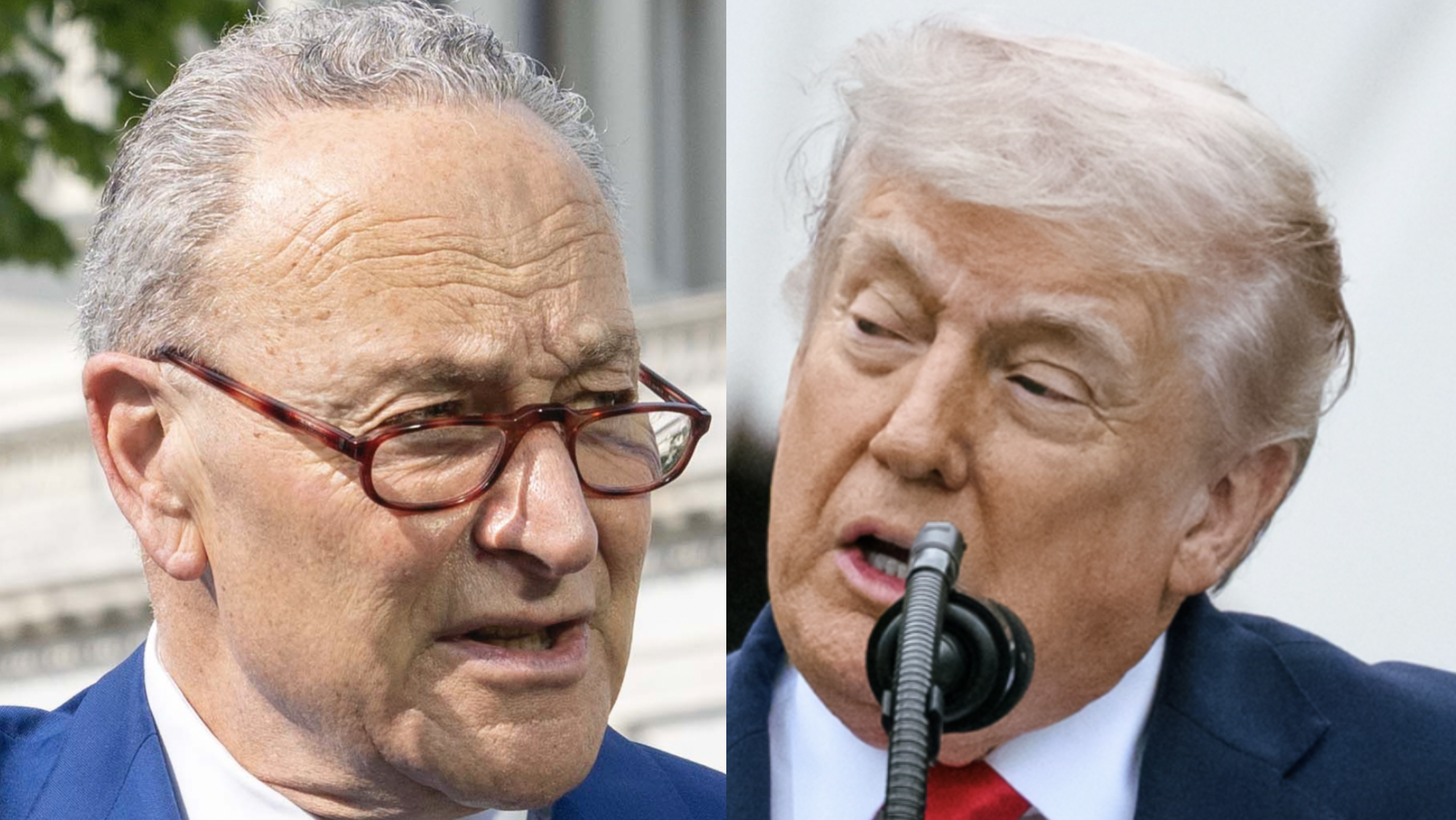
Senate Minority Leader Chuck Schumer used X on Wednesday to deliver one of his sharpest assessments yet of the Iran conflict — characterizing it as a costly military engagement with no defined objectives and no exit strategy, and pointing to a seventh consecutive Senate Republican blockade of legislation that would have constrained it.
The post read: “Trump has sunk at least $29 billion of American taxpayer money into a totally unnecessary war that has no endgame or strategic goals. Today’s vote was the 7th opportunity for the Senate GOP to support our resolution to withdraw troops from Iran, limit Trump’s ability to continue waging this war without authorization, and put an end to the economic fallout from this historic blunder — and they blocked it.”
The Closest Vote Yet — And the First Crack in GOP Unity
Wednesday’s measure failed by a single vote, 50 to 49 — the tightest margin of any of the seven attempts since the war began in late February. Senators Rand Paul of Kentucky, Susan Collins of Maine, and Lisa Murkowski of Alaska voted with most Democrats, while Senator John Fetterman of Pennsylvania remained the sole Democrat in opposition.
Murkowski’s vote represented a notable shift — the first time the Alaska Republican had backed the resolution. The vote highlighted emerging fractures within Republican ranks as the conflict passes the 60-day deadline that requires congressional oversight. Murkowski told reporters she had expected more clarity from the administration after the 60-day window elapsed, and had not received it.
The Cost Accounting
Schumer’s characterization of the war as having cost “at least $29 billion” aligns with a series of escalating cost figures Democrats have cited throughout the conflict. The Pentagon has put the total at approximately $25 billion, with the opening six days alone costing $11.3 billion in military expenditures.
Beyond direct defense spending, American families have paid an additional $16 billion more for gasoline compared to prices before the war began — a figure that includes over $517 million in New York State alone. The average price to fill a top-selling pickup truck reached $146.74, with SUVs averaging $59.10 and sedans $52.99 per tank. Gas prices have averaged above $4 nationally despite pre-war promises from the Trump administration of lower energy costs.
“No Endgame” — The Strategic Critique
Schumer has argued that across each of the core metrics used to evaluate the conflict — the status of the Strait of Hormuz, the strength of the Iranian regime, domestic gas prices, and Iran’s nuclear ambitions — the United States is worse off than it was the day the war began.
“Iran has now demonstrated to the whole world that it can use the Strait of Hormuz as leverage against the international community,” Schumer said at an earlier press conference, adding that the Iranian regime remains standing and is now “likely to be even more radical and more dangerous than it was before.” He concluded: “Iran still has its nuclear stockpile. Its nuclear ambitions are still unchecked, if not accelerated.”
The War Powers Dispute
The Democratic resolutions have sought to invoke the War Powers Resolution of 1973, which caps unauthorized military engagements at 60 days absent congressional approval. The Trump administration has maintained the 60-day clock no longer applies, pointing to a ceasefire reached on April 7 and arguing in a May 1 letter to Congress that hostilities have formally “terminated.”
Defense Secretary Pete Hegseth told a Senate committee in late April that he believes the 60-day deadline “pauses or stops in a ceasefire.” Democrats have rejected that interpretation, arguing that continued U.S. military presence in the region means the war powers clock remains active and that congressional authorization is legally required.
A Promise of More Votes
Schumer has made clear Wednesday’s vote will not be the last. He has pledged to force a war powers vote every single week until the conflict ends, framing the repeated votes as both a legal imperative and a political one — placing Republicans on the record repeatedly in a conflict that, among Democratic voters, 89 percent say the United States should not have entered.
“The best way to lower costs and end this chaos is to end this illegal war,” Schumer wrote, warning that Republicans “will continue to bear the blame for Trump’s war” if they remain opposed. With three Republicans now voting alongside Democrats for the first time, the political dynamics around those weekly votes appear to be slowly, if narrowly, shifting.