

A Chinese Chengdu J-20 stealth fighter reportedly flew within visual range of a key Taiwan airbase without being tracked, sharpening questions about how prepared Taipei is for a fast-moving air campaign. The episode, presented in new military footage and still disputed by some analysts, highlights how quickly the balance in the skies around the island could shift if Beijing decides to test the limits of Taiwan’s defenses.
Beyond the immediate drama of a stealth jet appearing near Pingtung, the incident underscores a broader trend: the People’s Liberation Army is using carefully staged drills and ambiguous messaging to probe Taiwan’s vulnerabilities while avoiding a direct clash. For regional militaries, the central issue is no longer whether China can field advanced aircraft, but how close those aircraft can operate to Taiwan before anyone sees them coming.
What the new J-20 footage appears to show
The latest video, released during a People’s Liberation Army exercise, shows a J-20 flying against a coastal and mountainous backdrop that military watchers say resembles the Pingtung area in southern Taiwan. According to reporting on the footage, the landscape and visible infrastructure align with the surroundings of a major Taiwan airbase, suggesting the jet was filmed at a distance that would allow pilots to see the runway environment with the naked eye. If accurate, that would mean the J-20 had crossed a critical threshold in Taiwan’s defensive bubble, moving from abstract threat to a platform capable of visually identifying and potentially targeting key facilities.
What makes the clip more alarming for Taipei is the claim that the aircraft approached without detection by local radar or air defenses. Analysis of the same material, cited in a separate report, describes the J-20 closing in on a Taiwanese base in a way that implies its ingress route and low observable design allowed it to slip past surveillance. The People’s Liberation Army has not publicly detailed the flight path or the exact distance to the airfield, but the combination of visual-range imagery and undetected approach claims is enough to raise serious concerns among defense planners who rely on early warning to scramble fighters and disperse aircraft on the ground.
Why Pingtung and Taiwan’s southern airbases matter
The apparent focus on the Pingtung area is not incidental. Southern Taiwan hosts airbases that are central to the island’s ability to sustain operations over the Bashi Channel and the South China Sea, corridors that would be vital in any attempt to keep sea lanes open or receive outside support. The suggestion that a J-20 could maneuver close to these facilities, as implied by the Taiwan-focused analysis, raises the possibility that China could threaten runways, fuel depots, and hardened shelters before Taiwan’s command centers fully register the incursion.
Strategists have long warned that the south of the island is both a lifeline and a vulnerability, given its role in hosting aircraft that can cover approaches from the Philippine Sea and beyond. If a stealth platform can reach that region without triggering alarms, as some interpretations of the new footage suggest, then Taiwan’s southern bases could face a scenario in which aircraft are targeted on the ground or forced to relocate under intense time pressure. That prospect complicates existing contingency plans that assume at least some warning before precision strikes or runway denial operations begin.
Stealth, radar gaps, and the limits of Taiwan’s early warning
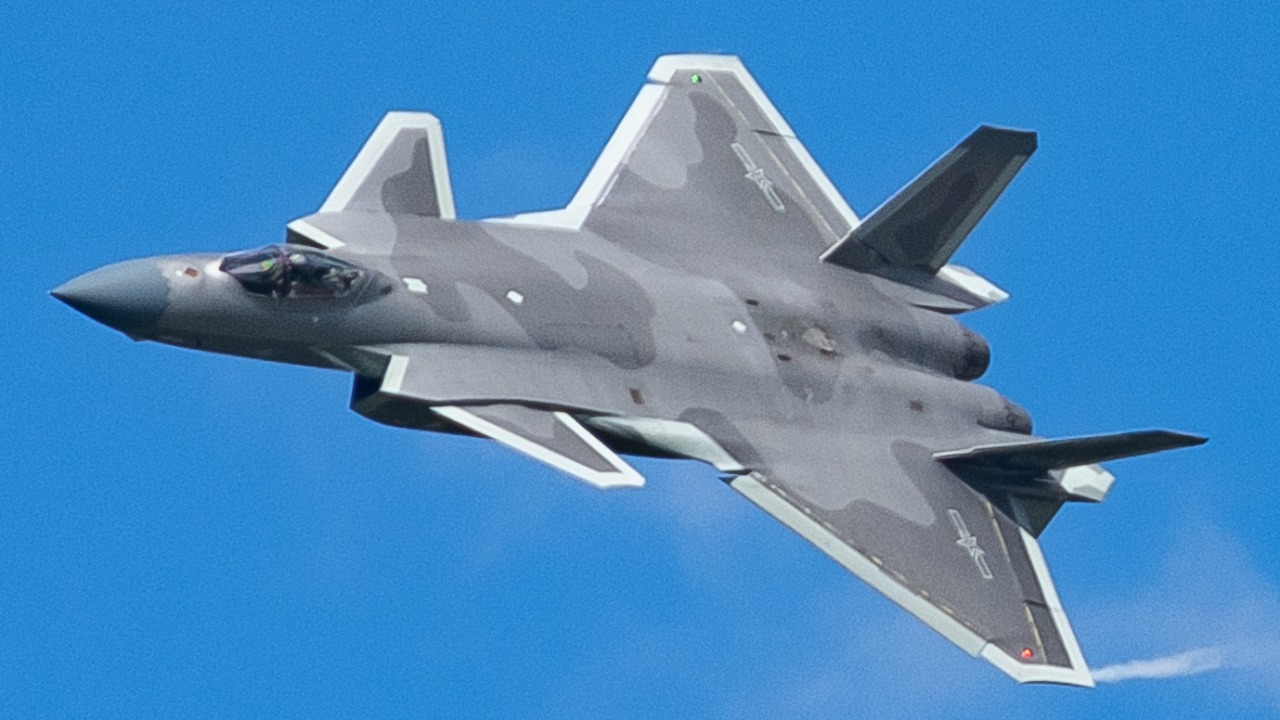
The J-20 is designed to reduce its radar cross-section from the front and sides, a feature that becomes more potent when combined with careful route planning and electronic support. Reporting on the recent drills notes that an undetected ingress along the axis used in the exercise would effectively serve as a rehearsal for time-sensitive strike options, a point underscored in an assessment of the visual range flight. If the aircraft can exploit radar coverage seams between ground stations or approach at altitudes and angles that minimize reflection, Taiwan’s existing network of sensors may struggle to generate a clear track in time to cue interceptors.
Analysts who have reviewed the J-20 approach claims argue that the incident highlights the need for more distributed and resilient early warning, including additional over-the-horizon radars and airborne sensors that can look down on low-flying threats. The People’s Liberation Army, for its part, appears intent on demonstrating that its latest fighter can operate close to Taiwan without automatically triggering a scramble, a message that reinforces the psychological impact of stealth as much as its technical advantages. Whether every detail of the undetected approach is verified or not, the episode exposes the limits of a defense posture that still leans heavily on fixed radar sites and predictable patrol patterns.
Ambiguity, propaganda, and the debate over what really happened
Not everyone accepts the J-20 narrative at face value. Some military experts caution that the footage could have been filmed over a training range on the mainland that was deliberately chosen to resemble Pingtung, allowing the People’s Liberation Army to imply a close approach without actually risking escalation. Others note that the video does not provide clear geolocation markers, leaving room for doubt about how near the aircraft came to any specific Taiwan facility. This ambiguity is itself a tool, enabling Beijing to showcase capability while keeping adversaries guessing about the exact parameters of the flight.
The debate over authenticity also reflects a broader pattern in Chinese military messaging, where carefully edited clips and selective disclosures are used to shape perceptions of strength. Reports on the J-20 drills near Taiwan emphasize that the People’s Liberation Army is comfortable operating in a gray zone between routine training and overt coercion. By leaving key details unconfirmed, Beijing can reap the deterrent benefits of a supposed undetected approach while retaining plausible deniability if foreign governments accuse it of reckless escalation. For Taiwan and its partners, the challenge is to respond to the capability being advertised without overreacting to every piece of contested imagery.
Strategic implications for Taiwan and the wider region
Whether the J-20 actually flew directly over a Pingtung-like landscape or operated just outside Taiwan’s air defense identification zone, the strategic message is similar: China wants to show that its most advanced fighters can threaten critical infrastructure with little warning. Analysts who examined the visual range maneuver argue that such flights are rehearsals for rapid strikes on command nodes, airbases, and logistics hubs that would be essential in the opening hours of a conflict. For Taiwan, this raises pressure to harden runways, disperse aircraft, and invest in passive defenses such as decoys and camouflage that can complicate targeting even if stealth jets get close.
The incident also carries implications for regional security partners that might be drawn into a Taiwan contingency. If the People’s Liberation Army can routinely bring J-20s near the island without clear detection, then allied forces operating from nearby bases in Japan or the Philippines must assume that similar tactics could be used against them. Reporting on the undetected approach claims underscores how quickly the tactical problem of tracking a single stealth fighter can scale into a strategic question about the credibility of regional deterrence. Even if some aspects of the latest video remain unverified based on available sources, the underlying reality is that China is fielding aircraft designed to exploit every gap in existing radar coverage, and Taiwan’s margin for error is shrinking.