
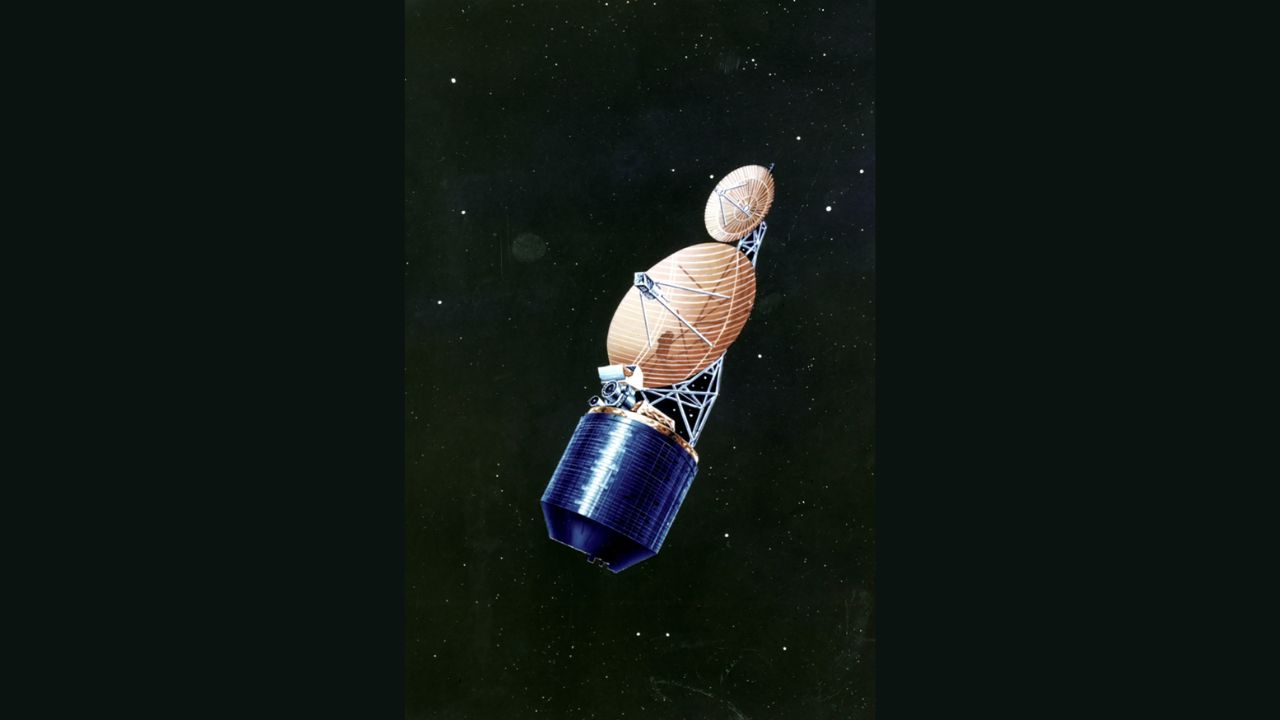
The United States has pulled back the curtain on a class of 1970s spy satellites that quietly watched Soviet forces for decades, revealing how space became a front line of the Cold War. The newly disclosed JUMPSEAT constellation shows how early signals intelligence from orbit helped military planners track missiles and radar sites far beyond the reach of aircraft or ground stations.
The declassification offers a rare look at how secret hardware shaped strategy, technology, and public anxiety during an era defined by nuclear brinkmanship. It also places JUMPSEAT alongside other once-hidden systems that turned the upper atmosphere into a dense web of American surveillance platforms.
The JUMPSEAT revelation and its Cold War mission
The National Reconnaissance Office has confirmed that a series of satellites codenamed JUMPSEAT formed a high altitude listening post that orbited above the Arctic to monitor Soviet activity. The agency has described how these spacecraft loitered near the North Pole, using their vantage point to collect radio and radar emissions that would have been difficult to intercept from lower orbits. By focusing on the high latitudes where many Soviet early warning and air defense systems were based, the satellites turned a geographic disadvantage into an intelligence advantage.
According to the declassified record, eight spacecraft in the JUMPSEAT series were launched into highly elliptical orbits between 1971 and 1987, a configuration that kept them hanging for long periods over the northern hemisphere. The National Reconnaissance Office has linked these orbits to a broader strategy of using high Earth trajectories to maximize dwell time over key Soviet sites. The US has now acknowledged that JUMPSEAT remained in service until 2006, which means hardware conceived in the early 1970s was still feeding data into American intelligence systems well after the Cold War formally ended.
How a secret constellation watched Soviet forces for decades
Officials now say that JUMPSEAT was designed to track Soviet radar networks, missile tests, and other electronic signatures that signaled changes in military posture. The US has described the program as a way to monitor Soviet military activity from space, turning raw emissions into early warning indicators for commanders on the ground. By listening for new frequencies, altered operating patterns, or sudden surges in radar power, analysts could infer whether new weapons were being deployed or existing systems were moving into higher alert.
Earlier this year, the US National Reconnaissance Office detailed how these satellites provided critical signals intelligence that helped map threats over several decades. The agency has now confirmed that the satellites tracked Soviet threats for decades before the program was declassified, underscoring how long the hardware remained relevant. In public statements, the NRO has framed JUMPSEAT as a quiet but central contributor to strategic stability, since reliable insight into adversary capabilities reduced the risk of miscalculation during crises.
From GAMBIT and HEXAGON to JUMPSEAT’s signals intelligence role
The unveiling of JUMPSEAT fits into a broader pattern in which the National Reconnaissance Office has slowly acknowledged its Cold War arsenal. The agency previously declassified the photographic systems known as GAMBIT and HEXAGON, describing how GAMBIT and its successors became America’s eyes in space by returning high-resolution images of foreign territory. Official histories note that two GAMBIT systems were developed, each optimized for different types of imaging, and that they worked in tandem with other platforms to give planners a detailed picture of missile fields, air bases, and industrial sites.
The HEXAGON KH-9 series, which the Air Force Museum now displays, represented the largest and last generation of US film return reconnaissance satellites. Museum records describe how HEXAGON used bucket-like film return vehicles that reentered the atmosphere and were caught in mid-air, a process that turned orbital photography into physical negatives for analysts to pore over. A fact sheet from the Center for the Study of National Reconnaissance explains how, over time, the Gambit program evolved into two different systems, underscoring the rapid pace of innovation in imaging. JUMPSEAT, by contrast, did not take pictures at all, instead focusing on signals intelligence that complemented the visual coverage provided by these earlier satellites.
A pioneer in high orbit and the legacy of secret space surveillance
In its own retrospective, the National Reconnaissance Office has described JUMPSEAT as an American pioneer in space that helped ease Americans’ anxiety of the unknown during the Cold War. The agency’s News Article on Declassifying JUMPSEAT emphasizes how the program’s long service life bridged eras of technology, from analog receivers to more modern digital processing. Public summaries now highlight that the constellation was part of a family of high orbit satellites that included the CANYON series and the RHYOLITE telemetry collectors, which a historical study identifies as the first wave of such systems. That same study notes that CANYON and RHYOLITE were followed by some of the most mysterious high orbit satellites, a category into which JUMPSEAT clearly fits.
Recent coverage of the declassification has stressed that the US government is only now inviting the public to meet America’s 1970s Cold War satellites for the first time. One account notes that the US government declassified details on some of its Cold War-era spy satellites on a Wednesday, with JUMPSEAT at the center of that disclosure. Another report explains that, on Wednesday in Jan, the National Reconnaissance Office formally acknowledged that JUMPSEAT collected critical signals intelligence from space, focusing on emissions from missiles or other weapons systems. A separate analysis, headlined Top Secret Spy Satellite Declassified By National Reconnaissance Office, credits the program with serving the intelligence community for 35 years, a span that Thomas Newdick links directly to the longevity of its hardware and mission.