
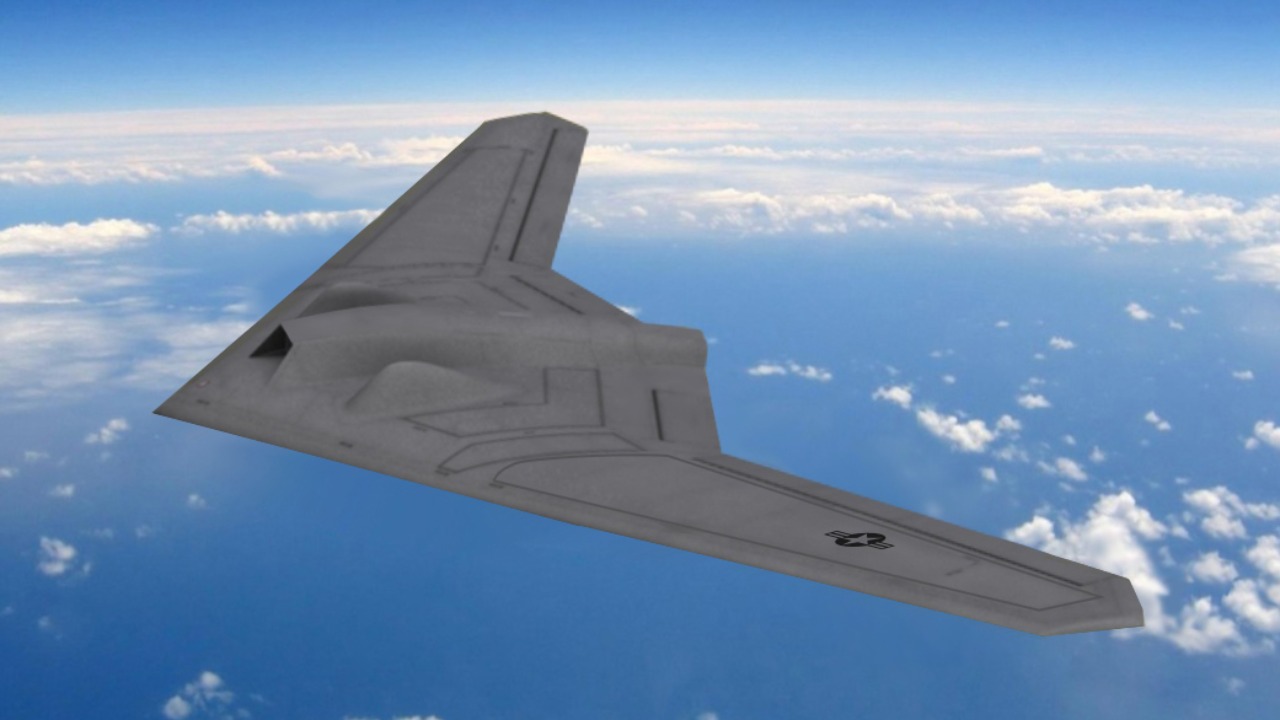
The public confirmation that secretive RQ-170 Sentinel drones helped U.S. forces seize Nicolás Maduro has pulled one of the Pentagon’s most shadowy aircraft into the spotlight. Lockheed Martin’s chief executive has now acknowledged that these stealthy unmanned systems supported the high-risk mission inside Venezuela, underscoring how quiet advances in surveillance technology are reshaping modern power projection.
The admission links a platform long shrouded in secrecy to one of the most audacious U.S. special operations in recent memory, in which Nicolás Maduro and Cilia Flores were flown out of Caracas to face narco terrorism charges in New York. It also raises fresh questions about how far airborne intelligence tools can tilt the balance in contested airspace, and what that means for both deterrence and accountability.
Lockheed’s rare acknowledgment and the Maduro raid
Lockheed Martin CEO Jim Taiclet used an earnings call to confirm that Air Force-operated RQ-170 Sentinel drones supported the mission to capture Venezuelan President Nicolás Maduro, a rare public nod to a program that usually stays in the shadows. He described an “extremely secretive” Air Force spy drone that helped bring “our armed forces home safely,” a clear reference to the Air Force aircraft. Taiclet’s comments aligned with earlier hints that the platform had been used in Venezuela, but his remarks marked the first time the contractor at the heart of the program publicly tied it to the operation.
The raid itself was vast in scale, with more than 150 aircraft involved as explosions echoed across Caracas while Maduro and Nicolas were taken into custody. U.S. special forces then flew Maduro and Cilia Flores out of Venezuela on Saturday local time, delivering Maduro and Cilia Flores to New York to face federal narco terrorism charges, according to accounts that describe how US special forces took Nicolas Maduro and his wife out of the country. Video explainers have since detailed how the operation to capture Nicholas Maduro unfolded inside Venezuela, describing months-long planning and the moment Nicholas Maduro was finally detained, as seen in one widely shared Jan broadcast.
What the RQ-170 brought to Operation Absolute Resolve
Even with Taiclet’s confirmation, the exact role the RQ-170 played in Operation Absolute Resolve remains deliberately opaque. He offered no further operational details, and analysts note that the mission likely relied on a mix of platforms, from strike aircraft to special operations helicopters, with the stealth drone providing a discreet eye in the sky. Reporting on the mission has stressed that the exact role the RQ-170 played in Operation Absolute Resolve remains unclear, and that Lockheed Martin CEO Jim Taiclet offered no further specifics beyond acknowledging that the aircraft supported Operation Absolute Resolve. That ambiguity is consistent with the program’s history, in which operational details are tightly held even when the aircraft’s presence becomes public.
What is clearer is why commanders would want the drone overhead. During the mission itself, having one of the drones orbiting above Caracas would have provided an indispensable source of real-time information, allowing commanders to track movements on the ground and adjust the operation as it happened, according to descriptions of how the aircraft supported the mission itself. One now-deleted post from Air Forces Southern on X, shared by AFSOUTH in December 2025, showed an individual wearing a new patch that appeared to reference the Maduro raid, hinting at how Air Forces Southern and AFSOUTH celebrated the operation to capture him before quickly removing the now-deleted image.
The Sentinel’s secretive evolution and ISR edge
The RQ-170 Sentinel has been flying for decades, yet official confirmation of its activities has been exceptionally rare, which is why Taiclet’s remarks drew such attention. RQ-170s have been described as supporting some of the U.S. military’s most demanding missions, and reporting notes that RQ-170s have been flying for decades but that official confirmation of any details about their activities is very rare, even as they quietly backstop the U.S. military’s most demanding missions. The Air Force’s own fact sheet describes the Air Force’s RQ-170 as a low-observable unmanned aircraft system, or UAS, that provides intelligence, surveillance, and reconnaissance to locate targets, underscoring how the Sentinel is designed to slip into contested airspace and feed back critical Sentinel data.
Analysts describe the RQ-170 as a low-observable unmanned ISR aircraft, operated by the Air Force and designed specifically to penetrate contested airspace where traditional drones would be too vulnerable. One assessment notes that the RQ is a low-observable unmanned ISR aircraft, operated by the Air Force, and that the RQ-170 was designed to penetrate defended airspace where non-stealth drones would be at risk, giving commanders a stealthy ISR option that can survive where vulnerable non-stealth drones cannot. Advocates of this approach argue that airborne ISR complements space-based satellite ISR, with experts like Cantwell saying Airborne ISR lets you watch adversaries change their patterns of life in response to pressure, and that a platform like the 170 could penetrate contested airspace that might be too risky for other Airborne ISR assets.
Strategic and political fallout from a shadow drone
The Maduro raid has already been framed by U.S. officials as a demonstration of restored military credibility, with U.S. war secretary Pete Hegseth boasting that the January raid in Venezuela showcased American prowess and helped restore deterrence. In remarks highlighted by Defense Mirror, he said the January raid in Venezuela demonstrated military capability and restored deterrence, describing it as one of the most complex operations in world history, according to Defense Mirror. Aviation analysts have gone further, arguing that the secretive RQ-170 supported U.S. planning for the Venezuela mission and that Russian air defenses fell short, with the initial operation unfolding over several days as the stealth drone and other assets helped shape the battlespace for the fighters and other assets. That narrative casts the Sentinel as a quiet enabler of a broader shift in the defense balance.