
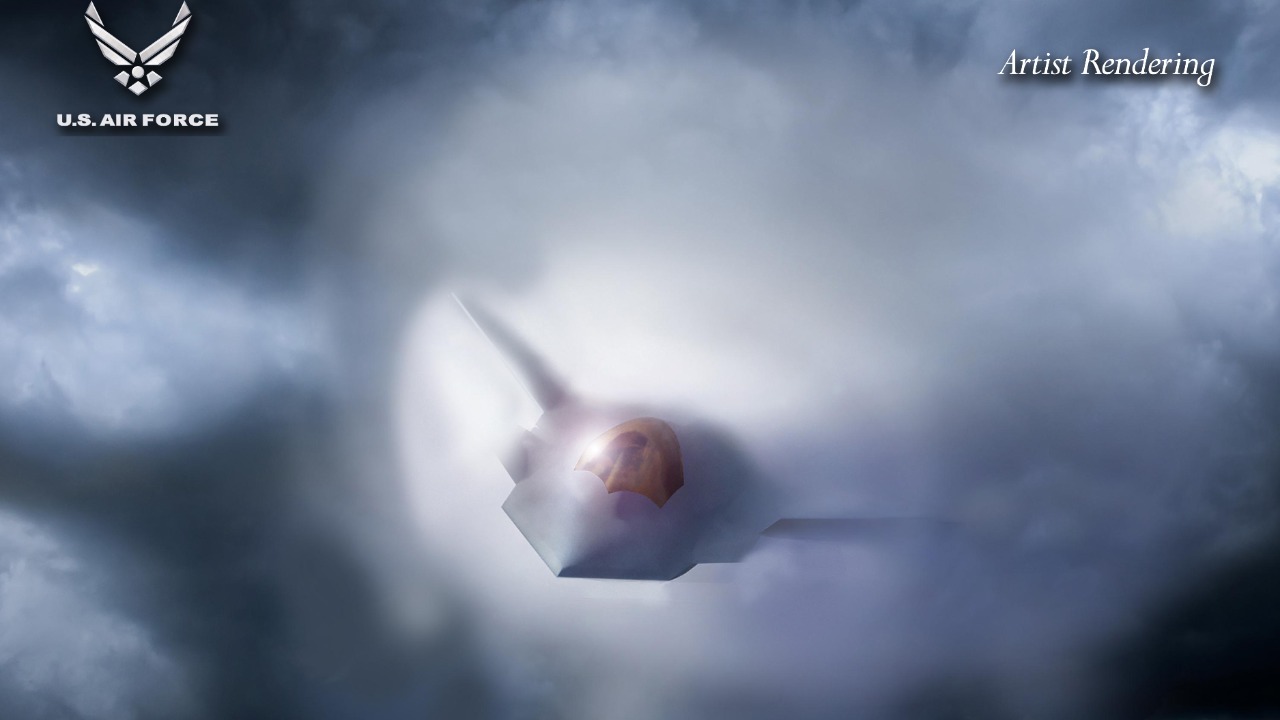
The U.S. Air Force’s next front-line fighter is still years from operational service, yet its very identity is already a political and cultural battleground. The aircraft widely known as the F-47, centerpiece of the Next Generation Air Dominance effort, now faces the prospect of a new designation before it ever takes to the sky. That debate reaches from the Oval Office to design shops and squadron patch boards, and it could shape how the public and the force itself understand the program.
At stake is more than a label on a data plate. The name attached to the F-47 will signal how the Air Force wants to frame its most ambitious combat aircraft since the F-22 Raptor, and how President Donald Trump intends to imprint his own narrative on a platform expected to define American airpower into the 2030s. The result will reveal how symbolism, tradition, and politics intersect in the era of sixth-generation fighters.
Presidential pressure on the F-47 designation
President Donald Trump has already injected himself directly into the naming debate, raising the possibility that the F-47 designation could change while the aircraft is still in development. In public remarks, he has suggested that the current label invites confusion with his status as the 47th president, a coincidence that critics and supporters alike have seized on as a talking point. According to detailed accounts of those comments, the president indicated that he had spoken with the Air Force about the issue and hinted that a different designation might better reflect the aircraft’s role and avoid any perception that the service was making a political statement by embracing the number 47.
Reporting on the internal discussion indicates that senior Air Force leaders have not announced any formal rebranding process, but they are now forced to navigate a sensitive balance between operational continuity and presidential preference. The F-47 label has already become embedded in planning documents, budget lines, and early industrial work, yet the commander in chief has publicly signaled that he is open to, and perhaps expects, a change. Analysts note that the service has previously adjusted designations for political and strategic reasons, and some observers see the current moment as a test of how much influence the White House will exert over the identity of the Air Force’s most important future combat aircraft, a point underscored in coverage of the president’s engagement with the Air Force.
NGAD ambitions and the industrial reality behind the label
Whatever name it ultimately carries, the aircraft now known as the F-47 sits at the heart of the Air Force’s Next Generation Air Dominance vision. The program is intended to produce a sixth-generation fighter that can succeed the F-22 Raptor in the most demanding air superiority missions, operating as the central node in a family of systems that includes advanced sensors, weapons, and collaborative drones. Earlier program decisions selected Boeing as the prime contractor, a choice that locked in industrial baselines and set the stage for a long production run that could extend to the end of the decade and beyond.
Senior leaders have already confirmed that the first airframe is under construction and that the initial prototype is expected to fly by 2028, a timeline that underscores how far the program has advanced behind the scenes even as the public debate fixates on its name. The Air Force chief of staff and other officials have described the F-47 as a central pillar of the service’s future force design, with the Next Generation Air Dominance construct intended to deliver a leap in survivability and lethality over legacy fighters. At key industry events, they have emphasized that the first “Next Generation Air Dominance” aircraft is already being built, reinforcing that the designation debate is unfolding in parallel with real hardware taking shape on factory floors.
Why the number 47 and the NGAD label matter
The choice of the number 47 for the fighter’s designation has taken on a symbolic weight that goes beyond the usual sequence of Air Force nomenclature. In the traditional system, the figure would simply reflect the next available slot in the fighter series, yet the overlap with President Trump’s position as the 47th president has fueled speculation about intent and optics. Some commentators have argued that the Air Force should avoid any appearance that it is honoring a sitting president through a program label, while others counter that changing the designation now would itself be a political act. Detailed analysis of the issue notes that the service has not publicly tied the number 47 to any presidential reference, but the coincidence has become impossible to ignore in Washington.
Alongside the numeric label, the NGAD tag has become a shorthand for the broader transformation the Air Force is pursuing. The phrase Next Generation Air Dominance signals a shift from single aircraft platforms to a networked ecosystem, and it has already shaped congressional debates and industry expectations. Commentators tracking the program’s evolution have pointed out that the Air Force’s own messaging, including references to the NGAD effort as the successor to the F-22 Raptor, has helped cement the F-47 label in public discourse. Any shift in designation would therefore require a careful communication strategy to avoid confusion among allies, lawmakers, and the defense industrial base that is already aligning around the current terminology.
The “Phoenix” question and what comes next
Beyond the alphanumeric code, the Air Force also faces decisions about the popular name that will accompany the fighter into service, and here the idea of a “Phoenix” has captured particular attention. A preliminary combat patch that surfaced in recent months depicted a flaming bird, prompting speculation that the service might christen the aircraft with that mythic title. The imagery suggested a narrative of rebirth and renewal for American air superiority, but closer examination of the patch and its context has led some analysts to caution that the design may not reflect the final official name. Coverage of the emblem has stressed that while the number 47 appears alongside the Phoenix motif, there are reasons to doubt that the Air Force has locked in that call sign for the sixth-generation fighter.