
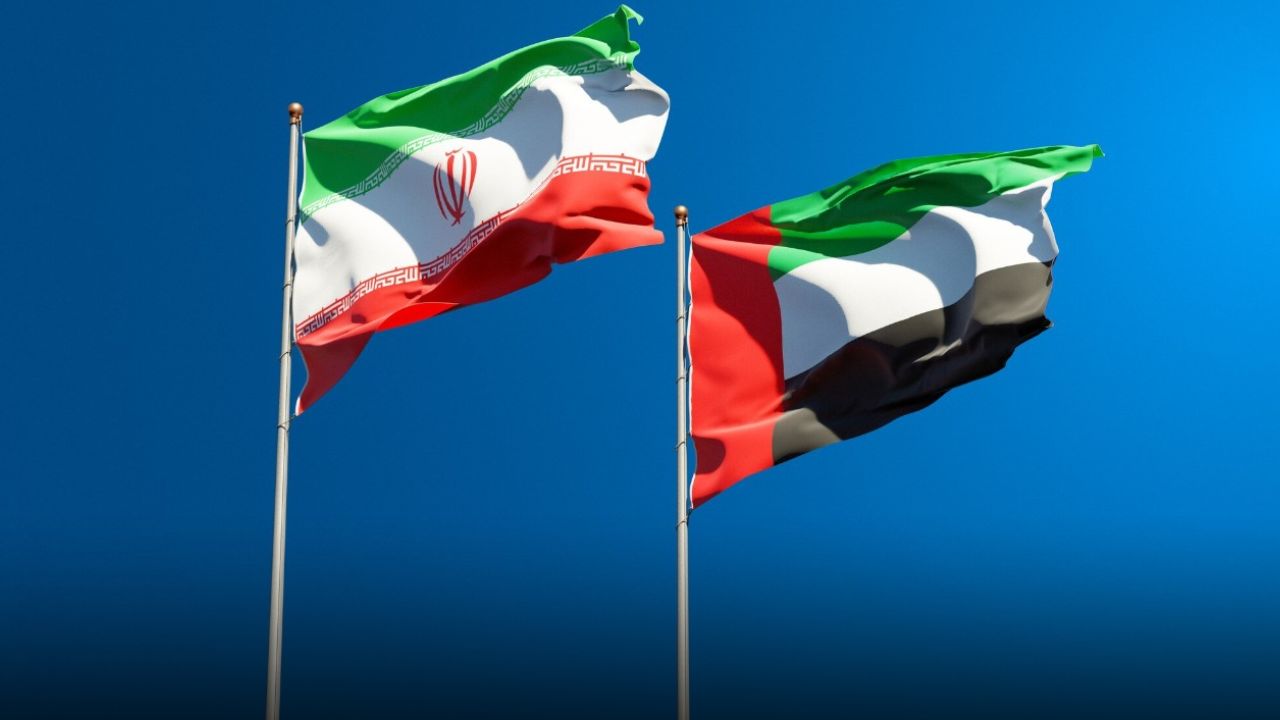
The United Arab Emirates has drawn a clear red line around its territory, declaring that no military strike on Iran will be launched from its skies, soil, or waters. The move signals a deliberate effort by the Gulf state to insulate itself from a potential regional confrontation while tensions around Tehran’s nuclear and regional activities remain high. It also underscores how frontline states are trying to manage the risks of escalation between larger powers and their rivals.
UAE’s pledge of non-participation in attacks on Iran
The United Arab Emirates has stated that it will not allow its airspace, territory, or territorial waters to be used for any hostile military action against Iran. Officials made the position public on a Monday in Jan, framing it as a firm policy line rather than a tactical message. The commitment covers not only direct Emirati involvement but also the use of its infrastructure by foreign militaries that might seek to launch strikes on Iranian targets.
According to detailed regional reporting, the United Arab Emirates communicated that its facilities and routes would not be available for any such operation, stressing that this applied to all parties contemplating attacks on Iran. One account of the announcement noted that the statement was delivered as part of a broader message that the country seeks to avoid entanglement in open conflict and wants to keep its territory out of any chain of escalation. By drawing this boundary, the leadership is signaling to both allies and adversaries that Emirati soil is not to be treated as a staging ground.
Regional coordination and Gulf states’ shared red lines
The Emirati decision is not occurring in isolation, but as part of a coordinated stance among key Gulf partners. Reports indicate that Saudi Arabia, the UAE, and Qatar informed both the United States and Iran that they would not allow Israel to use their airspace for strikes on Iranian territory, a message that was relayed in Jan as tensions mounted. This joint communication, described in one account that cited Saudi Arabia, UAE, together, underscores how Gulf capitals are trying to ring‑fence their own security from a confrontation that could involve Israel, Iran, and outside powers.
Another detailed account of the same message stressed that the United Arab Emirates said on Monday in Jan that it would not let its airspace, territory, or territorial waters be used for any hostile military action, and linked this to wider concerns about potential military escalation. That report, which highlighted the role of Saudi Arabia, UAE,, described Gulf leaders as wary of being drawn into a cycle of retaliation between Israel and Iran. By aligning their positions, these states are trying to reduce the risk that any one of them becomes the weak link through which a strike is launched, which could invite direct reprisals.
Strategic implications for US forces and regional military planning
The Emirati stance has immediate implications for the posture of United States forces in the Gulf, particularly those that have long relied on Emirati bases and waters. For decades, the Al Dhafra Air Base in Abu Dhabi has served as a central hub for the U.S. Air Force, hosting thousands of personnel and advanced aircraft. Reporting on the new restrictions notes that the UAE has now banned the use of its territorial waters and soil for strikes on Iran, a move that affects how assets like the USS Abraham Lincoln and other platforms could be used in any confrontation. One analysis highlighted how Al Dhafra Air in Abu Dhabi has been a crown jewel for the Air Force, and how the new policy constrains its use as a launchpad for any potential response against Iran.
Emirati officials have framed the decision as part of a broader doctrine that favors diplomacy over confrontation. One detailed report on the announcement stated that the UAE ruled out the use of its airspace or waters in military action against Iran and argued that dialogue is the only sustainable way to address regional crises. That account, which focused on the message that the UAE and Iran should resolve tensions through political channels, suggested that Abu Dhabi is trying to balance its security partnerships with a desire to avoid being seen as a direct participant in any attack. For U.S. planners, this means recalibrating assumptions about access and overflight rights that have been taken for granted in previous crises.
Aviation risks, Iranian airspace, and the UAE’s neutrality narrative
The Emirati decision also intersects with a wider pattern of aviation risk management in the region. Earlier in Jan, Iranian airspace closures forced carriers based in the UAE to reroute flights, raising complex duty‑of‑care questions for airlines and regulators. An analysis of those disruptions noted that aviation‑risk consultancy Safe Airspace has already classified Iranian airspace as high risk, drawing comparisons to the circumstances that led to the downing of Ukraine International Airlines Flight PS752. The report on Iranian airspace closure and its impact on UAE carriers underlines how any military escalation around Iran would immediately spill into civilian aviation and commercial logistics.
Against that backdrop, Emirati officials have been keen to present their refusal to host or enable strikes as part of a consistent neutrality narrative. One widely shared statement, circulated as a New update, quoted the United Arab Emirates saying on Monday that it would not let its airspace, territory, or territorial waters be used for any hostile military action and linked this to a commitment to neutrality and regional stability. The same message, which stressed that the United Arab Emirates wants to avoid escalation, dovetails with other reports that describe the UAE as seeking to reduce its exposure to U.S.–Iran tensions. In practice, that means limiting the use of its territory for offensive operations while still maintaining close security ties with Western partners and managing a complex relationship with Tehran.