
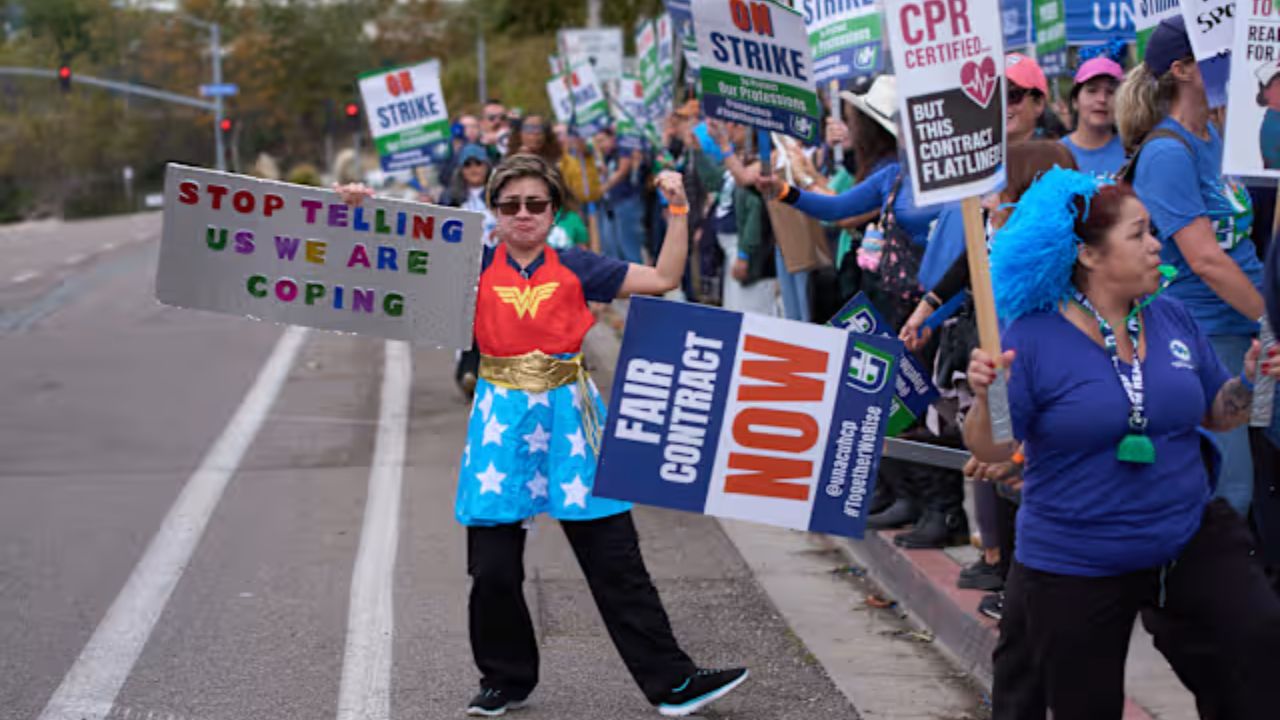
More than 31,000 Kaiser Permanente nurses and health care workers in California and Hawaii are walking off the job in what union leaders describe as a fight over safe staffing and fair pay. The walkout affects major cities and smaller communities, testing one of the nation’s largest health systems and its patients. As both sides trade accusations over responsibility and risk, the dispute has quickly become a defining labor clash in West Coast health care.
The strike reflects months of mounting frustration over staffing shortages, rising workloads, and stalled contract talks with Kaiser Permanente. Union leaders call staffing conditions unsafe, while Kaiser cites wage increases and active recruitment. The outcome will shape not only working conditions for tens of thousands of clinicians, but also the standard of care in a region where Kaiser’s footprint is hard to avoid.
Scale of the walkout across California and Hawaii
The current action involves more than 31,000 nurses and health care workers, a figure that underscores how deeply the conflict has penetrated Kaiser Permanente’s workforce. Organizers say the walkout stretches from Northern California through Southern California and into Hawaii, affecting hospitals and clinics that serve millions of members. Reports describe thousands of Kaiser workers leaving their posts as picket lines formed outside major facilities, signaling a coordinated push by bedside staff to confront management over working conditions.
In California, the walkout is concentrated in large urban hubs such as Los Angeles, the Bay Area, and San Diego, while in Hawaii it reaches from Oahu to other islands where Kaiser operates. Coverage of the action notes that 31,000 Kaiser Permanente health care workers are participating across California and Hawaii, with picket lines reported outside hospitals from Los Angeles to Honolulu. In the Bay Area, local coverage describes how regional staff are joining the Kaiser walkout that began earlier in the day, adding to the pressure on the system’s statewide operations.
Union demands: staffing, safety, and workload
At the heart of the dispute is a union campaign that casts the strike as a fight for patient safety as much as for wages. Organizers say over 31,000 nurses and healthcare workers in California and Hawaii demand enforceable staffing ratios, clear workload standards, and protections against chronic short staffing. A detailed breakdown of the dispute notes that Why 31,000 K Kaiser Permanente nurses are on strike is rooted in concerns about patient care, with Questions and Answers from union leaders emphasizing that safe staffing sits at the top of their list of concerns. Striking members of the United Nurses Associations argue that without binding guarantees, staffing promises will remain aspirational rather than enforceable.
On the ground, nurses describe a daily reality of caring for more patients than they believe is safe, juggling complex cases with limited support staff, and watching colleagues burn out or leave. One account from About 31,000 K Kaiser Permanente health care workers who went on strike Monday morning highlights demands around staffing shortages, workload standards and wages, with Union representatives accusing Kaiser of failing to address systemic gaps. Another report notes, a frontline worker, voiced frustration that resources are not reaching the bedside, reflecting a broader sentiment that staffing and safety requirements are being shortchanged in favor of cost control.
Kaiser Permanente’s response and contingency plans
Kaiser Permanente disputes the unions’ claims, highlighting a strong economic package and ongoing staff recruitment. In a formal statement, the organization said its latest proposal includes what it describes as the strongest compensation package in its national bargaining history, with a 21.5% wage increase over the life of the contract and assurances that patients remain its priority. Kaiser Permanente has also emphasized that it has been bargaining with UNAC, UHCP and the Alliance of Health Care Unions for more than seven months, portraying the strike as a breakdown in talks rather than a lack of engagement. A separate account notes that Kaiser’s bargaining team resumed talks with the union on Sunday but confirmed that the walkout would proceed, with Sunday statements stressing that the system is onboarding nurses and other staff.
To blunt the impact on patients, Kaiser has activated contingency plans that include redeploying managers with clinical backgrounds, bringing in temporary staff, and postponing some non-urgent appointments. Coverage of the strike notes that Kaiser Permanente nurses and health care workers in the San Diego area joined their counterparts across the state on Monday, prompting the system to reassure members that emergency departments and critical services would remain open. In Los Angeles, reports describe how California, Hawaii Kaiser workers went on strike while Kaiser Permanente sought to maintain operations in the Los Angeles region, underscoring the delicate balance between honoring labor rights and sustaining care. Another account of the broader action notes that 31,000 Kaiser Permanente health care workers have launched what is described as an open-ended strike, raising the stakes for how long contingency measures can realistically hold.
Impact on patients and the broader health care landscape
The immediate question for patients is how the walkout will affect access to care, particularly in regions where Kaiser dominates the insurance and provider market. Reports indicate Kaiser nurses and healthcare workers walked out Monday, forcing the system to prioritize essential services. In Northern and Southern California as well as Hawaii, detailed lists of affected facilities show that What is at stake includes emergency departments, medical-surgical units, and specialty clinics that serve a broad cross section of Kaiser members. For many patients, the strike is a reminder of how dependent their care is on a single integrated system and the people who staff it.