
Fierce clashes in northern Syria have pushed a senior Kurdish commander to demand that Washington move beyond statements and intervene decisively. As Syrian government forces press their advantage and local ceasefires fray, Kurdish leaders argue that only firm United States action can prevent a wider collapse of security and a potential humanitarian disaster. Their appeal comes at a moment when the balance of power on the ground is shifting rapidly, and the future of Kurdish self-rule hangs in the balance.
The commander’s warning is not only about battlefield setbacks, but about the unraveling of a fragile order that has kept ISIS remnants contained and millions of civilians under a tenuous form of protection. Kurdish officials say decisions made by Washington in the coming days will determine whether northeastern Syria moves toward a negotiated transition or collapses into competition among rival forces and extremist groups.
Escalating clashes and a plea for decisive US intervention
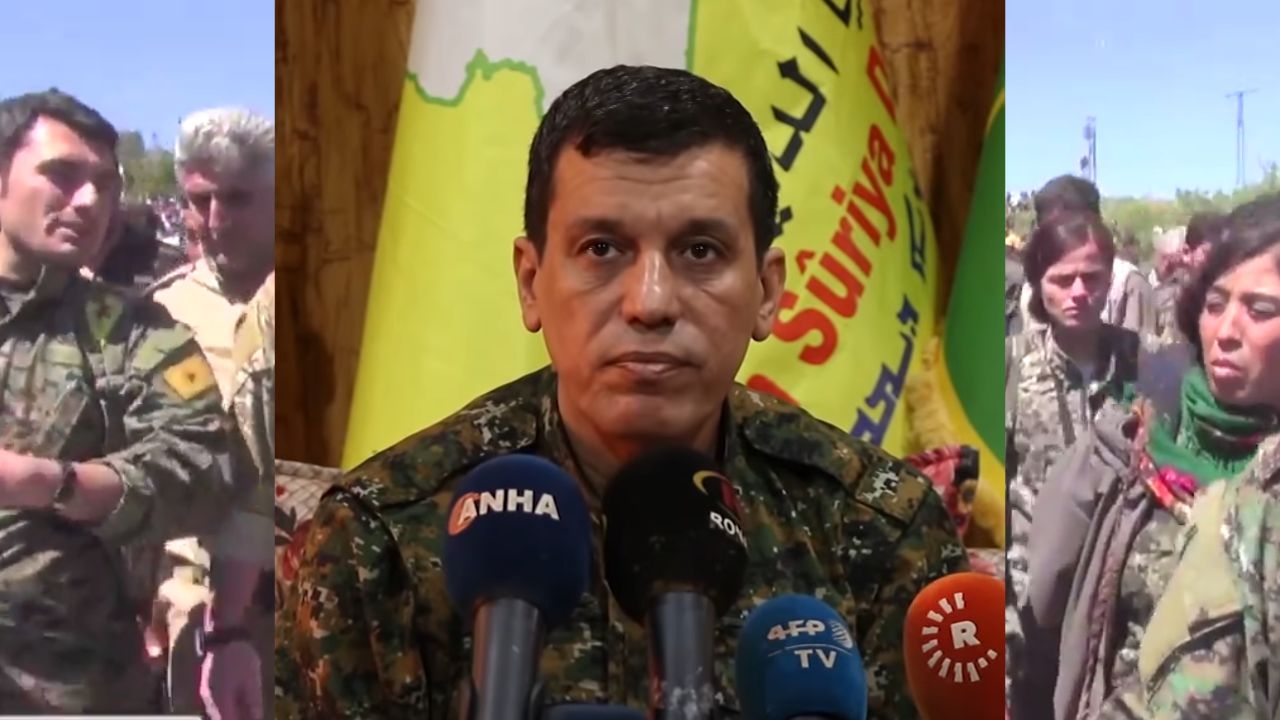
Kurdish officials describe the current surge in violence as a turning point, arguing that the United States must use its leverage to stop Syrian government advances and force a credible ceasefire. A Kurdish commander identified as Hamo has publicly urged Washington to “intervene forcefully” in the clashes in Syria, framing the situation as a test of American commitments to its local partners. He linked the deteriorating front lines to a sense of abandonment, warning that without US pressure the fighting could spiral further.
Hamo’s appeal reflects a deeper frustration with what Kurdish leaders view as a gap between American rhetoric and action. Despite calls from US Central Command to halt their advance, Syrian government forces have continued to push forward, underscoring the limits of verbal warnings. Kurdish commanders argue that only concrete steps, such as enforcing red lines around key towns or conditioning future engagement with Damascus, will convince the Syrian side to respect any truce. Their message to Washington is blunt: symbolic gestures are no longer enough, and the credibility of the United States as a security guarantor is on the line.
Ceasefires on a knife edge as Syrian forces press their gains
On the ground, the conflict has entered a volatile phase in which ceasefires are announced, broken, and then hastily reassembled. After an earlier truce collapsed, Syrian government forces and Kurdish-led units declared a new ceasefire, following the breakdown of a previous agreement. The announcement was presented as a chance to stabilize front lines and open channels for political talks, yet both sides appear to be maneuvering for advantage rather than preparing for a durable settlement. For civilians in contested areas, the stop-start nature of these truces has meant repeated displacement and constant uncertainty.
Syrian officials have framed their operations as a legitimate effort to restore state authority, while Kurdish representatives warn that this language masks an attempt to roll back hard-won autonomy. Government figures insist that linking law enforcement measures and the restoration of state legitimacy to the risk of renewed war is a mistake, arguing that their actions are aimed at reasserting control after the ceasefire was reached. Kurdish leaders counter that the pattern of offensives, followed by fragile truces, suggests Damascus is testing how far it can go without provoking a stronger international response, particularly from the United States.
Strategic stakes for Kurds as Damascus advances and offers integration
Behind the immediate clashes lies a larger strategic question about the future of Kurdish self-rule in Syria and the shape of any post-Assad transition. Analysts say the Kurds’ best opportunity lies in a negotiated settlement that recognizes their role in fighting ISIS and secures some decentralization in a post-Assad political framework. Yet the current offensive by Syrian forces risks foreclosing that path, as each new gain by Damascus reduces the bargaining power of Kurdish negotiators. The more territory the Syrian army retakes, the easier it becomes for officials in Damascus to insist on full reintegration on their own terms.
At the same time, the Syrian government has floated a formal framework that would bring Kurdish-led forces into the state’s military and security apparatus. According to an official statement, both sides have agreed in principle to integrate all SDF military and security forces into the Ministries of Defens, a move that would, on paper, end the dual power structure in the northeast. For Kurdish leaders, this proposal is both an opportunity and a trap: it could secure formal recognition and resources, but it might also dismantle the autonomous institutions they have built since the early years of the war. Their call for a stronger US role is partly an attempt to shape the terms of any such integration, rather than accept a unilateral blueprint from Damascus.
Security vacuum fears after ISIS prison loss and an ‘Oct. 7 moment’ warning
The urgency behind Kurdish appeals to Washington is amplified by a growing sense that the security architecture built against ISIS is starting to fray. The Kurdish-led Syrian Democratic Forces said they lost control of a prison holding ISIS militants and requested assistance from a US coalition base, but did not receive the intervention they believed was necessary to prevent a serious security catastrophe. That episode has become a symbol for Kurdish officials of what they see as a dangerous drift in US policy, from active partnership to distant oversight. Each breach in detention facilities or security lines raises the risk that ISIS cells could regroup in the chaos of renewed fighting.
Regional commentators have gone further, warning that the Kurds may be facing what some describe as an “Oct. 7 moment” in Syria, a reference to the shock of sudden mass violence and the fear of large-scale massacres. Over the last decade, the SDF worked with the United States to defeat ISIS in Syria, but now the SDF is facing major setbacks and Kurds fear they may be massacred if front lines collapse. Those fears are not abstract: they are rooted in memories of battles such as Kobane in 2014 and in the knowledge that communities seen as collaborators with foreign powers often pay a heavy price when alliances shift. For Kurdish leaders, the message to Washington is that a failure to act decisively now could not only unravel years of counterterrorism gains, but also leave an ally exposed to catastrophic violence.
US leverage, regional calculations, and what ‘stepping in hard’ could mean
Behind the Kurdish commander’s plea lies a complex web of regional calculations that will shape how far Washington is willing to go. Kurdish officials argue that the United States still has significant leverage, from its military presence on the ground to its influence over reconstruction funds and diplomatic recognition. They point out that when Hamo and other Kurdish commanders call for the US to step in hard, they are not necessarily asking for large new deployments, but for a clear strategy that ties any engagement with Damascus to respect for Kurdish rights and to the protection of civilians. In their view, calibrated pressure on Syrian and allied forces, combined with support for local governance, could still prevent a descent into all-out war.