
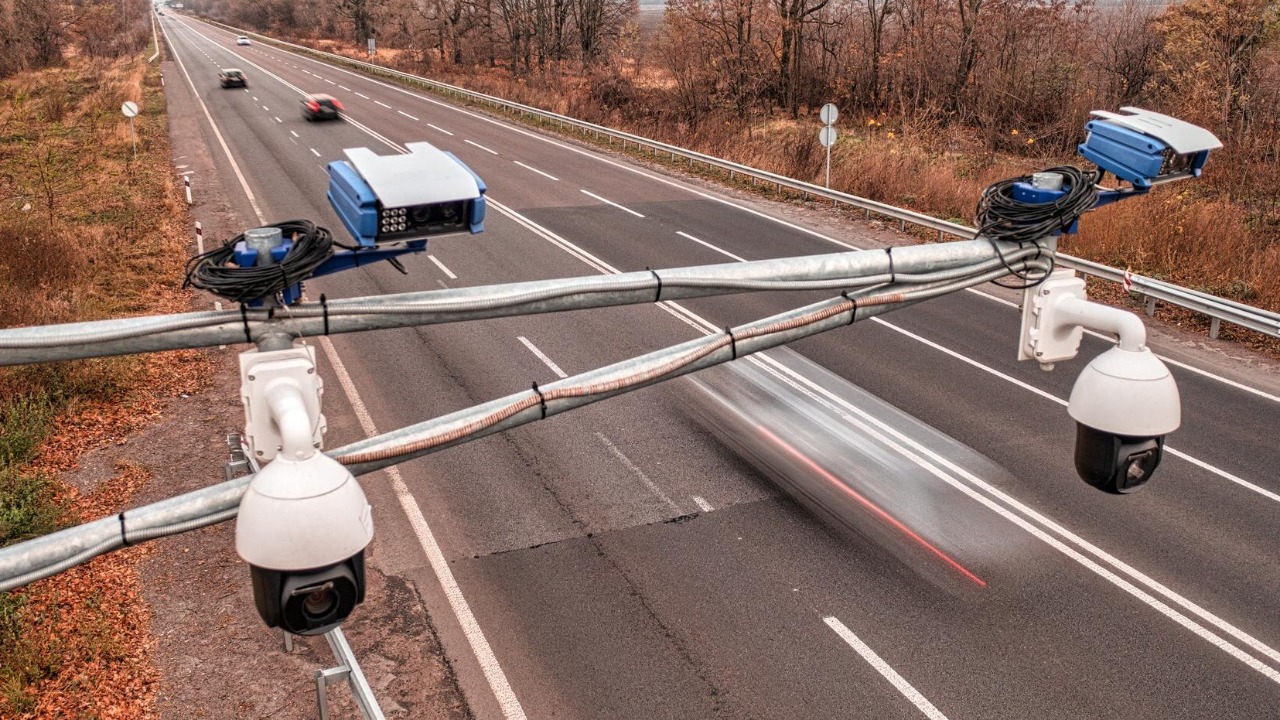
Across highways and city streets, a new kind of traffic cop is taking shape in metal gantries and roadside poles. Artificial intelligence is now trained to read drivers’ hands, faces, and seat belts, turning a quick glance at a phone into hard evidence that can trigger a ticket. The shift is redefining how distracted driving is policed, and it is arriving faster than many motorists realize.
Instead of relying on an officer’s line of sight, these systems use high-resolution cameras and machine learning models to scan every passing vehicle, flagging suspected violations in real time. Supporters frame the technology as a necessary response to stubborn crash statistics, while critics see the early architecture of an automated surveillance grid built around everyday driving.
How AI traffic cameras actually “see” your hands
The new generation of roadside cameras does more than capture license plates. Systems deployed in parts of America use elevated camera rigs that peer through windshields and side windows, then feed those images into software that evaluates where a driver is looking, whether a phone is in hand, and if a seat belt is fastened. One widely used platform assigns each detection a confidence score, so a clear shot of a driver staring at a handset can be treated very differently from a blurry frame where the algorithm is unsure, with only the strongest matches passed along for potential citations, according to detailed reporting on AI analysis. The result is a system that can scan thousands of cars per hour, looking for the telltale posture of a driver with one hand on the wheel and the other wrapped around a smartphone.
In practice, the technology is closer to industrial quality control than science fiction. Cameras capture a burst of still images as each vehicle passes, then neural networks trained on labeled examples search for patterns such as fingers curled around a rectangular object, a lap held at an odd angle, or the diagonal line of a shoulder belt. In some pilots, those images are relayed to human reviewers who confirm or reject the machine’s judgment before a ticket is mailed, a workflow that mirrors how Everything in financial surveillance has shifted toward AI triage followed by human oversight.
From Arkansas to Florida, a quiet rollout across U.S. roads
What began as a handful of trials is now spreading across multiple states. In the South, work zone cameras in Arkansas are being upgraded so they can spot drivers who pick up a phone while passing orange cones, a change that state transportation officials have promoted as a way to protect road crews. A separate report on America’s broader deployment notes that the Arkansas Department of Transportation is part of a national wave of agencies adopting systems that can watch drivers’ hands and automatically flag suspected violations, a trend detailed in coverage of America and its new enforcement tools.
Further north, pilots in Minnesota have placed AI-enabled cameras along Highway 7, where the system captures suspected phone use and relays the images to officers stationed nearby within about five seconds, according to a detailed description of the Highway operation. Another Minnesota program uses similar technology to identify vehicles parked illegally in bus lanes, showing how the same core tools can be repurposed for different traffic problems, as outlined in the broader review of AI enforcement in five states.
Global testing ground, from Australia to the United Kingdom
While U.S. drivers are only beginning to encounter these systems, motorists in other countries have already lived with them for years. In Australia, authorities in New South Wales and Queensland have rolled out what was described as a world first AI camera network to catch drivers on their phones, a program that has since been implemented on a wide scale according to detailed coverage of the rollout in Dec. Legal experts there warned early on that reversing the presumption of innocence, by treating every captured image as potential evidence, could have lasting consequences for privacy and due process.
In Europe, the United Kingdom has become a major testing ground. Almost half of U.K. police forces have tried AI-powered traffic cameras that use an Acusensus system to scan for phone use and seat belt violations, assigning each detection a confidence level before a human reviewer decides whether to proceed, according to a detailed account that notes how almost half of forces have participated. A separate report on national policy explains that images flagged by the software are not treated as official offenses until a person reviews them, and that drivers caught using mobile devices can face fines and penalty points under rules that have evolved since phone-detecting cameras first debuted in 2021, as outlined in a detailed look at how Drivers are sanctioned.
Safety gains, legal questions, and the French experiment
Supporters of AI enforcement point to early safety data. In one British region, new Acusensus cameras deployed across Greater Manchester and parts of Cornwall have been credited with exposing widespread phone use and seat belt non compliance, while the number of people killed or seriously injured on the roads in that wider area fell from 790 in 2022 to 678 in 2024, figures reported in a detailed review that described the system as “phenomenal” and highlighted the precise drop from 790 to 678. In Manchester, local authorities have promoted AI cameras that can identify both phone use and seat belt non-compliance, with Transport for Greater Manchester backing a program that Gemma Sherlock reported on for BBC News Manchester, a project that aims to change behavior by making detection far more likely, according to coverage of Gemma and her reporting.
Yet the same capabilities raise sharp legal questions. In Australia, one legal analysis of new AI traffic camera rules explains that the software will analyse each photo to search for illegal mobile phone use or missing seat belts, and that if no offense is detected, the image will be deleted, a safeguard meant to limit unnecessary retention according to a detailed breakdown of how Oct rules work. In France, authorities are preparing new speed cameras powered by artificial intelligence that will not only track speed but also distance between vehicles, seat belt use, and phone use, with penalties that can include fines and a 3-point deduction from a driver’s license, as described in a detailed preview of the New French system.
What this means for everyday drivers and the road ahead
For drivers, the most immediate change is that enforcement is becoming both stricter and more automated. A national overview of 2026 regulations notes that hands-free rules are tightening as grace periods expire, with “National Traffic Law Trends in 2026” highlighting how Hands Free Driving Laws Are More Strictly Enforced across the country. In parallel, America’s new AI traffic cameras are being framed as tools that can watch drivers’ hands and catch phone use without waiting for an officer to witness the behavior, a shift described in detail in a report on how Jan deployments will work.