
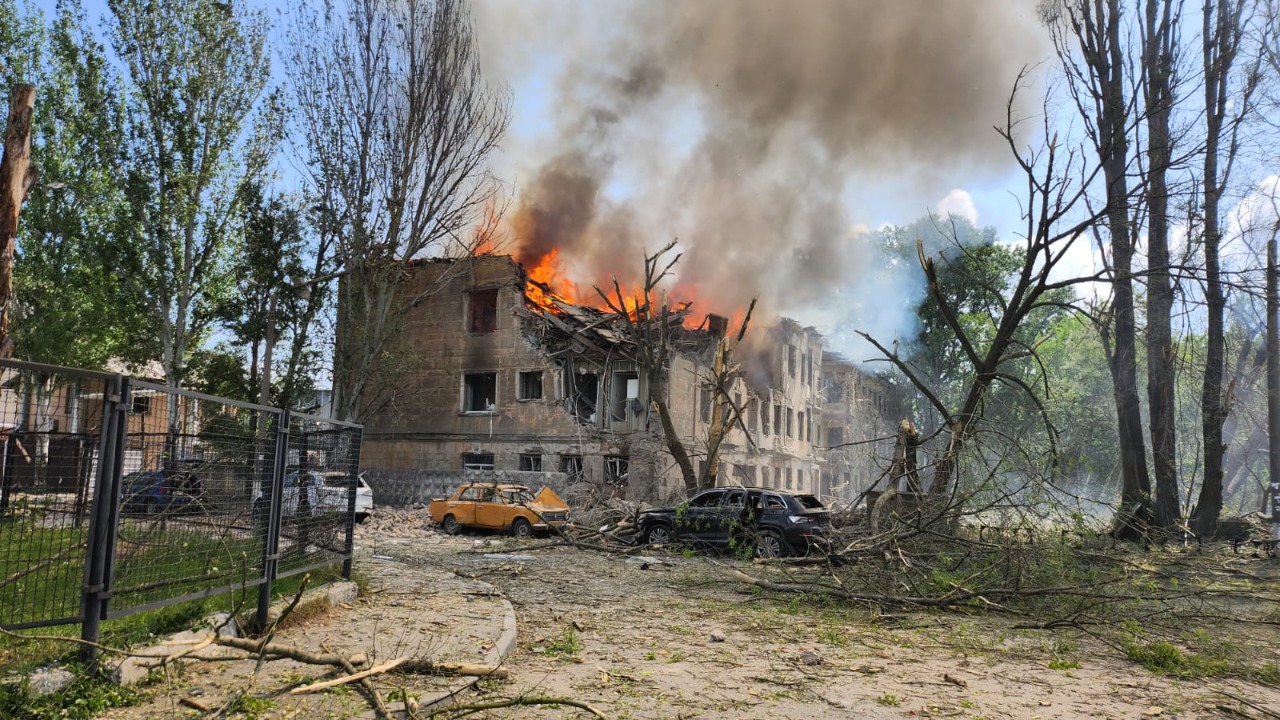
Russian forces have again plunged Kyiv into darkness and cold, using a dense wave of drones and missiles to rip through the capital’s power and water systems. The overnight barrage left apartment blocks unheated, taps dry on the city’s left bank, and large parts of the metropolis struggling to function in subzero temperatures. Ukrainian officials framed the assault as a deliberate attempt to break civilian resilience by turning basic utilities into a battlefield.
Emergency crews worked through the morning to restore electricity, heating, and water, but the scale of the damage underlined how vulnerable Ukraine’s energy grid remains after repeated strikes. As Kyiv residents queued for drinking water and crowded into warming centers, diplomats warned that the attack was not only a humanitarian crisis but also a test of whether international support can keep pace with Russia’s evolving campaign against civilian infrastructure.
Coordinated an overnight assault on Kyiv’s grid
Ukrainian authorities described a complex overnight operation in which Russia combined drones and missiles to overwhelm air defenses and hit key energy nodes around Kyiv. Military officials said more than 300 attack drones and dozens of missiles were launched at power facilities, with some penetrating defenses and striking their targets. The pattern fits a broader Russian tactic of saturating Ukrainian skies with cheap unmanned aircraft to expose gaps, then sending in heavier munitions against exposed substations and transmission lines.
Regional officials around Kyiv reported that the combined strikes cut electricity to large parts of the city and surrounding communities, forcing grid operators to impose emergency shutdowns to stabilize remaining capacity. Reporting from Ukraine’s capital region described entire districts waking up without power after the night of explosions, with repair teams dispatched as soon as air raid alerts ended. Officials stressed that the strikes were aimed squarely at energy infrastructure rather than at front-line positions, underscoring Russia’s focus on degrading the grid as winter temperatures fall.
Heat, water, and electricity were cut to thousands of homes
The most immediate impact of the attack was felt inside Kyiv’s apartment blocks, where radiators went cold, and water pressure dropped or disappeared. Mayor Vitali Klitschko stated that 5,635 apartment buildings in the capital were left without heating after the strikes, a figure that captures how deeply the assault cut into daily life. He added that Almost 80% of the city’s consumers lost access to centralized heat at the peak of the outage, forcing many residents to rely on electric heaters or to seek shelter in public buildings that still had power.
Water supplies were also hit, particularly on the left bank of the Dnipro River, where pumping stations and distribution lines depend on stable electricity. City authorities said that water service on the left bank was disrupted after the overnight barrage, leaving residents to queue at tanker trucks or collect snow to melt for basic needs. National officials reported that Much of Kyiv was without running water and that emergency power cuts were extended to nearby regions as grid operators tried to prevent a wider collapse. The outages followed earlier emergency shutdowns that had already strained Ukraine’s energy system during a spell of intense Cold weather.
Targeting nuclear-linked infrastructure and a stressed grid
Beyond the immediate blackouts, Ukrainian analysts warned that Russia is methodically probing the backbone of the national grid, including facilities linked to nuclear power. A detailed account from the capital said that nuclear power plant substations were among the targets in the latest wave, a choice that threatens not only Kyiv but also the stability of electricity flows across Ukraine. While there were no reports of direct damage to reactor cores, strikes on substations and high voltage lines can force reactors offline or limit their output, compounding shortages during peak demand.
Officials and energy experts have described a pattern in which Russia hits thermal plants, hydroelectric dams, and now facilities tied to nuclear generation to stretch repair crews and spare parts to the breaking point. Earlier in Jan, the Energy Ministry had already warned of Emergency power cuts in Kyiv and other regions after earlier missile strikes, noting that repeated attacks were eroding the grid’s resilience. The latest barrage, which also prompted alerts in western regions such as Rivne, reinforced fears that the campaign is designed to keep Ukraine in a state of rolling blackouts for the rest of the winter.
Humanitarian strain and diplomatic fallout
The humanitarian consequences of the latest strikes were immediate and stark. With temperatures well below freezing, families in high-rise buildings without power or heat faced difficult choices about whether to stay put or seek shelter elsewhere. Local authorities opened warming centers and urged residents to conserve electricity where it remained available, while Foreign Minister Sybiha appealed for urgent international assistance to repair damaged infrastructure and bolster air defenses. Humanitarian agencies warned that prolonged outages could disrupt hospitals, schools, and public transport, deepening the social and economic toll on Ukraine’s capital.
The strikes also reverberated in diplomatic circles, where officials are trying to sustain momentum in talks aimed at a negotiated end to the war. Reporting from the front noted that units from Ukraine’s 24th Mechanized Brigade continued to fire 2S1 Gvozdika howitzers even as the capital struggled with outages, a reminder that the war’s front lines and its energy front are tightly linked. Analysts suggested that by battering Kyiv’s utilities at the same time as political leaders discuss peace frameworks, Russia is signaling that it intends to negotiate from a position of pressure, not parity. For residents shivering in dark apartments, that strategic message is experienced as a daily fight to keep the lights and the heat on.