
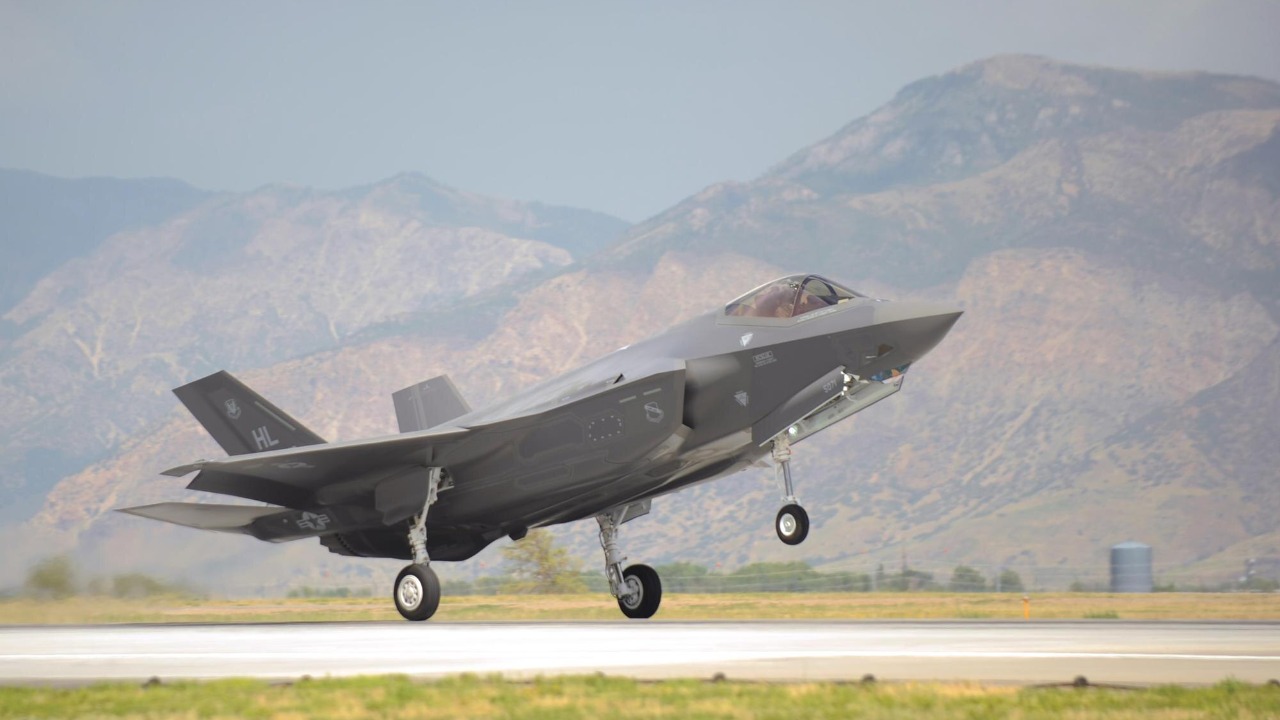
The lightning-fast operation that toppled Nicolás Maduro’s grip on Caracas did not begin with commandos at a palace gate, but with invisible jets dismantling his ability to see or shoot back. U.S. Marine Corps F-35B squadrons methodically stripped away Venezuela’s air defenses and combat aircraft, clearing the sky so the broader intervention could unfold in barely a few hours. In doing so, they offered a stark preview of how airpower, data fusion and stealth now combine to “pave the way” for regime-changing operations in contested airspace.
The opening blow: F-35Bs and the race for air dominance
When the United States moved against Venezuela earlier this year, the first decisive contest was for control of the air. The 2026 United States intervention in Venezuela, which began with coordinated strikes and the capture of Maduro, hinged on whether Marine Corps F-35B units could blind and suppress the country’s integrated defenses before Venezuelan pilots ever reached their cockpits. According to accounts of the United States campaign, planners treated air dominance not as a supporting task but as the central precondition for every subsequent move on the ground and at sea.
That logic shaped the opening wave of the 2026 United States strikes in Venezuela, when precision attacks hit radar sites, command nodes and key air bases almost simultaneously. Reports on the Venezuela and strikes describe explosions across the country in a compressed window, a tempo designed to overwhelm operators before they could coordinate a coherent response. In that environment, the F-35B’s ability to penetrate early, map the battlespace and pass targeting data in real time turned it into the spearhead of a campaign that sought to end the air war before Venezuela’s leadership fully understood it had begun.
Crippling Venezuela’s air force and S-300 shield
The most immediate task for the Marine Corps was to neutralize Venezuelan combat aircraft that might threaten U.S. formations or attempt to flee. Analysts describe how Marine Corps F-35B units hunted the country’s Su-30MK2 fleet, using their sensors to detect and track these fighters long before Venezuelan crews could detect the stealth jets in return. In North America, Western Europe and Oceania, air forces have spent years gaming out how to counter such fifth generation tactics; Venezuela confronted them in real combat when Marine Corps pilots used their F-35B radars and electronic support measures to stalk and destroy Su-30MK2s that tried to scramble.
At the same time, the F-35B and its partners went after the backbone of Venezuela’s ground-based air defenses, including the S-300 batteries that formed the core of the country’s IADS. A detailed reconstruction of how F-35 Lightning II aircraft and EA-18G Growlers dismantled this network describes a sequence in which stealth platforms located emitters, passed coordinates to jamming and strike assets, and then closed in to finish off surviving launchers. That combination of Lightning II stealth, Growlers and other enablers compressed what might once have been a prolonged suppression campaign into minutes, leaving Venezuela’s IADS unable to contest the skies over its own capital.
Enabling the Maduro raid: from Hawkeyes to Marine Corps strike packages
With the air defense grid collapsing, the focus shifted to enabling the raid that would physically remove Maduro from power. Accounts of the operation describe a meticulously choreographed air picture in which Unmanned platforms and E-2 Hawkeyes provided wide-area surveillance while strike and transport aircraft launched from roughly 20 different bases on land and at sea. In that architecture, the F-35B functioned as both a sensor and a shooter, feeding targeting data to the Hawkeyes and Unmanned systems while also prosecuting time-sensitive threats that emerged along the route to Caracas, a role detailed in reconstructions of the Hawkeyes-supported mission.
The tempo of the raid underscored how thoroughly air dominance had been secured. One account describes how the operation to seize Maduro in Venezuela, months in planning, unfolded in roughly two and a half hours from first strikes to the moment U.S. forces had the Venezuelan leader in custody. That compressed timeline, captured in reporting on Months of preparation, was only possible because Marine Corps F-35Bs had already dismantled the most capable Venezuelan units that might have intercepted helicopters or tiltrotors inbound to the target. By the time ground teams closed on Maduro, the airspace above them had been sanitized to a degree that would have been difficult to imagine in earlier interventions.
Strategic fallout: Venezuela, Washington and the future of stealth
The removal of Maduro has left Venezuela in a state of profound uncertainty, and the role of airpower in that outcome is now central to debates about legality and precedent. Legal scholars and regional experts have noted that the arrest of Maduro by U.S. forces raises complex questions about sovereignty, the use of force and the Trump administration’s evolving doctrine for regime change. Analyses of what comes next for Venezuela point out that President Trump and his advisers now own not only the tactical success of the operation but also the long-term responsibility for stabilizing a country whose leadership was removed in a matter of hours by overwhelming U.S. power.
Inside the Pentagon and among allies, the campaign has already begun to reshape thinking about the F-35 program and future force structure. Commentators who have examined how the U.S. Military’s F-35B Stealth Fighter Made Venezuela Pay a Big Price argue that the aircraft’s performance will harden support for Marine Cor aviation concepts that treat the F-35B as a forward-deployed node in a larger kill web. Analyses framed as Key Points and Synopsis on how the Marine Corps F-35 Stealth Fighter Made Venezuela Pay a Big Price emphasize that the number 35 is now synonymous with a platform that can both neutralize high-end threats and enable rapid regime-change operations. Reporting on how Marine Corps F-35s neutralized Venezuelan air force assets, including key Venezuelan bases and aircraft, reinforces that perception, while broader assessments of how Lockheed Martin F-35 fighters and other systems shifted the defense narrative suggest that the Venezuela operation will echo through budget and policy debates for years, a point underscored in coverage of Lockheed Martin programs.
For partners in North America, Western Europe and Oceania, the intervention has become a live case study in how fifth generation Aircraft and Anti systems interact in real combat, and how Marine Corps aviation can be used to achieve political objectives at speed. Analysts who have revisited the campaign’s Synopsis and Key Points argue that the Stealth Fighter Made Venezuela Pay a Big Price not only in destroyed hardware but in the collapse of a deterrent posture that had relied heavily on Russian-built systems. As I weigh those assessments, I see a throughline: the F-35 family, and particularly the Marine Corps F-35B, did more than win an air battle. It rewrote the script for how the United States uses airpower to unmake hostile regimes, a script that will now inform every adversary watching from afar and every planner in Washington who must decide when, and whether, to reach for that capability again.