
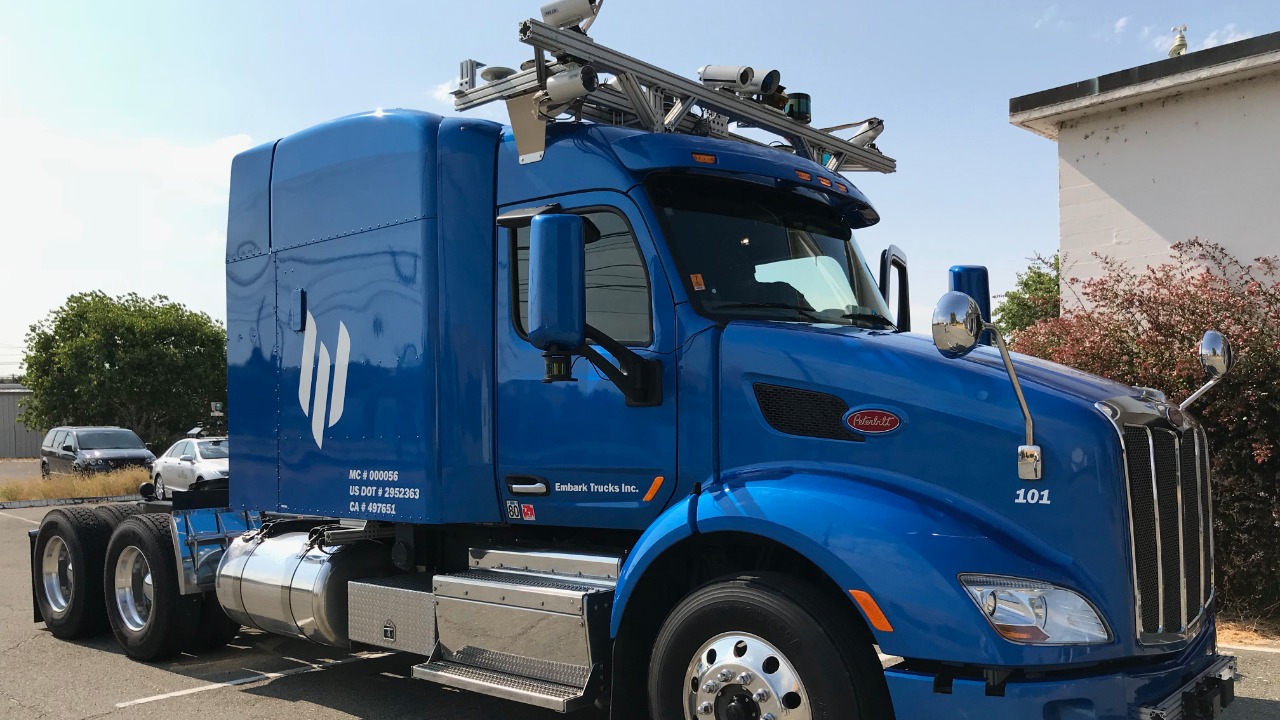
Bosch is putting its weight behind Kodiak AI in a bid to turn experimental self-driving trucks into a scalable, production-grade business. The new strategic agreement centers on building and supplying hardware and sensor systems at volume, a shift that could move autonomous freight from pilot projects to regular operations on U.S. highways. For both companies, the deal is a test of whether carefully engineered “physical AI” can meet the reliability and cost demands of long-haul trucking.
Bosch’s strategic bet on autonomous freight
Bosch has spent years positioning itself as a key supplier for advanced driver assistance, but its latest move with Kodiak AI signals a deeper commitment to fully driverless trucking. At CES, Bosch highlighted new agreements focused on artificial intelligence and autonomy, including partnerships with Microsoft and Kodiak, as it targets growth in higher-margin software and automated driving systems. Management framed these deals as part of a broader strategy to embed Bosch technology at the core of next-generation vehicles, rather than remaining a commodity parts provider, a shift underscored by the company’s decision to publicly spotlight its work with Kodiak on autonomous trucks at CES.
The Kodiak AI agreement gives Bosch a direct path into long-haul freight, a segment where autonomy promises clear economic gains and relatively predictable highway environments. Bosch executives have described the need to move from one-off prototypes to thousands and eventually hundreds of thousands of vehicles, a scale that demands industrialized hardware, robust sensor integration, and advanced steering technologies. The new platform unveiled with Kodiak at CES is designed with that trajectory in mind, positioning Bosch not just as a supplier of components, but as a co-architect of the full autonomous truck stack.
Inside the Kodiak–Bosch hardware and sensor platform
The core of the partnership is a plan to scale a standardized hardware and sensor solution that can be installed on new trucks at the factory or retrofitted to existing fleets. Kodiak AI and Bosch are working on a production-grade package that includes cameras and radar sensors, integrated with advanced steering technologies that can support continuous autonomous operation on highways. The companies describe this as a single, repeatable system that truck makers can build into their production lines or that fleet operators can add later, reducing the complexity and cost of deploying self-driving capability across large numbers of vehicles, as detailed in their strategic agreement.
For Kodiak, which has focused on a modular “sensor pod” approach, Bosch’s manufacturing and engineering muscle is a way to turn that concept into a repeatable product. The companies emphasize that scaling physical AI takes more than software, pointing to the need for tightly integrated hardware, firmware, and software interfaces that can be validated and supported over long service lives. By aligning on a common architecture for sensors, compute, and actuation, Kodiak and Bosch aim to give truck builders and fleets a clear path from pilot vehicles to full commercial deployment, a goal reflected in the scaling physical AI messaging around the platform.
From pilots to production: how Kodiak plans to scale

Kodiak has already shown that its technology can operate in real freight networks, but the Bosch deal is about turning those early wins into a repeatable business. The company has delivered at least eight self-driving trucks to Atlas Energy as part of an initial 100-truck order, a concrete example of how shippers are beginning to commit to autonomous capacity. To fulfill that kind of order at scale, Kodiak needs a supply chain that can reliably produce sensor suites, steering systems, and other critical components in volume, which is where Bosch’s global manufacturing footprint becomes central.
The partnership is structured to let truck makers either integrate the autonomous hardware directly into new models or retrofit existing vehicles, giving fleets flexibility in how they adopt the technology. Reporting on the agreement notes that Bosch and Kodiak AI are aligning hardware, firmware, and software interfaces so that the same platform can be deployed across different truck brands and configurations without bespoke engineering for each unit. That approach, described in detail in coverage of Kodiak AI’s plan to scale its autonomous truck platform, is intended to compress deployment timelines and reduce per-truck integration costs.
Why Bosch’s backing matters for the trucking industry
For truck manufacturers and large fleets, Bosch’s involvement reduces some of the perceived risk of betting on a relatively young autonomous driving company. Bosch already supplies critical systems such as braking, steering, and sensors to many commercial vehicle platforms, and its move to integrate autonomous hardware and sensor solutions with those existing components offers a more familiar path to adoption. Industry coverage of how Bosch and Kodiak Robotics plan to scale autonomous trucks notes that the companies are pitching a solution that can plug into current production processes, rather than forcing manufacturers to redesign vehicles around a startup’s bespoke hardware.
The collaboration also sends a signal that major suppliers see a viable commercial path for driverless freight, not just experimental technology demonstrations. By unveiling a platform at CES that will include cameras and radar sensors and integrate advanced steering technologies, Bosch and Kodiak are effectively telling truck makers that the building blocks for autonomy are ready to move into mainstream product planning. Reports on the platform unveiled at CES emphasize that the goal is to support deployment across thousands and eventually hundreds of thousands of trucks, a scale that could reshape how long-haul capacity is planned and priced.
Competitive stakes and the road ahead for self-driving trucks
The Bosch–Kodiak alignment comes as multiple players race to define the standard stack for autonomous trucking, but it stands out because it pairs a focused self-driving specialist with a global Tier 1 supplier. Kodiak AI brings the on-road experience, including commercial runs and customer orders such as the Atlas Energy deal, while Bosch contributes deep expertise in sensors, steering, and large-scale manufacturing. Coverage of how Kodiak AI teams up with Bosch to scale hardware for self-driving trucks underscores that the companies are explicitly targeting both factory integration and retrofit markets, a dual track that could accelerate adoption relative to rivals that focus on one channel.
There are still significant hurdles, from regulatory approvals to proving long-term reliability and safety across varied routes and weather conditions, and those challenges remain unverified based on available sources. Yet the structure of the Bosch–Kodiak partnership suggests a maturing phase for autonomous trucking, where the focus shifts from proving that self-driving trucks can work to proving that they can be built, serviced, and supported at industrial scale. By tying its autonomous ambitions to a partner with established relationships across the commercial vehicle ecosystem, Kodiak AI is betting that Bosch’s backing will help turn its self-driving technology into a standard option on future trucks, rather than a niche experiment confined to a handful of pilot corridors.