
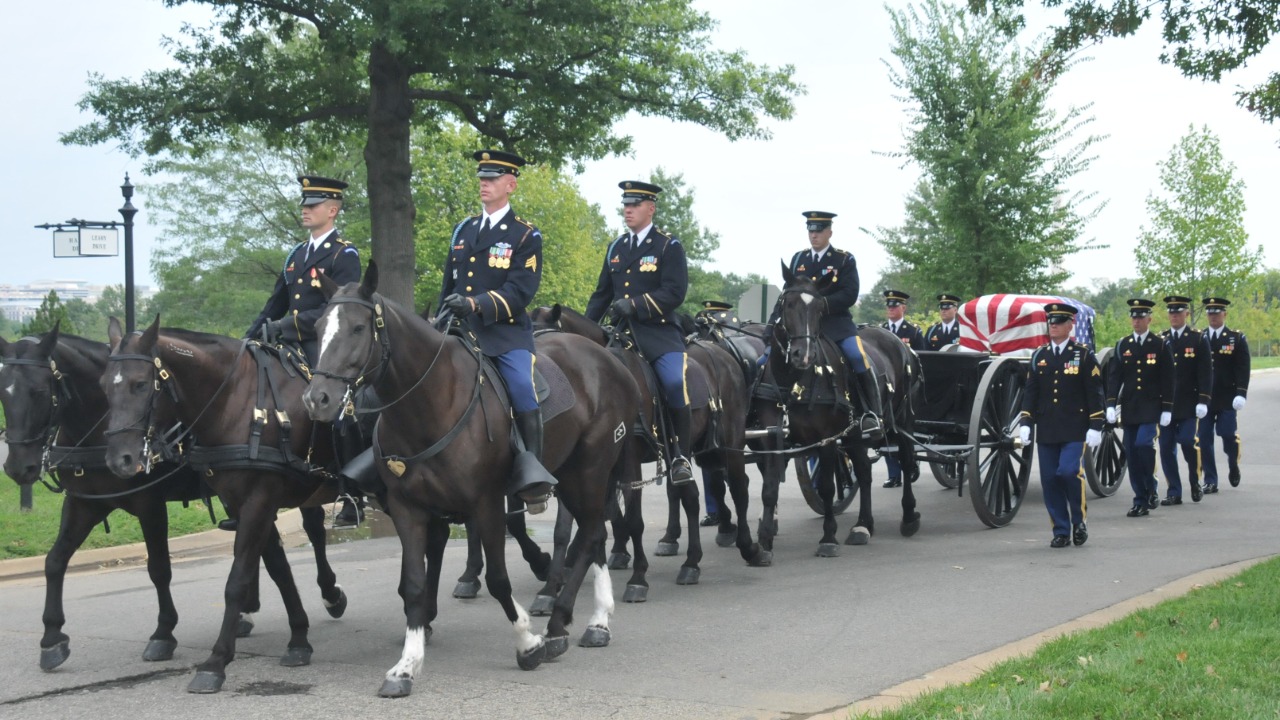
The Army’s plan to retire most of its ceremonial horse units looked, for a moment, like the end of a storied chapter in U.S. military history. Instead, a partial reversal has kept cavalry horses at key posts and revived the caisson mission at Arlington, turning a cost-cutting move into a broader debate over tradition, public trust, and how a modern force defines readiness. The decision to preserve horses at Fort Hood and Fort Riley, and to reintegrate them into funeral honors, shows how public pressure, internal reassessment, and hard lessons about animal care reshaped what once seemed like a settled choice.
From full drawdown to a selective reprieve
When The Army first announced it would retire most of its ceremonial horse programs, the message was blunt: the service needed to focus on “warfighting” and free up money and manpower. Reporting on the closure of five equine programs described a plan to save about 2 million dollars annually by shutting units that were explicitly ceremonial, not operational. Senior leaders at five forts were given one year to transfer, adopt out, or donate the horses under their command, according to guidance cited in a directive to senior commanders. The U.S. Army Medical Center of Excellence later summarized the same plan, noting that the Army was retiring most ceremonial horse programs, including units at Fort Irwin, Fort Huachuca, Fort Riley, and Fort Sill, and that a dedicated adoption program would manage the transition.
The logic was straightforward on paper. The US Army, as one report put it, was closing five equine programs that were all ceremonial units, including those at Fort Irwin in California, Fort Huachuca in Arizona, Fort Riley in Kansas, Fort Sill in Oklahoma, and Fort Hood in Texas, to reallocate resources to higher priority missions. The adoption guidance framed the move as a managed drawdown, with assurances that horses would be placed in suitable homes and that soldiers would be reassigned to new duties. Yet even as the plan advanced, it collided with a powerful counterargument: that ceremonial horses, while not part of modern combat formations, still carried out missions that mattered to the public, to veterans, and to the Army’s own sense of identity.
Why Fort Hood and Fort Riley were spared
The clearest sign that the initial plan had gone too far came when The Army reversed course at two of the five posts. At the end of the year, the service announced that horses would stay at Fort Hood in Texas and Fort Riley in Kansas, even as other ceremonial units continued to wind down. Coverage of the shift noted that the Army had previously planned to phase out its Military Working Equid program at five bases, but later decided to keep horses at these two locations. In a detailed account of the change, the Army said it would retain the equid program at Fort Riley and Fort Hood, and that the horses would continue to support cavalry demonstrations, community outreach, and participation in local events, according to an Army release on the reversal.
Reporting on the same decision emphasized that horses would remain part of the 1st Cavalry Division’s Horse Cavalry Detachment at Fort Hood and the cavalry unit at Fort Riley, preserving some of the most visible mounted formations in the Army. One account described how Members of the 1st Cavalry Division, Horse Cavalry Detac, had become fixtures at public events and training demonstrations, and how their continued presence would sustain a living link to the service’s mounted past. Another report on horses staying at Fort Hood and Fort Riley framed the move as a partial reversal of the earlier retirement plan, noting that the Army had listened to feedback from soldiers, veterans, and local communities who saw the units as more than pageantry. The decision effectively created a two-tier system, with some ceremonial horses preserved as core symbols while others at Fort Irwin, Fort Huachuca, and Fort Sill continued toward adoption or transfer.
Lessons from Arlington’s troubled stables

The debate over cavalry horses unfolded against a more sobering backdrop at Arlington National Cemetery, where the Army’s Caisson horses had faced a crisis of care. In 2023, the service suspended the use of the Army Caisson Platoon during military funerals after a series of health and welfare concerns in the stables. The Army later described how it paused funeral honors to overhaul the program, improve facilities, and strengthen veterinary oversight, as detailed in an official summary of how the Army prioritized horse care. The problems at Arlington became a cautionary tale, showing that ceremonial missions could not be insulated from scrutiny over animal welfare and that underinvestment in care could have reputational costs.
In response, The Army poured resources into fixing the program. A fact sheet from Arlington National Cemetery explained that, on April 8, the Army announced the limited reintegration of the caisson into funeral services after making improvements in five key areas, including facilities, staffing, training, veterinary care, and governance. The document on reintegration of limited caisson support at Arlington National Cemetery detailed how the Army would gradually reintroduce horse-drawn caissons once those benchmarks were met. Another report described how the service worked with some of the nation’s top equine experts and equestrians to overhaul the stables and care regimen, and how The Army ultimately returned the Caisson unit to its storied role after a 28 million dollar renovation of the facilities and program. That account of Arlington’s historic Caisson horses returning underscored that keeping ceremonial horses was not just about sentiment, but about committing to professional-level care.
Rebuilding trust through better care and facilities
The path back for the caisson mission has been deliberately cautious. A notice to funeral directors explained that the U.S. Army would reintroduce limited caisson support at Arlington National Cemetery beginning the week of June 2, once the initial reforms were in place. That announcement of limited caisson support made clear that the mission would ramp up gradually, with close monitoring of horse health and performance. A separate feature on the caisson detachment described how veterinary exams and expert assessments now ensure mission readiness, quoting an official who said, “The horses are professional athletes,” and highlighting how the unit uses structured assessment to match horses to tasks and manage their workload. That profile of how the caisson detachment revitalizes tradition at Arlington National Cemetery showed a program that now treats equine welfare as a core readiness issue, not an afterthought.
Infrastructure has been part of that reset. The Army unveiled interim stables for caisson horses at Joint Base Myer-Henderson Hall, a short distance from Arlington, as part of the broader overhaul. Reporting on the new facilities described how the Army opened upgraded barns and support spaces at Joint Base Myer and Henderson Hall, with improved ventilation, drainage, and layout to support better daily care. A gallery feature on interim stables for caisson horses highlighted the investment as a visible sign that the Army had learned from past failures. Together with the renewed veterinary program and phased return to funerals, the new stables helped rebuild trust with families, veterans, and lawmakers who had questioned whether the service could safely maintain such a high-profile equine mission.
Tradition, public image, and the limits of cost-cutting
Even as the Army trimmed back its horse footprint, it signaled that some mounted traditions were too central to abandon. A report on the end of the trail for many ceremonial horse units argued that, while warfighting in 2025 does not call for horse-mounted formations, value is not measured only in battlefield utility. The commentary noted that times are changing, and that the Army must adapt, but also insisted that it is vital to preserve certain symbols that connect the force to its history and to the public it serves. That perspective on the end of the trail for ceremonial units captured the tension at the heart of the horse debate: the need to modernize without erasing the rituals that give military service its emotional weight.
The same balance is evident in how the Army has handled the Old Guard’s role at Arlington. After a difficult period for the Old Guard stables in Virginia, the unit paused funeral honors for two years while the caisson program was overhauled. A report on the broader decision to retire five ceremonial horse units noted that this pause, and the scrutiny that followed, shaped the Army’s thinking about which missions to keep and which to cut. Another account described how the horse-drawn caissons of the 3rd Infantry Regiment, known as The Old Guard, resumed carrying flag-draped caskets in funeral processions once the reforms took hold, with the Army heralding a new beginning for the unit. That story on how the funeral caisson program returns to the Infantry Regiment in WASHINGTON showed that, for all the talk of savings and efficiency, the Army ultimately judged that some ceremonial roles, especially those tied to honoring the dead, were nonnegotiable. The choice to keep horses at Fort Hood and Fort Riley fits that same pattern, preserving highly visible cavalry traditions while accepting that other, less central units would quietly ride off into retirement.