
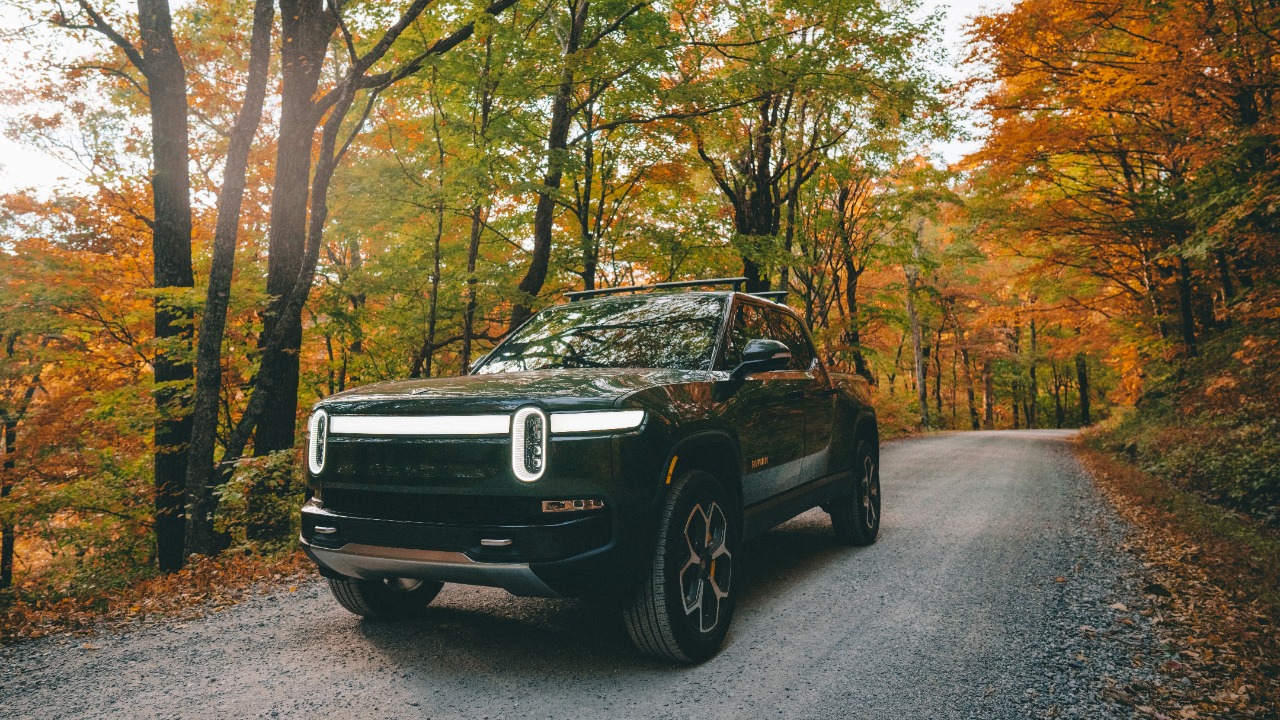
The idea of an electric pickup quietly covering 500 miles at real highway speeds has long sounded like marketing fantasy. A modified Rivian R1T has now shown that, with enough engineering discipline and a willingness to rethink how energy is stored and used, that kind of long‑legged performance is not only possible but repeatable. The result reframes what drivers can expect from battery trucks and forces a fresh look at how much range people actually need versus how much they have been told to want.
Instead of waiting for a clean‑sheet model, a group of engineers took an existing R1T and methodically pushed its efficiency and capacity until it could cross the 500‑mile threshold without slowing to a crawl or hiding behind lab conditions. Their experiment sits at the intersection of a broader shift in the EV market, where ultra‑efficient sedans, record‑setting work trucks, and powerful electric pickups are all testing different answers to the same question: how far is far enough?
From concept to 500 miles: what the Rivian R1T experiment actually proved
The modified Rivian R1T that recently completed a 500‑mile highway run did not rely on a miracle battery chemistry or a one‑off prototype. Instead, engineers treated the production truck as a platform and then layered in a larger pack, careful thermal management, and software tweaks so the vehicle could hold steady speeds while sipping energy. Their goal was to show that a familiar electric Pickup could be tuned to behave more like a long‑range grand tourer than a short‑hop work tool, and the result was a truck that stayed in its lane, literally and figuratively, while quietly resetting expectations.
What makes this effort notable is that it happened in the open, with the team explaining how they set out “to make an EV with” the kind of endurance drivers usually associate with diesel rigs, then documenting how the Rivian R1T went over 500 miles at realistic highway speeds. By keeping the test grounded in everyday conditions rather than hyper‑miling tricks, they effectively turned a thought experiment into a rolling proof of concept that other manufacturers, and plenty of skeptical truck owners, can study in detail.
How This Rivian Went Over Miles At Highway Speeds
To understand why this particular R1T matters, I have to look closely at how the team structured its run. They focused on steady‑state cruising, where aerodynamics and drivetrain efficiency dominate, and then optimized the truck so it could hold that regime for as long as possible. That meant paying attention to tire choice, ride height, and auxiliary loads, then letting the truck sit in a narrow speed band that mimics a long interstate slog rather than a stop‑and‑go commute.
The project has been chronicled in detail under the banner How This Rivian, which explains how the truck Went Over Miles At Highway Speeds without resorting to unrealistic driving behavior. The same reporting notes that the company behind the build is also exploring ideas captured in the phrase This Company Wants To Turn Your Old Pickup Into something cleaner and more efficient, a reminder that the lessons learned from this 500 Miles experiment could eventually filter into retrofit kits as well as new vehicles.
Rivian’s official stance: no appetite for a range war
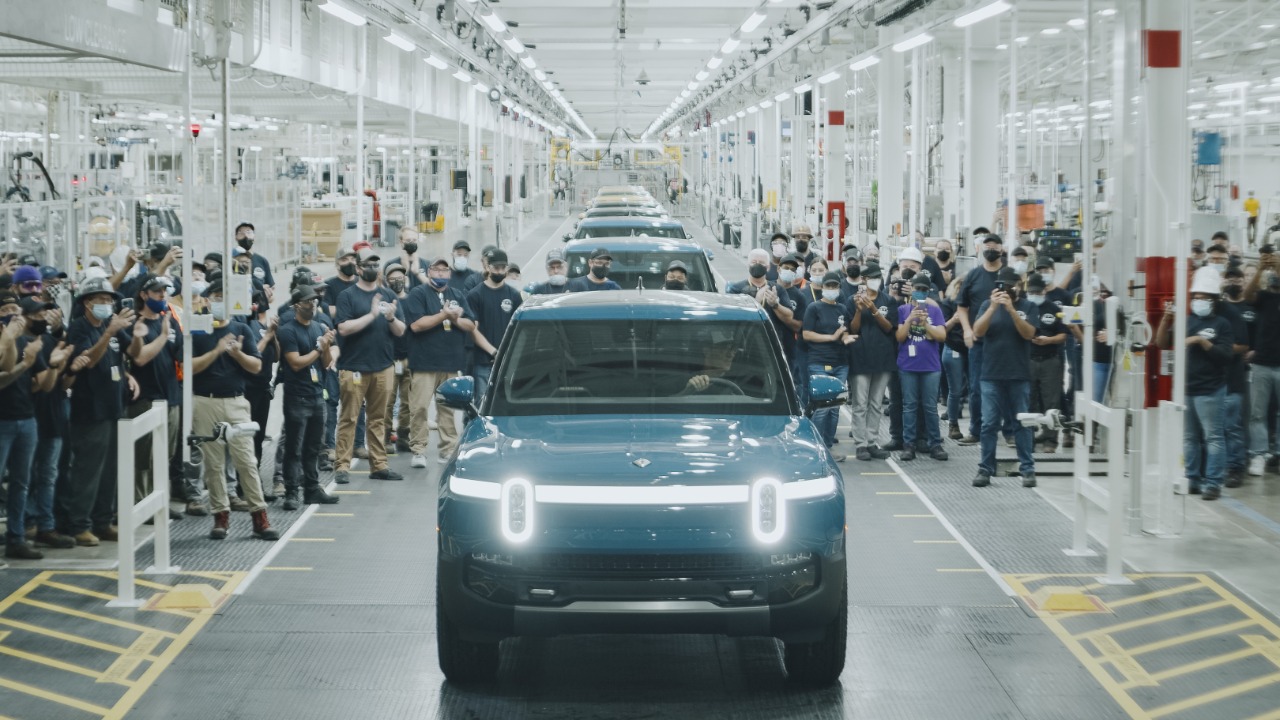
What makes the 500‑mile R1T even more intriguing is that it runs counter to Rivian’s own public strategy. The company has been clear that it does not want to be dragged into a numbers contest with rivals that advertise ever‑larger packs and ever‑higher range estimates. Executives have argued that chasing headline figures can add weight, cost, and complexity that most owners will never fully use, especially when fast‑charging networks are improving and typical daily driving remains well below triple‑digit mileage.
That philosophy has been summarized with the observation that, Despite big strides in battery range and charging network growth, Rivian is not looking to make 500‑mile EVs just to keep up with Lucid or Tesla. The company’s reluctance to engage in a range war suggests that the 500‑mile R1T should be read less as a preview of a showroom model and more as a technical demonstration, one that shows what is possible when engineers are allowed to prioritize endurance above all else.
Power, performance, and the 2026 Rivian R1T Pickup
Any discussion of a long‑range R1T has to be balanced against the truck’s performance credentials. Rivian’s first vehicle was the electric R1T Pickup, and it arrived with a clear message that electric trucks did not have to be slow or compromised. The quad‑motor layout, instant torque, and sophisticated traction control gave it sports‑car acceleration in a package that could still tow, haul, and scramble up muddy trails, a combination that helped define the brand’s identity.
That performance focus has only intensified with the 2026 Rivian R1T Pickup, which is now counted among modern trucks with more power than some traditional heavy‑hitters. Reporting on powerful pickups notes that Rivian has ensured All R1T models pack more than enough punch to satisfy drivers who care about acceleration as much as efficiency. The 500‑mile experiment therefore sits on top of a platform that was already engineered for serious output, underscoring how far software and battery tuning can stretch a truck that was never designed as a hyper‑miler in the first place.
Lessons from Lucid Air and the 500‑mile club
The R1T’s highway feat does not exist in a vacuum. Long before an electric pickup crossed the 500‑mile mark, luxury sedans were quietly proving that kind of range was achievable with careful aerodynamics and obsessive efficiency work. The Lucid Air has been a benchmark in this space, with one configuration delivering a 520-mile rating that was independently tested by Motor Trend, setting a high bar for what a battery‑electric sedan could do on a single charge.
More recently, the 500‑mile conversation has shifted toward a specific trim, The Lucid Air Grand Touring, which has been highlighted as an example of an electric car with a 500‑mile range that is already on sale. Coverage framed as Suggested Reading notes that this version of the Lucid Air uses 19‑inch aero wheels and a new‑for‑2025 heat pump system to stretch its pack, with those miles power‑limited by the car’s computer to keep efficiency in check. When a lifted, boxier R1T starts to approach the territory staked out by such a slippery sedan, it signals that pickup aerodynamics and drivetrain management are catching up fast.
Real‑world owners and the 469‑mile benchmark
While factory ratings and engineering experiments are useful, I find that owner anecdotes often reveal how these vehicles behave in the wild. On Rivian forums, drivers trade notes about how different drive modes, wheel sizes, and motor configurations affect their usable range. One thread in particular compares the R1T’s endurance to a high‑efficiency luxury sedan, with a poster mentioning that they also have a Lucid Air at 469 miles range with 21” tires.
That 469‑mile figure, attached to a Lucid Air running relatively large wheels, underscores how far efficiency‑focused sedans have already pushed the envelope. For R1T owners reading those numbers, the 500‑mile highway experiment is less a distant dream and more a sign that their own trucks could gain meaningful range through software updates, motor‑count adjustments, or future battery options. The forum discussion about range increase using only 2 motors hints at a path where Rivian can deliver better endurance without fundamentally changing the truck’s character.
The Silverado EV’s record and what it says about battery capacity
The R1T’s 500‑mile run also needs to be seen alongside the extreme end of the spectrum, where sheer battery capacity dominates. The 2026 Chevy Silverado EV Work Truck has claimed a world‑record range figure by packing an enormous pack under its floor and then driving it down to a very low state of charge. That approach proves that, if cost and weight are secondary, engineers can deliver four‑digit range numbers that would have sounded absurd only a few years ago.
In coverage of that record, analysts pointed out that, Additionally, Lucid still wins in efficiency, as the Air Pure achieved 5 miles/kWh compared to 4.9 miles/kWh by the Sil. That contrast between the Silverado EV Work Truck’s brute‑force strategy and the Lucid Air Pure’s efficiency‑first approach mirrors the choice facing electric pickups like the R1T: chase ever‑larger packs, or squeeze more miles out of every kilowatt‑hour through smarter software and lighter hardware.
Why 500 miles in a truck feels different from 500 miles in a sedan
On paper, a 500‑mile R1T and a 500‑mile Lucid Air Grand Touring might look similar, but in practice they answer very different use cases. Pickup buyers often tow, haul, or venture off‑pavement, all of which can slash range compared with a gentle highway cruise. That means a truck that can manage 500 miles unladen at steady speeds might still see its effective range cut in half with a heavy trailer, whereas a sedan like the Lucid Air is more likely to spend its life carrying only passengers and luggage.
This context helps explain why Rivian can publicly avoid a range war while engineers and enthusiasts quietly chase longer legs. For a driver who regularly tows a camper or boat, a 500‑mile baseline in ideal conditions might translate into a comfortable 250 to 300 miles with a load, which is the difference between a single charging stop and a stressful day of leapfrogging chargers. The R1T experiment therefore serves as a kind of stress test for the idea that electric trucks can be true road‑trip machines, not just urban runabouts with a bed.
What this means for the next generation of electric pickups
Looking ahead, I see the 500‑mile R1T as a blueprint rather than a one‑off stunt. It shows that, with current‑generation cells and careful integration, a mainstream electric Pickup can deliver the kind of highway endurance that once seemed reserved for diesel tanks and premium sedans. Automakers watching this project now have a concrete example of how to balance pack size, efficiency, and performance without turning their trucks into science projects that only exist in press releases.
At the same time, Rivian’s stated reluctance to chase headline range figures suggests that future R1T variants may prioritize smarter energy use over simply bolting in more capacity. Lessons from the Lucid Air, the Silverado EV Work Truck, and owner experiences with a Lucid Air at 469 miles all point toward a future where software, motor configuration, and thermal systems matter as much as raw kilowatt‑hours. The 500‑mile highway run proves that the ceiling is higher than many assumed, and it gives both engineers and drivers a new reference point for what an electric truck can realistically do between charges.