

Virginia Hall built a career on making powerful men underestimate her. An American with a wooden leg who was barred from diplomacy, she became the Special Operations Executive’s most audacious organizer in occupied France, a woman whose networks outfoxed Nazi security services for years. By the time the Gestapo realized that the “Limping Lady” was orchestrating sabotage and escapes under their noses, they were calling her “the most dangerous of all Allied spies” and launching a manhunt she repeatedly slipped.
Her story reads like fiction but is documented in intelligence files, biographies and official honors. From early setbacks in Maryland to clandestine work for the SOE and later the OSS, Hall turned personal adversity into a weapon, using her apparent vulnerability to fool the very secret police who hunted her.
From Maryland misfit to reluctant recruit
Virginia Hall grew up in Maryland with ambitions that did not fit the expectations placed on a well-off American woman in the early twentieth century. She studied abroad, learned languages and set her sights on a career in the United States Foreign Service, only to see that path blocked after a hunting accident cost her a leg and left her reliant on a wooden prosthesis she nicknamed “Cuthbert”. Biographical accounts describe how the injury, and the State Department’s refusal to accept a disabled woman as a diplomat, pushed Hall toward the margins where unconventional opportunities, including espionage, would later appear, a trajectory explored in depth in works such as A Woman of No Importance.
When war engulfed Europe, Hall was already in France, initially serving as an ambulance driver for the French Army. The collapse of France and the rise of the collaborationist Vichy regime created a demand for people who could move between cultures and speak multiple languages, and Hall fit that profile. According to research on her recruitment, a “friend” who encouraged her to consider clandestine work later turned out to be Nicolas Bodington, an officer from “F” Section of the Special Operations Executive, the British organization created to “set Europe ablaze” through sabotage and resistance support. The National Archives notes that this recruitment brought Hall into the SOE as one of its earliest female field agents in occupied territory.
Building the Heckler network under Gestapo noses
Once inserted into Vichy France in 1941, Hall operated under the cover of a reporter for the New York Post, a role that gave her plausible reasons to travel, ask questions and meet a wide range of people. From her base in Lyon she built what became known as the “Heckler” network, a web of resistance contacts, safe houses and supply lines that helped move agents, weapons and information across a country under tight surveillance. Accounts from intelligence historians describe how she used coded messages, dead drops and seemingly mundane signals to coordinate activity, while her status as a foreign journalist helped her pass through checkpoints that might have stopped a French resister, a pattern detailed in profiles such as the History Guild study of her SOE work.
The Germans were slower to recognize the scale of the threat. At first, they saw scattered sabotage and escapes, not the hand of a single organizer. Over time, however, the Gestapo pieced together that a limping woman was at the center of multiple resistance operations. According to wartime records and later biographies, The Germans gave her the nickname Artemis, and the Gestapo reportedly considered her “the most dangerous of all Allied spies”, a judgment echoed in a feature that calls her World War II’s “Most Dangerous” Allied Spy and emphasizes that she was a Woman With a Wooden Leg. The Nazis also referred to her as “La Dame Qui Boite”, the lady who limps, and hunted her through their Gestapo Chief in Lyon, Klaus Barbie, the German Nazi known as the “Butcher of Lyon”, as noted in the Maryland State Archives profile.
The manhunt, the Pyrenees, and a wooden leg called “Cuthbert”
As Heckler’s operations expanded, the Gestapo intensified its efforts to destroy the network and capture its elusive organizer. Raids swept up some of Hall’s contacts, and informers tried to penetrate her circles, but she proved adept at sensing danger and shifting locations. The National Archives recounts that when she received a warning that the Gestapo had identified her and were closing in, she slipped out of Lyon just ahead of a raid, leaving behind a trail of frustrated secret police who had underestimated the woman they had dismissed as a minor nuisance. A conversation with author Sonia Purnell cites a Gestapo message from 1942 that read, “She is the most dangerous of all Allied spies. We must find and destroy her,” a line highlighted in the BackStory interview with Gabriel Hunter Chang, which notes the 05.02 reference in its metadata.
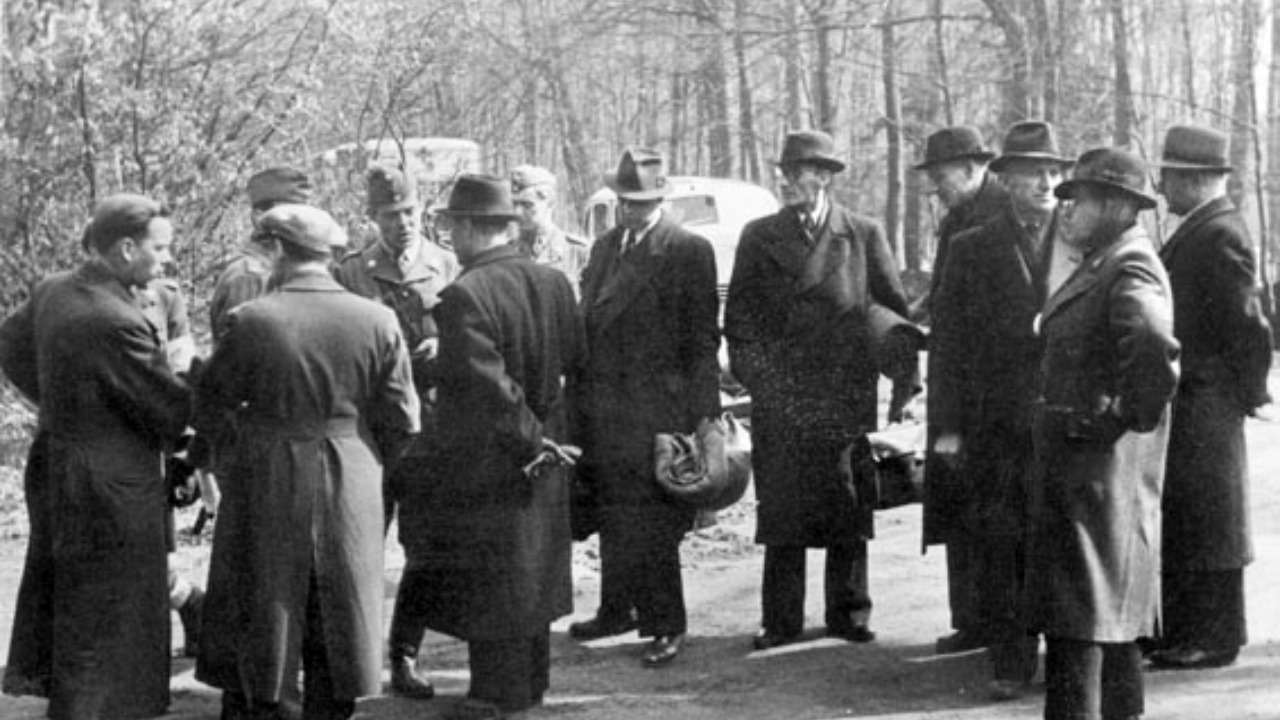
Hall’s escape from France after her cover was blown has become one of the most vivid episodes in her legend. Refusing evacuation by air, she chose to cross the Pyrenees into Spain on foot in winter, despite her prosthetic leg. Accounts describe her trudging over mountain passes with “Cuthbert” strapped on, at times needing help to navigate steep, icy paths that would have challenged a fully able-bodied climber. Intelligence histories and biographies, including material summarized by Spyscape, emphasize that this journey was not only a feat of endurance but also a tactical decision that allowed her to evade the dragnet closing around her in France. By the time she reached safety, the Gestapo’s most wanted woman had vanished into neutral territory, leaving behind only rumors and a deepening sense of humiliation among her pursuers.
Return with the OSS and sabotage before D-Day
Hall’s escape did not end her war. After a period in Britain, she transferred from the SOE to the American Office of Strategic Services, the wartime intelligence agency that would later evolve into the CIA. The History Guild notes that she became a bridge between British and American clandestine efforts, bringing hard-earned experience in occupied France to the OSS as it prepared for the Allied return to Western Europe. When she volunteered to go back into France, American handlers initially hesitated, aware that the Gestapo was still hunting the limping woman they had failed to catch. Hall insisted, and eventually she was sent back, this time with a new identity and a radically different appearance.
To reenter a country where her face was on wanted notices, Hall disguised herself as an elderly peasant woman, dyeing her hair, altering her gait and even filing down her teeth to look older. Operating under this cover, she cycled through rural areas, organizing resistance groups, arranging weapons drops and coordinating sabotage of rail lines and communications ahead of the Allied landings in Normandy. The CIA’s own account of her service describes how she helped arm and train resistance fighters who then attacked German infrastructure in the days around D-Day, slowing reinforcements and contributing to the broader Allied strategy. A detailed narrative on Home of Heroes underscores that even Klaus Barbie and his security apparatus failed to recognize that the stooped farm woman on a bicycle was the same Virginia Hall they had once hunted as Artemis.
Recognition, secrecy, and a complicated legacy
For her wartime service, Hall received the Distinguished Service Cross, one of the highest American decorations for valor, and according to the CIA she was the first civilian woman to be so honored. President Harry Truman wanted to present the award publicly, but Hall reportedly declined a ceremony, preferring to keep her identity and methods out of the spotlight while clandestine work continued. The CIA profile notes that she later joined the Central Intelligence Agency as a pioneer among women officers, carrying her SOE and OSS experience into the early Cold War. Yet even within the intelligence community, she remained wary of attention, a habit formed in the years when a single careless word could have meant arrest or execution.
Outside classified circles, Hall’s story faded for decades, resurfacing only gradually through official declassifications and the work of historians and former intelligence officers. The Maryland State Archives entry on Virginia Hall highlights how The Nazis once hunted her as La Dame Qui Boite, while later generations in her home state inducted her into a women’s hall of fame. Former CIA operative Craig R. (identified in a New York Post feature as Craig) drew on her life for a novel, as noted in a piece headlined “She was a Post columnist — and a heroic WWII spy”, and biographers such as Sonia Purnell and Craig Gralley, whose work is listed on Craig Gralley’s books page, have helped cement her place in the broader narrative of World War II. Today, as new readers discover titles like A Woman of No Importance and The Spy with the Wooden Leg, Hall’s reputation has shifted from obscurity to that of a central figure in Allied clandestine history, a woman who turned a wooden leg and a lifetime of underestimation into tools that fooled the Gestapo at every turn.