

Popular carry pistols have a habit of turning into divas the moment the shooting stops being polite and starts getting real. The guns that feel great in a glass case or at a static lane can suddenly choke, jump, or vanish into your waistband the first time you sprint, reload on the move, or shoot one‑handed under a timer. The gap between “Instagram EDC” and a pistol that survives hard training is exactly where many beloved carry guns quietly fail.
I have watched people outgrow their once‑favorite sidearms in a single weekend of structured drills, not because the guns were evil, but because real training exposes every ergonomic shortcut, reliability compromise, and bad habit the owner has been getting away with. When the pace picks up and the stress climbs, some designs, and some setups, simply cannot keep up.
When comfort beats competence
The first trap is comfort. A pistol that disappears in your shorts can also disappear from your control the second you press the trigger with intent. Ultralight and micro‑compact guns are marketed like fitness trackers, something you “forget you even have,” and that is exactly the problem once recoil shows up to the party. Reports on the Pros of Lightweight Handguns point out that ease of Carry and how compact you can go are the big selling points, but the same traits that make a pistol featherweight also magnify recoil and muzzle flip when you start shooting quickly.
Once you leave the static lane and start drawing from concealment, moving, and reloading under time pressure, that tiny, slick grip that felt “fine” at seven yards becomes a liability. Instructors who run practical drills, including holster work and movement, routinely see small guns with minimal grip surface and crude sights drag shooters’ scores down or cause failed qualifications, a pattern echoed in Instructor Notes that call out poor sights, heavy recoil, and lack of grip as “no bueno” for passing standards. Once the drills look more like a defensive encounter and less like a selfie, comfort stops being king and control takes over.
Ergonomics that work on paper, not under pressure
Even when a gun is mechanically sound, the way it fits your hands can quietly sabotage you. A carry‑size pistol is supposed to be a deliberately made lifesaving tool, yet detailed criticism of modern designs notes that many manufacturers still ship grips that are too slick, too small, or shaped in ways that make it harder to run the pistol at speed. One pointed analysis of innovation in handgun design argues that companies keep chasing marketing trends instead of building ergonomics that help you actually use the pistol to save your own life, a complaint that lands hard once you start running timed strings and complex drills.
That mismatch shows up fast in structured training. Once shooters move beyond slow fire and start running rifles and pistols through real courses, they discover that ergonomic shortcomings baked into popular platforms can hinder performance, as one breakdown of updated rifle grips bluntly puts it. The same principle applies to handguns: a grip that feels “fine” in the shop can force awkward thumb placement that interferes with slide stops, or encourage a weak support‑hand position that collapses under recoil. Reviews of slimline 9 mm pistols, for example, have documented malfunctions where the slide failed to lock open because of shooter grip issues during rapid fire, a problem highlighted in a 9 mm slimline shootout that traced the odd behavior to how the gun was being held rather than a broken part.
Reliability myths that die at 1,000 rounds
Another reason popular carry guns fall apart in training is that many owners never push them far enough to see the cracks. People will argue online about whether it is “prudent” to put 1,000 rounds through a carry gun, with some insisting that certain models, like a compact revolver they describe as “My CA Bulldog,” will never see that round count, while a sturdier revolver such as “My Ruger SP101” is expected to go well past 1,000. That split, captured in a forum debate, shows how many people accept low durability as a given instead of testing whether their chosen pistol can survive a serious training cycle.
Once you start logging real volume, the picture changes. Detailed breakdowns of pistol malfunctions note that the most common issues are failures to feed, failures to extract, failures to eject, and double feeds, and that Failure to feed alone accounts for roughly “90 percent” of the problems that appear in classes. After‑action reports on carbine courses list the same Malfunction Types and emphasize that while some guns can run an entire event without a single stoppage, others start showing part fatigue and cycling issues as the round count climbs. When your “reliable” carry gun cannot make it through a weekend without repeated failures, it is not a training aid, it is a very expensive noise maker.
Training stress exposes both gun and shooter
Realistic training does not just stress the gun, it stresses you, and that is where some very popular setups reveal their dark side. Instructors who run scenario‑based concealed carry work point out that skills on the range are one thing, but real‑world scenarios are another, especially when you add drawing from concealment, reloading under stress, and moving while shooting. One comprehensive guide to concealed carry training stresses that Scenario drills, not slow‑fire groups, are what prepare you for the ugly, fast, and awkward reality of defensive gun use, and that is exactly where marginal guns and marginal habits collide.
Under that kind of pressure, even experienced shooters discover that their grip and manipulation fall apart. A detailed explanation of pistol grip mechanics notes that Semi automatic pistols rely on recoil to operate the slide, eject the spent casing, and feed a new round from the magazine, and that the shooter must provide enough resistance for the slide to cycle. If your grip is too loose, or your wrist breaks under recoil, the gun can fail to feed or eject properly, which looks like a “gun problem” but is really a technique problem. Other training pieces warn that when you start shooting under intense time pressure, as in practical competition or advanced classes, your stance, grip, and trigger work can degrade quickly, a point driven home in a discussion titled “Why Do You Hold Your Gun Like That?” that reminds Even for experienced shooters, advanced drills expose flaws you never saw at the static lane.
Static lanes hide dynamic failures
Static indoor ranges are the gym selfie of the gun world, flattering and not very honest. You stand in one spot, shoot at a predictable target, and leave convinced that your gear and skills are squared away. The problem is that defensive shootings do not happen in neat lanes, and training that never leaves that environment hides the ways your gun and setup can fail once movement and complexity enter the picture. Instructors who specialize in dynamic work argue that Holster Drills are Essential for Defensive Shooting because they teach you to draw and fire while moving and to manage your gear in modular setups that mimic real‑world situations, something a paper target at seven yards will never demand.
Once you step into more practical environments, the difference is obvious. Practical shooting competitions, for example, require you to shoot with one or two hands, move, draw from a holster, reload, and change positions, all while the clock is running. One description of these matches notes that You are doing something far more practical than standing in one location, and that shift in context quickly reveals which guns are easy to run and which ones punish you for every design compromise. Scenario‑based concealed carry programs echo the same point, stressing that Skills developed on a flat range must be translated into movement, awkward positions, and stress if they are going to matter when it counts.
Small guns, big recoil, and the “outgrown” phase
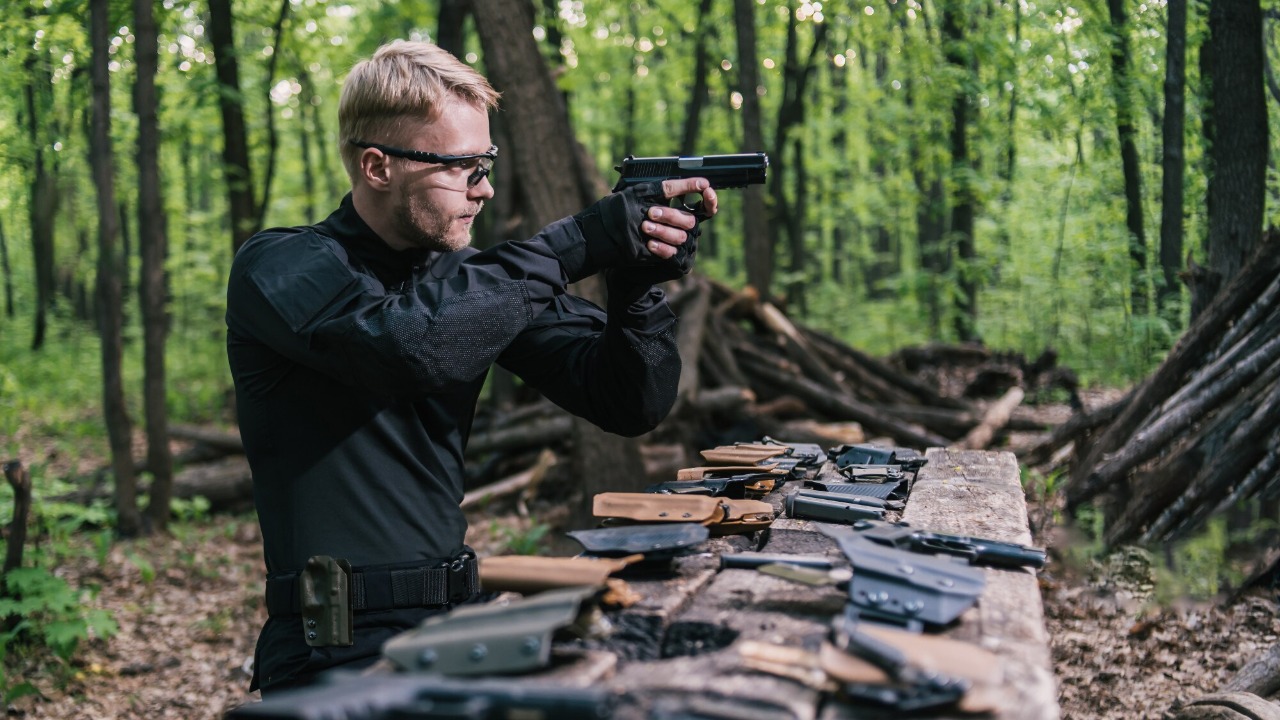
There is a predictable life cycle to many carry guns. New shooters gravitate toward the smallest, lightest pistols they can find, often with minimal sights and tiny grips, because they are easy to hide and look manageable. Once those shooters enroll in structured training, they discover that the same guns are hard to shoot well, punishing to practice with, and unforgiving of imperfect technique. A widely shared breakdown of firearms that shooters outgrow once they get real training notes that there is a big difference between casually shooting a rifle or pistol and running one through structured drills, and that serious practice quickly reveals where a platform falls apart.
Real‑world anecdotes back that up. One former gang officer who now works in another department described carrying a keltec pf9 with a Crimson Trace laser, calling it a Great pistol but admitting that it “kicks like a mule,” a colorful way of saying that the recoil is brutal for extended practice. Instructors who debrief failed qualifications point to the same pattern: guns with poor sights, heavy recoil, and minimal grip surface are technically concealable, but they are miserable to run through long strings or timed standards. Over time, many shooters quietly retire these early choices in favor of slightly larger, more shootable pistols that they can actually control when the pace picks up.
Malfunctions that only appear when you move fast
Some of the most embarrassing failures only show up when you add speed. Under slow fire, your slide locks back, your reloads are clean, and your gun cycles like a sewing machine. Under match or scenario pressure, thumbs start riding controls, magazines do not seat fully, and the gun suddenly looks unreliable. Detailed coverage of reload techniques notes that Sometimes shooters unintentionally ride the slide stop with their thumb, preventing it from engaging, or push it up at the wrong time so it intercepts the slide during recoil. That kind of user‑induced malfunction is almost invisible at a static lane but becomes a recurring nightmare in fast drills.
Training that includes one‑handed shooting and reloads adds another layer of chaos. Law enforcement‑focused instruction on one‑handed reloads points out that it is entirely realistic to end up fighting with one arm or hand disabled, which is why officers practice running the gun single‑handed, manipulating the slide and magazine with improvised techniques. In that environment, small controls, stiff magazine springs, and tiny slides become serious obstacles. Reviews of compact carry pistols have noted that smaller guns with exceptionally high‑capacity magazine springs, which require exceptionally stiff effort to load, can be harder to run reliably until the springs break in, a tradeoff highlighted in a review of carry‑size pistols that still managed to earn a spot in a trusted carry rotation once those quirks were understood.
Software bugs: training failures that blame the gun
Not every failure is the gun’s fault, although the gun usually gets blamed first. Under stress, people forget safeties, ride controls, and fumble basic manipulations they thought were automatic. One candid account from a concealed carrier who runs a Shield Plus with a manual safety describes a personal training failure where the safety was left engaged under pressure, turning a perfectly functional pistol into a very expensive paperweight. The shooter admits that this is one of the main reasons they changed how they train, a reminder that hardware choices and practice habits are joined at the hip.
Discussions among everyday carriers show a wide range of tolerance for how much malfunction risk they will accept. In one Comments Section on carry gun reliability, a user notes that their pistol has choked in matches but they are not overly worried, reasoning that competition is harsher than daily carry. At the same time, other instructors who analyze real defensive shootings warn that Stress and adrenaline make even simple malfunction clearing an under practiced skill, and that assuming you will calmly tap‑rack your way out of trouble without ever drilling it is optimistic at best. When you combine marginal guns with marginal training, the failure rate in realistic scenarios climbs fast.
From “good enough” to actually ready
The pattern across all of this is not that certain brands are cursed, it is that real training strips away illusions. Static lanes flatter bad habits, ultralight pistols flatter our desire for comfort, and social media flatters our taste for sleek gear. Structured drills, scenario work, and high round counts do not flatter anything. They simply reveal whether your chosen pistol, and the way you run it, can survive the same chaos that instructors build into practical competitions and defensive courses.
If there is a single practical takeaway, it is this: treat your carry gun less like a fashion accessory and more like a power tool. Run it through holster work, movement, one‑handed shooting, and at least a few hundred rounds of focused practice. Pay attention to the Malfunction Types you see, whether they are genuine mechanical Failures or user‑induced problems, and be honest about whether your current setup is helping or hurting. The guns that survive that process may not be the smallest or trendiest, but they are far less likely to fail you when the training stops and the stakes become real.