
Modern concealed carriers are surrounded by images of highly customized pistols with compensators, red dots, and extended magazines, blurring the line between competition hardware and everyday tools. The question is not whether these “race guns” are impressive, but whether the features that win trophies actually translate into safer, more effective real-world carry. As more shooters cross over between matches and defensive training, the gap between what looks ideal on the timer and what works under a jacket has become impossible to ignore.
What a race gun really is – and what it is not
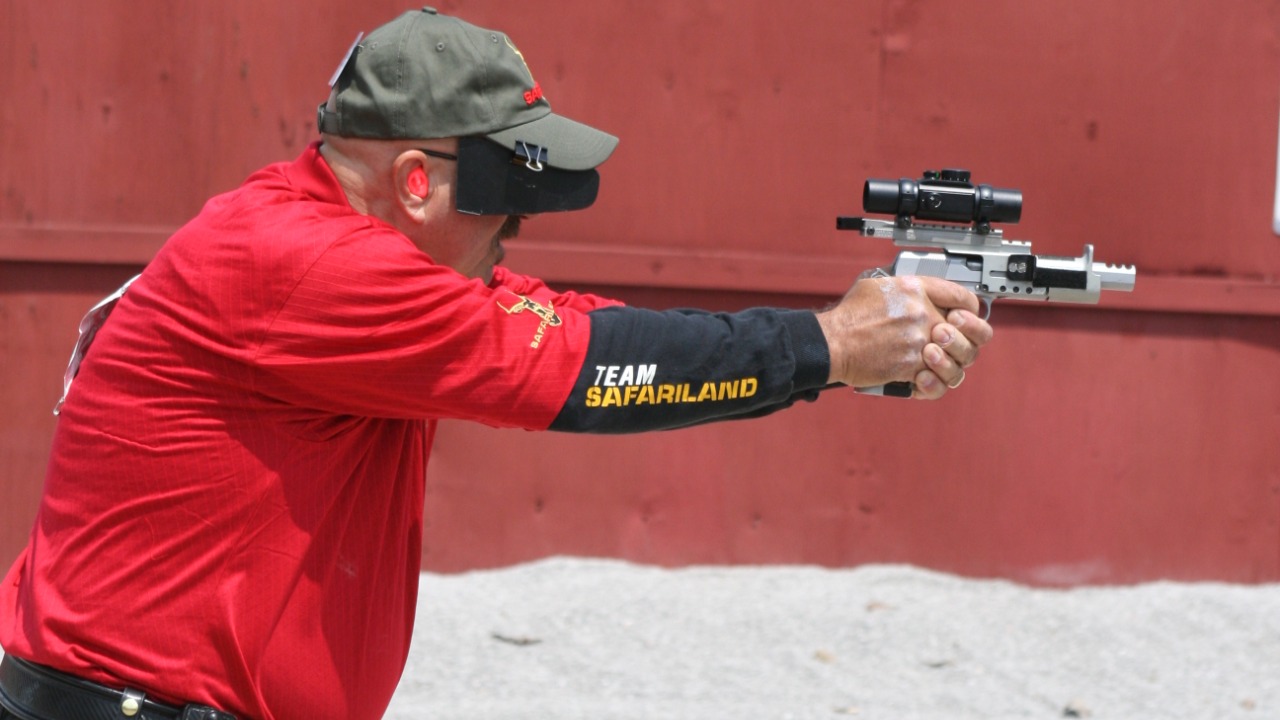
In competitive circles, a race gun is not just any pistol with a few upgrades, it is a firearm purpose built for speed, accuracy, and controllability within specific rule sets. A typical racegun is often a semi-automatic pistol that has been modified with light triggers, tuned springs, optics, compensators, and oversized controls to squeeze every fraction of a second out of a stage, all while staying inside division limits on weight, size, and capacity requirements. These pistols are engineered around predictable courses of fire, known distances, and a shooter who is already on the line with hearing protection and a rigid holster, not someone pulling a gun from concealment in a parking lot.
Even when a pistol starts life as a common duty or carry model, the transformation into a competition tool changes its purpose. One analysis notes that generally a race gun was not built from scratch, instead it is a customized version of an existing platform that has been pushed toward maximum performance in a narrow context, which can still leave it as an effective self-defense weapon but only if the shooter understands the tradeoffs baked into that customized design. That distinction matters, because the more a pistol is optimized for the clock, the more its ergonomics, size, and maintenance demands can drift away from what most people can realistically carry and support day after day.
Why competition tuning can clash with concealed carry realities
The very qualities that make a race gun shine on a stage can introduce vulnerabilities when the stakes involve an actual threat instead of a match score. Detailed discussions of Competition pistols point out that they are finely tuned to be as soft shooting as possible, which often means lighter recoil springs, sensitive triggers, and ammunition tailored to a specific power factor, all of which can reduce reliability when conditions or ammo change outside that narrow competition window. In a defensive encounter, where clothing, debris, awkward shooting positions, or imperfect grip are far more likely, a setup that runs on the edge of mechanical tolerance is less forgiving than a more conservative carry gun.
Experienced instructors also warn that hardware built for sport can shape habits that do not always map cleanly to self-defense. One training focused analysis, framed around using the same pistol for both roles, stresses that formal instruction and realistic drills remain irreplaceable, because nobody on a square range can fully replicate the stress, chaos, and legal scrutiny that follow a real use of force, even if competition gives a small adrenaline rush that helps inoculate shooters to pressure, as explored in a detailed look at using a carry gun for competition. When the trigger is lighter, the controls are oversized, and the gun is tuned to break shots with minimal input, the margin for error under stress shrinks, which is the opposite of what most concealed carriers say they want.
Urban firefights, internet hypotheticals, and what real violence looks like
Online debates often frame the choice as a dramatic scenario, with one widely shared thread asking if, in an Urban firefight, a shooter would rather have a Race handgun or a Tactical handgun while moving through tight spaces or even going to the mall, a conversation that highlights how far internet hypotheticals can drift from the mundane realities of daily carry, as seen in a detailed Urban firefight discussion. The imagery of weaving through cars and concrete with a compensated pistol and a giant magazine is compelling, but it obscures the fact that most defensive gun uses involve a handful of shots at close range, often in low light, with the defender reacting from a disadvantaged position.
Researchers examining real world violence also underline that the guns used in high profile tragedies are rarely the kind of tuned competition pistols that dominate social media. One study of adolescent school shooters notes that Guns like Raceguns are not created for self defense, They are created for competition shooting, and when such firearms are misused it is usually because they were stolen from family rather than selected as an optimal tool for an attack, a pattern described in an analysis of how Guns and Raceguns show up in school shootings. That distinction does not make race guns harmless, but it does reinforce that the fantasy of a prolonged firefight with a gamer pistol is far removed from the grim, close range confrontations that most carriers should be preparing for.
Carry guns, competition guns, and the middle ground
For many shooters, the more practical question is not whether to carry a full blown race gun, but how much competition influence to bring into an everyday pistol. One long running CCW conversation, kicked off with a commenter joking that a certain spelling was Weird, turns into a serious debate over whether to compete with the same gun that rides in the holster, with some arguing that consistency builds confidence and others preferring a dedicated match setup that does not compromise concealment, as reflected in a thread on whether to compete with your carry. The underlying tension is clear: a gun that is easy to shoot fast is attractive, but only if it remains practical to hide, comfortable to wear, and simple to run under stress.
High level shooters who straddle both worlds often draw a sharper line. In a detailed comparison of EDC vs competition guns, instructor JJ Racaza focuses on weight and stability, noting that a heavier pistol with a long slide and compensator tracks flatter and feels more controllable, but he also states plainly that “Race guns are not ideal” for daily use because their bulk and accessories make them impractical for concealed carry, a point underscored in his breakdown of how weight and stability cut both ways. The middle ground many professionals recommend is a reliable, moderately sized pistol with a red dot and perhaps a modestly improved trigger, but without the extreme tuning, giant magazines, or bulky compensators that define a true race build.
Size, reliability, and why boring guns still dominate real carry
If race guns were truly the best answer for self defense, the broader concealed carry market would likely look very different. Instead, the last decade has been defined by a surge in compact and subcompact pistols, a trend that accelerated when Ruger introduced the Light Carry Pistol, or LCP, which sparked an American sub compact arms race and set a new standard for what a tiny, easily concealed handgun could be, as chronicled in a survey of the Ruger Light Carry Pistol. That market response speaks volumes: most people who actually carry guns daily prioritize light weight, minimal bulk, and simple controls over the kind of extended dust covers and slide mounted optics that dominate competition holsters.
Reliability also remains the non negotiable baseline for any defensive firearm, regardless of how fast it can run a stage. One guide to affordable pocket pistols for self defense puts it bluntly, stating that the reliability of the firearm is paramount, ensuring it functions when needed most, a standard that leaves little room for setups that only run well with specific ammunition or meticulous maintenance, as emphasized in advice on reliability of the firearm. That is why many seasoned competitors still recommend that newcomers start with a straightforward, duty grade pistol for matches, and one overview of the 10 best competition ready factory handguns notes that if someone is looking for a first gun for USPSA or IDPA, all they really need, seriously, is a reliable pistol that runs out of the box, a sentiment captured in guidance on choosing a USPSA ready handgun. The same logic applies even more strongly when that gun is expected to protect a life instead of a match score.
How much “race” belongs in a real world pistol?
None of this means that features popularized in competition have no place in concealed carry. Optics ready slides, improved sights, and better ergonomics have filtered into mainstream models precisely because they help ordinary shooters hit more accurately and manage recoil more effectively. One guide to fast shooting pistols notes that You can have a Glock 19 with a compensator and a red dot mounted to it, but it is not necessarily a race gun if its primary purpose remains defensive use rather than chasing every possible go fast part, a distinction drawn in a breakdown of what makes a true Glock based race gun. The key is intent: a modestly upgraded carry pistol that remains reliable, concealable, and manageable for its owner is very different from a full blown open division build.
At the same time, the culture around highly modified guns can tempt new shooters to chase hardware solutions to software problems. One detailed overview of race oriented builds points out that Generally these guns evolve from existing platforms, Instead of being designed from the ground up for concealment, which can leave them heavier, bulkier, and more finicky than a purpose built carry pistol, a pattern that echoes broader warnings about are race guns carry guns. For most people who carry in the real world, the smarter path is to borrow the best ideas from the competition world, such as better sights and consistent training, while resisting the urge to turn a life saving tool into a finicky showpiece that only shines under perfect conditions.