

The .357 Magnum has been eclipsed on paper by newer handgun rounds, yet its name still lands with a visceral jolt in police reports, courtroom testimony, and street lore. The cartridge blends real ballistic authority with a sensory blast that feels closer to a carbine than a compact pistol, which keeps its reputation alive long after many agencies moved to lighter recoiling semi‑autos. That mix of history, physics, and psychology explains why the .357 Magnum still looms large in the minds of people on both sides of the gun.
Behind the legend is a cartridge that was engineered from the start to do things earlier service rounds could not, from punching through car bodies to stopping determined attackers through heavy clothing. Modern loads and revolvers have only sharpened that edge, even as research reminds shooters that no caliber can substitute for precise hits and sound tactics.
The original magnum mystique
The fear factor around the .357 Magnum starts with how it was built, not just how it is remembered. Designers strengthened the revolver’s frame, cylinder, and barrel so the platform could handle pressures far beyond the .38 Special, creating a handgun that delivered what had previously been rifle‑like performance in a duty sidearm. That structural margin meant the cartridge could be loaded hotter without destroying the gun, and the resulting velocity and penetration quickly set it apart from the service revolvers that came before, a distinction that still colors how suspects and officers talk about it when a case file mentions “.357” instead of “.38.” Those reinforced components, described in detail in technical histories of the round, explain why the cartridge could safely operate at pressures that would have damaged earlier 38 Special designs.
That engineering leap gave the .357 Magnum a head start in the public imagination, and its early adoption by law enforcement locked in the image of a no‑nonsense fighting gun. The cartridge’s reputation was reinforced by classic revolvers that wore the name proudly on their barrels, including early “Registered” models that were marketed as precision tools for serious shooters. Historical accounts note that, Although the .357 M cartridge has been surpassed in raw power by some hunting rounds, the original Magnum revolvers still symbolize a kind of authoritative sidearm that many people instinctively associate with detectives and highway patrol officers, a perception that continues to shape how the caliber is perceived in modern magnum discussions.
Ballistics, blast, and the sensory shock factor
On the range and in real confrontations, the .357 Magnum’s intimidation factor is not just about numbers on a chart, it is about what the cartridge does to the senses. Fired from a service‑length revolver, it produces a sharp crack, heavy concussion, and bright muzzle flash that can feel overwhelming indoors, especially to someone who has never been around gunfire. That sensory overload is part of why stories persist about the round “stunning” assailants, even when the bullet does not strike a vital area, and why some shooters describe the first shot as a psychological weapon in its own right. In online debates about whether the .357 m has a unique “stopping” aura, commenters often cite Massad Ayoob’s early work on the cartridge’s street performance, while others caution that the dramatic blast can be as disorienting to the defender as to the attacker.
Barrel length magnifies or moderates that effect, which is why experienced revolver users pay close attention to how much tube they give a .357 Magnum. With a longer barrel, the powder has more time to burn, which boosts velocity and energy and makes full use of the cartridge’s potential, but it also increases muzzle flash and blast that can be punishing in low‑light or confined spaces. Guides for new owners’ stress that if a shooter wants to exploit the full performance envelope of the 357 M cartridge, they should think carefully about Barrel Length and how it will affect recoil, flash, and controllability, especially in compact carry guns that trade away some of the Magnum’s ballistic edge for easier concealment.
Stopping power, shot placement, and modern 9mm rivals
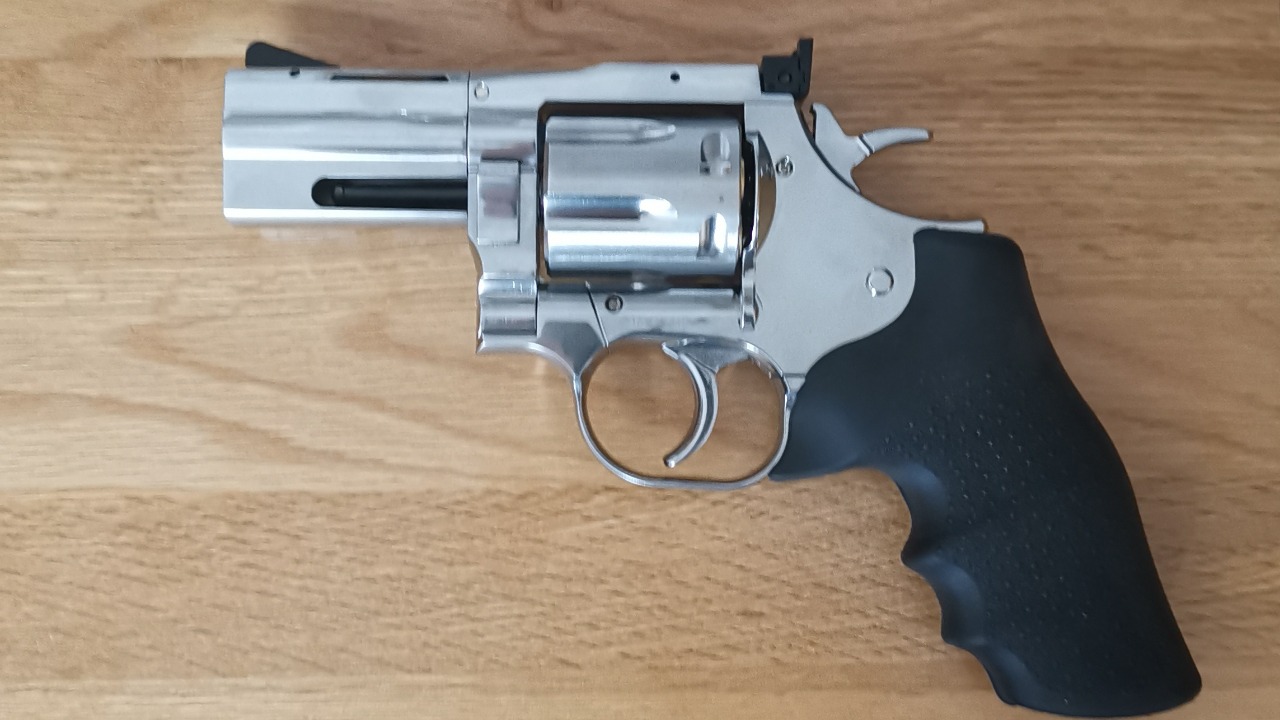
The .357 Magnum’s enduring aura rests heavily on its reputation for “stopping power,” yet modern ballistics research and street data have complicated that simple story. In caliber comparisons, the Magnum is often credited with higher velocity and energy than 9mm, which translates into deeper penetration and more dramatic expansion when bullets perform as designed, advantages that help explain why it remains a favorite for defense against larger threats and even for handgun hunting. At the same time, analysts point out that 9mm offers higher capacity, faster reloads, and softer recoil in similar‑sized guns, which can matter more than raw power when a defender must fire multiple accurate shots under stress.
That shift in thinking is echoed in self‑defense communities, where shooters increasingly emphasize measurable factors like penetration depth and permanent wound cavity over caliber myths. In one widely cited discussion of personal protection, a commenter writing in Dec argues that They are the only things that are really quantifiable in terms of effectiveness, with bullet diameter and permanent wound channel taking precedence over brand loyalty or nostalgia. That perspective dovetails with training advice that stresses shot placement above all, a theme repeated so often that instructors joke about how many times You will hear the words “shot placement” in a single class, a point underscored in critiques of Hollywood gunfights that remind viewers that even the most powerful handgun cannot make up for poor hits.
Recoil, control, and the reality of carrying a magnum
For all its power, the .357 Magnum demands more from the shooter, and that cost is part of the calculation for anyone who carries one for defense. Recoil is significantly sharper than 9mm in comparable platforms, which can slow follow‑up shots and make practice more fatiguing, especially for newer shooters or those with smaller hands. Ballistic comparisons note that while the Magnum can deliver impressive energy, the tradeoff is a heavier kick that some users find difficult to manage in lightweight revolvers, a reality that stands in contrast to 9mm loads that generate around 340 ft‑lbs of energy with more manageable recoil.
Manufacturers have tried to tame that behavior with features like ported barrels and multi‑caliber cylinders that let shooters train with softer rounds. Reviews of revolvers such as the Taurus Tracker 692 describe how barrel porting reduces muzzle rise with full‑power .357 loads, while noting that the benefits are less pronounced with 9mm and .38 ammunition. However, testers still report that the Magnum chambering delivers a distinct jump and blast compared with its milder siblings, reinforcing the idea that the cartridge is best suited to shooters who are willing to invest in practice and who understand the implications of touching off a full‑house load in a small, lightweight frame.
From classic wheelguns to modern defensive roles
Even as polymer‑framed 9mm pistols dominate police holsters and civilian carry permits, the .357 Magnum has not faded into a purely nostalgic niche. Retailers still highlight 357 M revolvers as serious defensive tools, often positioning them alongside 9mm and .45 ACP handguns for buyers who want maximum power in a simple, mechanically robust package. Product listings emphasize that Magnum handguns remain popular for home defense, trail carry, and backup roles, and they encourage customers who are Interested in expanding their firearm options to Consider how a .357 revolver might complement a stable of semi‑autos, especially for those who already stock both Magnum and 45 ACP ammunition.
The cartridge’s staying power is also tied to how it has evolved rather than stood still. Ammunition makers point out that, like so many classic cartridges, the 357 M is better today than it has ever been, thanks to modern bullet design that optimizes expansion and penetration for specific tasks, from urban defense to backcountry protection. That evolution means a shooter can choose loads that reduce over‑penetration risk in a home setting or, at the other extreme, select hard‑cast bullets that maximize straight‑line penetration against four‑legged threats, a flexibility that keeps the Magnum relevant in a way that goes beyond nostalgia.
Why the legend still matters on the street
Strip away the mythology and the .357 Magnum is simply a powerful, flexible handgun round with clear pros and cons, yet the legend still matters in real confrontations. Suspects who grew up on crime dramas and secondhand stories often react differently when they see the yawning muzzle of a large‑frame revolver, and officers who carried the caliber in its heyday still speak of it with a certain respect. That psychological edge is not quantifiable in the way penetration depth or expansion diameter are, but it can influence how quickly a confrontation de‑escalates once a gun is drawn, especially when the person on the receiving end believes the cartridge is uniquely unforgiving compared with more common service rounds.
At the same time, trainers and experienced defenders caution against chasing that fear factor at the expense of fundamentals. They point back to the same principles that guide caliber debates in online communities and in formal classes: choose a gun that can be shot accurately and quickly, feed it with reliable ammunition, and practice until hits are automatic under stress. Within that framework, the .357 Magnum remains a formidable option rather than a magic talisman, a cartridge whose intimidating blast and storied history add a layer of psychological weight to a platform that still demands disciplined marksmanship and sound judgment every time the trigger is pressed.