

The U.S. Army is reshaping its command structure in a way that puts the Western Hemisphere at the center of its planning, consolidating multiple headquarters into a single organization focused on threats to the homeland and the Americas. The new U.S. Army Western Hemisphere Command is designed to streamline how soldiers train, deploy, and respond from the Arctic to South America, while freeing other formations to concentrate on Europe and the Pacific. The move signals that senior leaders now see the continental United States and its neighbors as a primary theater of competition, not just a rear area that supports wars elsewhere.
The birth of a Western Hemisphere-focused command
At the heart of the restructuring is the activation of U.S. Army Western Hemisphere Command, a theater-level headquarters built to oversee operations, planning, and readiness across North, Central, and South America. During a historic transition ceremony at Fort Bragg, the Department of the Army formally stood up the new command and laid out a path for it to reach full operational capability by the summer of 2026, contingent on meeting specific conditions for staffing, infrastructure, and mission integration, according to an official activation announcement. Senior leaders framed the change as a generational shift in how the service organizes for large-scale conflict, treating the Western Hemisphere as a distinct theater that demands its own dedicated headquarters rather than a patchwork of overlapping commands.
The new organization is not a niche or experimental unit but the Army’s newest Theater Army, with authorities and responsibilities that mirror long-standing commands in Europe and the Indo-Pacific. In remarks captured during the ceremony, officials emphasized that U.S. Army Western Hemisphere Command will serve as the primary theater-level response force for the region, synchronizing everything from crisis response to long-term security cooperation with partner nations, as shown in a detailed video of the activation. By elevating the Western Hemisphere to the same organizational level as other global theaters, the Army is signaling that it expects more complex, multi-domain challenges close to home and wants a single headquarters ready to manage them.
Three commands merged to prioritize homeland defense
The creation of U.S. Army Western Hemisphere Command is part of a broader consolidation that merges three existing commands into one, a move that Army leaders argue will sharpen the focus on defending the homeland and its approaches. Rather than maintaining separate headquarters for missions that often overlapped across North America and Southern America, the service is folding those responsibilities into a single structure that can prioritize threats to the continental United States while still managing commitments across the wider region, a shift described in detail in reporting on how the Army merges three commands. The logic is straightforward: a single theater headquarters can better align planning, logistics, and force posture for everything from natural disasters to state-based threats that might target critical infrastructure or population centers in the United States.
The restructuring is unfolding at a moment when domestic security demands are already high, with National Guard forces mobilized at several locations to protect federal law enforcement and Immigration facilities, underscoring how homeland defense now blends external and internal missions in ways that strain existing command relationships, according to the same report on National Guard and Immigration security. By placing responsibility for the Western Hemisphere under one theater Army, senior leaders are betting that they can reduce bureaucratic friction when crises cross borders or involve both domestic agencies and overseas partners, while still preserving the ability of specialized units to support missions in other regions when needed.
Why the Army is concentrating on the Western Hemisphere
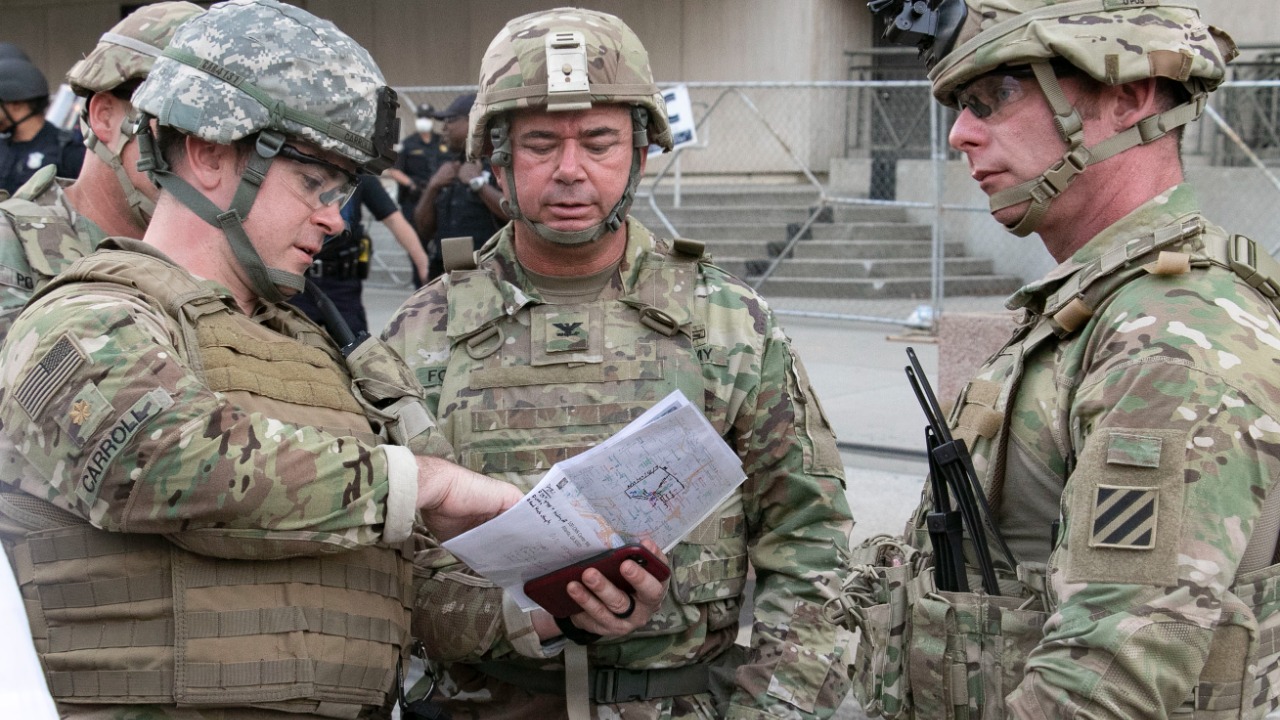
Army planners are explicit that the new command is not just a bureaucratic reshuffle but a response to evolving threats, strategy, and the need to treat the homeland as a priority theater in its own right. Officials involved in the redesign have argued that the decision to create a single command for the Western Hemisphere is rooted in a reassessment of risk that places greater emphasis on protecting the continental United States, Alaska, and key approaches, while still engaging with partners in the Caribbean and countries in South America, as detailed in coverage of how the Army creates single command for the region. That analysis highlights a shift away from viewing the homeland as a sanctuary and toward treating it as a contested space where adversaries can reach U.S. territory with cyberattacks, long-range missiles, and influence campaigns.
The new focus also reflects a recognition that instability or coercion in the Western Hemisphere can have direct consequences for U.S. security, whether through mass migration, disruptions to critical supply chains, or the presence of rival powers seeking military access in the region. By concentrating responsibility for these challenges under U.S. Army Western Hemisphere Command, the service aims to align its force posture, exercises, and partnerships with a strategy that prioritizes the defense of the homeland and its immediate neighborhood, a rationale that is echoed in the same report on threat and strategy. The result is a command that is expected to think holistically about everything from Arctic routes and Caribbean sea lanes to land borders and urban centers in the Midwest and Northeast, treating them as interconnected elements of a single theater problem set.
How the restructure reshapes forces and reporting chains
The Western Hemisphere-focused overhaul is not limited to a new headquarters patch; it also changes how major formations report and how they are expected to operate. One of the most significant shifts pulls the Army Reserve Command out from its previous alignment and places it directly under Headquarters, Department of the Army, as a direct reporting unit, a change described in detail in coverage of how the Army stands up Western Hemisphere Command in major force restructure. That adjustment is intended to give senior leaders more direct control over reserve capabilities, which are often critical for domestic missions such as disaster response, infrastructure protection, and support to civil authorities, while also ensuring they can be rapidly integrated into theater plans if a crisis escalates.
The same restructuring effort is designed to complement the Army’s Pacific-focused force structure, effectively dividing global responsibilities so that one set of commands can concentrate on the Indo-Pacific while U.S. Army Western Hemisphere Command manages the Americas, according to the same analysis of the force restructure. That division of labor is meant to reduce the strain on units that previously had to juggle missions across multiple regions, while also clarifying who is in charge when a crisis touches both domestic and international equities, such as a cyberattack that affects U.S. infrastructure and allied networks in Latin America at the same time.
From ceremony to full operational capability
Although the activation ceremony marked a symbolic turning point, Army leaders are clear that U.S. Army Western Hemisphere Command still has work to do before it is fully ready to execute its expanded mission set. The Department of the Army has laid out a timeline in which the command will reach full operational capability by the summer of 2026 if all conditions are met, a benchmark that includes building out staff sections, integrating planning functions, and aligning subordinate units under the new headquarters, as described in detail in an official transition ceremony account. Leaders speaking at the event framed the activation as part of a continuum, noting that today the Army is reorganizing to meet emerging threats in the Western Hemisphere while still maintaining global commitments.
As the command moves toward that full operational capability milestone, it will have to prove that the promised efficiencies and strategic clarity translate into real-world readiness. That means demonstrating that a single theater headquarters can coordinate complex operations across a vast geography, from Arctic training ranges to urban centers that adversaries might target in the Midwest and Northeast, while also supporting partners across the Caribbean and South America, a scope of responsibility highlighted in the broader Army description of the Western Hemisphere mission. If the new structure delivers on that vision, it will not only reshape how the Army thinks about the Western Hemisphere but also redefine what it means to prioritize the homeland in an era of global competition.