
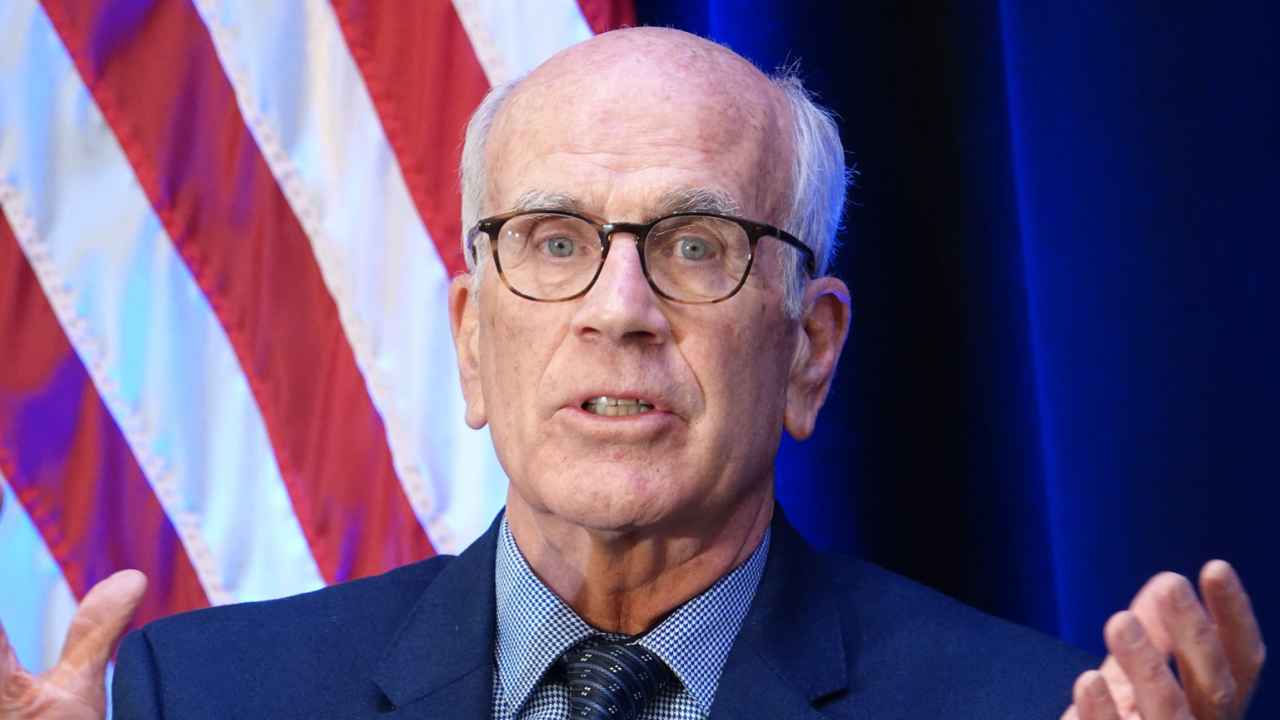
Sen. Peter Welch is renewing his demand that President Donald Trump end the war with Iran, arguing that American families are paying more to travel for Thanksgiving because of the administration’s military decisions. The Vermont Democrat’s November 24 statement links rising gasoline expenses to the conflict and warns that the financial consequences will continue without a clear end to the war. His comments follow months of efforts to use congressional war powers legislation to remove American forces from unauthorized hostilities.
Welch published the following statement on X on Tuesday, November 24, 2026:
“Americans are paying more to travel to their loved ones this Thanksgiving because of President Trump’s war with Iran.
Gas prices are out of control and there’s no end in sight.
We have to end this war.”
Welch’s statement raises three connected issues: the cost of holiday travel, the effect of the Iran conflict on energy prices and the absence of a defined end to American military involvement. The relationship between the war and fuel prices has been documented in energy-market reporting. Reuters reported in October that U.S. consumers had paid substantially more for fuel following supply disruptions caused by the conflict, including the effective closure and subsequent blockade of the Strait of Hormuz.
The conflict has affected a strategically important international shipping route through which approximately one-fifth of global oil and liquefied natural gas supplies normally pass. Disruptions to shipping and energy exports have affected crude oil, refined fuel availability and transportation costs. Reuters reported on November 23, however, that crude prices had retreated significantly from earlier wartime highs and U.S. gasoline inventories had recovered above their five-year average, while diesel inventories remained substantially below normal. The energy market therefore presents a more complicated picture than a single statement about gasoline prices being out of control might suggest.
Welch has consistently opposed the administration’s military campaign. On February 28, the day the United States and Israel launched attacks against Iran, he described Trump’s decision as reckless and wrong. He questioned why the president had abandoned diplomacy, what the military objectives were and whether the administration intended to pursue regime change. He also raised concerns about the possibility of American ground troops being deployed and warned that previous regime-change campaigns in the Middle East had produced prolonged and costly consequences.
On March 2, Welch took his opposition to the Senate floor, arguing that Congress had a constitutional responsibility to decide whether American service members should be committed to combat. He urged senators to support the bipartisan War Powers Resolution introduced by Sens. Tim Kaine and Rand Paul. The proposed measure sought to stop the president from continuing unauthorized military operations in Iran without congressional approval.
Welch also voted for the first War Powers Resolution considered by the Senate in March. The measure was blocked by Senate Republicans. In subsequent statements, he repeatedly argued that the administration had not provided a coherent military endgame and that the conflict was placing American personnel at risk while increasing costs for households. His opposition has included both the constitutional question of presidential authority and the practical consequences of continuing military operations.
By April 15, Welch was calling for a diplomatic resolution to the Iran conflict and criticizing the administration’s handling of the broader Middle East situation. He argued that the war was endangering American troops, killing civilians and raising costs for families in Vermont. His office also highlighted his support for efforts to restrict taxpayer-funded transfers of certain weapons and military equipment to Israel, demonstrating that his position on the regional conflict extends beyond the direct U.S. campaign against Iran.
Welch’s demands continued into June, when he joined other Democratic senators in challenging the administration’s claim that hostilities with Iran had legally terminated. The senators argued that ongoing naval operations, bombings, blockades and strikes continued to constitute hostilities under the War Powers Resolution. They also maintained that the law’s 60-day limit could not be suspended simply by declaring the conflict over.
On September 24, Welch again voted for a War Powers Resolution seeking to end Trump’s unauthorized military involvement in Iran. His office described it as the Senate’s 14th vote on efforts to terminate the conflict. Welch said the war had resulted in American military deaths and injuries, destabilized the Middle East and increased the cost of gas, household goods and groceries for American families. The resolution failed to pass the Senate.
Welch’s opposition to the Iran war has also been accompanied by criticism of Trump’s tariff policies. On September 2, he joined Senate Democratic Leader Chuck Schumer and other senators in introducing the End Trump’s Tariff Tax Act. The legislation sought to revoke and refund the administration’s newest tariffs, including broad international tariffs and the 50% tariffs imposed on Canadian goods. Welch argued that the measures were increasing costs for households, businesses and farmers.
Earlier in March, Welch also joined the introduction of the Reclaim Trade Powers Act, legislation intended to repeal Section 122 of the Trade Act of 1974 and end the administration’s broad-based tariffs imposed under that authority. He argued that Congress, rather than the president acting unilaterally, should exercise its constitutional authority over trade policy. The senator has additionally opposed legislation that he said would give Trump broader authority to impose tariffs on countries accused of facilitating Russian and Iranian oil sanctions evasion.
The fuel-price issue is particularly significant for Thanksgiving because higher transportation costs affect families traveling long distances to visit relatives, as well as trucking, agriculture and other businesses responsible for moving goods. Reuters reported in September that U.S. diesel prices had exceeded $6 per gallon amid the global supply disruption, placing additional pressure on farmers, truckers and businesses. Those pressures can extend beyond the gas station into the cost of transporting food and other consumer products.
Welch’s November 24 statement is consistent with his earlier efforts to end the Iran conflict through congressional action. His record includes repeated War Powers Resolution votes, public demands for a diplomatic settlement and legislation opposing Trump’s tariffs. Although fuel prices have fluctuated as global supply conditions have changed, his broader argument is that the administration’s military and trade decisions have imposed avoidable economic costs on American families. He is again calling for the conflict to end rather than allowing those costs and the military consequences to continue.