
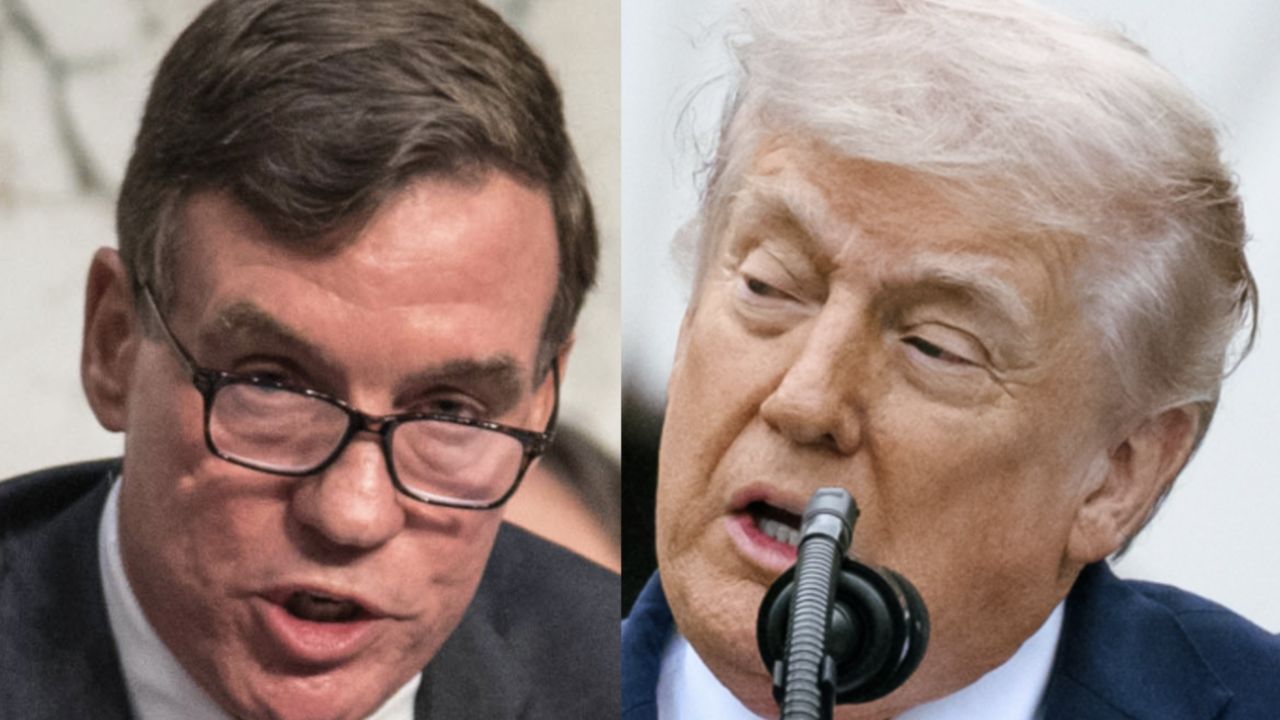
Sen. Mark Warner is accusing President Donald Trump of worsening the financial pressure facing American families ahead of Thanksgiving, pointing to higher gasoline prices and more expensive holiday groceries as evidence of what he describes as the consequences of the administration’s economic and foreign policies. In a November 24 statement, the Virginia Democrat specifically connected the cost of traveling to see relatives and the price of Thanksgiving staples to Trump’s decisions, including the ongoing war with Iran and his administration’s trade policies.
Warner published the following statement on X on Tuesday, November 24, 2026:
“Americans are being squeezed on what they can afford this Thanksgiving season. Gas for travel to loved ones is more expensive, and food costs for Thanksgiving staples like turkey are up 10% from last year.
The common denominator? Donald Trump and his reckless policies.”
The senator’s comments address two major expenses associated with the holiday: transportation and food. His reference to gasoline reflects the economic consequences of the conflict involving Iran, which has disrupted energy markets and contributed to higher fuel costs. His reference to turkey prices draws on a separate measure of grocery inflation, with the American Farm Bureau Federation reporting that the average price of a 16-pound frozen turkey reached $23.68 in 2026, an increase of $2.38, or approximately 10%, from the previous year.
The Farm Bureau’s broader Thanksgiving survey found that the average cost of a traditional dinner for 10 people increased approximately 6% to $58.63, or $5.86 per person. Turkey was not the only item that became more expensive. Milk, dinner rolls, sweet potatoes, cranberries, stuffing and several other commonly purchased Thanksgiving products also recorded increases. The organization identified fuel used in food processing and transportation, fertilizer, labor, electricity and other agricultural inputs as important pressures affecting the supply chain.
The Farm Bureau’s findings also provide an important distinction in the discussion about food inflation. Higher grocery prices do not necessarily mean farmers are receiving higher profits. The organization cited USDA estimates indicating that less than six cents of each dollar consumers spend on food goes back to the farm. It also identified strong demand and tight inventories as contributing factors behind higher turkey prices. The survey therefore documents the increase in Thanksgiving expenses but does not attribute every individual price increase exclusively to presidential policies.
Warner has repeatedly connected the Iran conflict to the financial pressure facing American households. In an October 27 statement with Sen. Tim Kaine, he highlighted a Joint Economic Committee report estimating that Americans had spent an additional $101 billion on gasoline since the war began on February 28, 2026. The report estimated an additional $856 in gasoline expenditures per American family on average. Warner and Kaine argued that disrupted supply chains and higher energy prices were simultaneously increasing consumer expenses and benefiting the value of certain oil and gas holdings.
Warner’s criticism began when the United States first launched military operations against Iran. On February 28, he questioned the administration’s decision to initiate extensive strikes without first obtaining congressional authorization. He acknowledged Iran’s record of supporting militant organizations and pursuing nuclear capabilities but argued that those concerns did not eliminate the president’s responsibility to act within the law and provide Congress with a defined military strategy. He also warned that the operation could pull the United States into another prolonged and costly Middle Eastern conflict.
The senator subsequently joined other Democrats in challenging the administration’s legal justification for continuing military operations. On June 8, Warner joined 37 Senate Democrats in demanding that Trump provide the legal opinion supporting the administration’s assertion that hostilities with Iran had terminated. The senators argued that continuing naval operations, bombings, blockades and strikes could not simply be disregarded when calculating the time limits established by the War Powers Resolution.
Warner also participated in congressional efforts to establish the financial cost of the conflict. On September 17, he joined 45 senators in demanding that Defense Secretary Pete Hegseth provide a full accounting of the war’s expenses. The lawmakers raised concerns about the Pentagon withholding basic budget information while American casualties, troop deployments and taxpayer costs continued to increase. The letter noted that more than 50,000 American troops were deployed to the Middle East at the time and questioned the repeated extensions of military deployments.
Warner’s opposition to Trump’s economic policies also extends to tariffs. On September 2, he and Kaine joined 12 other senators in introducing the End Trump’s Tariff Tax Act. The legislation sought to revoke the administration’s newest tariffs, require refunds and restrict the president’s ability to continue imposing broad trade measures without congressional involvement. Warner’s office argued that American families and businesses were absorbing most of the financial burden created by the tariffs.
The legislation followed earlier efforts to challenge the administration’s trade policy. Warner and Kaine introduced the Tariff Refund Act of 2026 after the Supreme Court struck down Trump’s broad tariffs imposed under the International Emergency Economic Powers Act. Their position was that importers should receive full refunds, including interest, for tariffs collected under the invalidated policy. Warner also supported congressional efforts to repeal tariffs imposed on Canadian imports.
The senator’s broader economic criticism has included housing, utilities, health care and agricultural expenses. In October, Warner and Kaine highlighted a congressional report estimating that Virginia families had spent more than $3,900 extra on goods and services since Trump took office. Their statement specifically identified the Iran war and tariffs as contributors to the financial pressure on households. Warner’s November Thanksgiving post therefore continues an established public argument linking the administration’s foreign and trade policies to everyday expenses.
The international energy situation has also remained relevant to Warner’s warning about travel expenses. Reuters reported on November 23 that crude oil prices had fallen substantially from earlier wartime peaks as Middle Eastern exports recovered, while diesel supplies remained unusually tight because of disruptions to refining and exports. The distinction matters because gasoline and diesel do not necessarily follow identical price trends. Gasoline inventories had recovered above their five-year average, while U.S. distillate inventories remained approximately 15% below that benchmark.
Warner’s November 24 statement brings together two issues he has repeatedly raised throughout the conflict: the economic consequences of military escalation and the financial effects of the administration’s trade policies. His record includes challenging the legal basis of the Iran operation, seeking greater transparency about its cost and introducing legislation intended to reverse Trump’s tariffs. His central argument is that American families should not be left absorbing the financial consequences of decisions made by the administration. The Farm Bureau’s latest figures confirm that Thanksgiving food costs have increased, although the individual causes of those increases vary across agricultural products.