
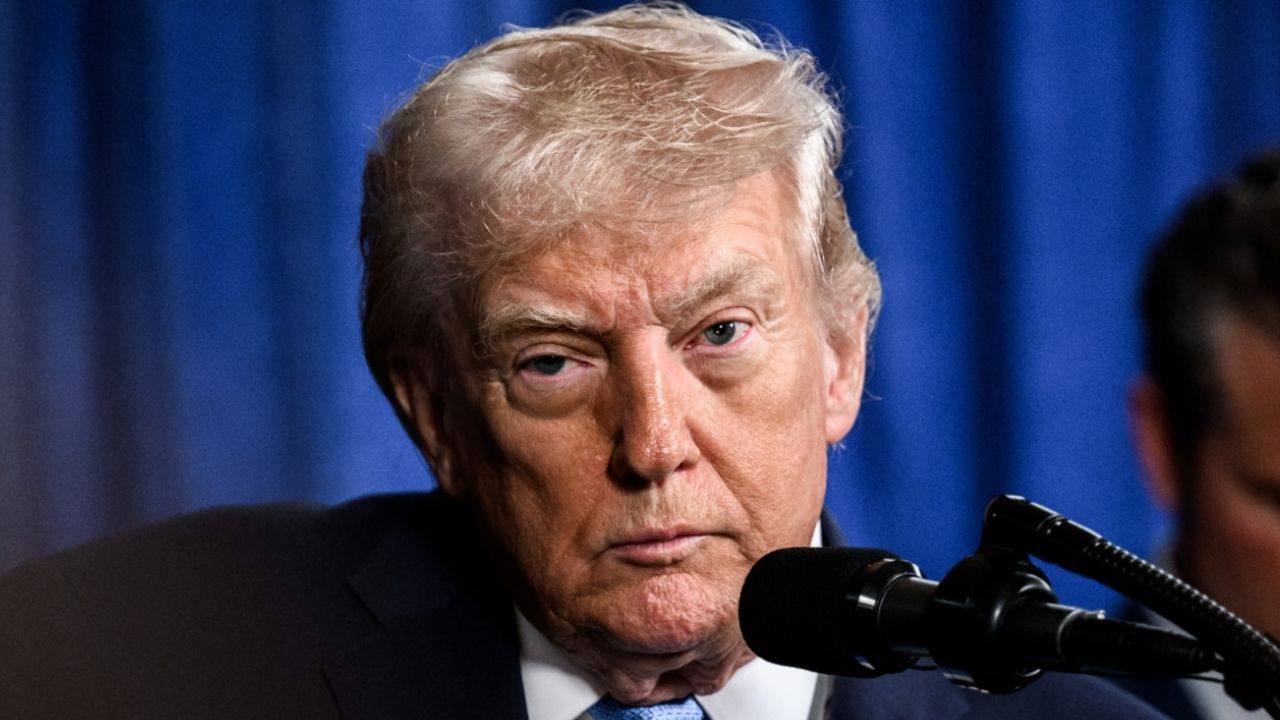
President Donald Trump declared Friday that the United States now has Greenland following parliamentary approval of a sweeping Arctic security agreement with Denmark and Greenland, describing the arrangement as a major achievement for American national defense.
Speaking during a November 20 news conference at the White House, Trump said the agreement had received approval the previous day, allowing the United States to secure expanded and lasting military rights on the strategically important Arctic territory.
“And as you know, we have Greenland, and that was just approved yesterday,” Trump said.
“Everybody said, ‘Oh, you’ll never get it. You’ll never get it.’ Well, we have it, and we have it powerfully. And that gives us tremendous protection.”
Trump also thanked Denmark and NATO Secretary General Mark Rutte for their roles in the diplomatic process.
“I want to thank Denmark. I want to thank Mark Rutte, from a really great group of people,” Trump said, calling Rutte a “fantastic leader.”
The president’s remarks followed the Danish Parliament’s November 19 approval of an agreement signed in September by the United States, Denmark and Greenland.
Although Trump described the outcome as the United States having Greenland, the agreement does not transfer ownership or sovereignty over the territory. Greenland remains a self-governing part of the Kingdom of Denmark, and the agreement explicitly recognizes the Greenlandic people’s right to self-determination.
Denmark Approves Greenland Security Agreement
Denmark’s Parliament, known as the Folketing, approved the agreement on November 19, completing the parliamentary approval process after Greenland’s legislature had also endorsed the arrangement.
In a statement published November 19, Greenland’s government confirmed that both legislatures had approved the defense and security agreement signed in New York on September 22.
Greenlandic Prime Minister Jens-Frederik Nielsen welcomed the approval, emphasizing that the agreement recognizes Greenland’s authority to participate in decisions affecting its territory and future.
Nielsen said the arrangement was based on respect for Greenland’s right to self-determination, its interests and its position in the Arctic.
According to the Greenlandic government, the next procedural step was formal notification to the United States, after which the agreement could enter into force.
That distinction is important because parliamentary approval and the agreement’s formal entry into force are separate steps. Trump’s statement that the arrangement had been approved referred to the completion of the legislative process, not necessarily confirmation that every procedure for implementation had already been completed.
The agreement was negotiated following months of diplomatic tensions over Trump’s repeated statements that the United States needed control of Greenland for national security reasons.
Denmark and Greenland had consistently opposed transferring sovereignty to Washington while expressing willingness to expand defense cooperation with the United States.
Agreement Expands American Military Rights in Greenland
The September agreement updates the longstanding defense framework established between the United States and Denmark in 1951, expanding American military access and strengthening cooperation on Arctic security.
According to an official explanation published by Greenland’s government, the agreement confirms the ability of the United States to establish additional defense areas and unmanned military installations, including radar and weather stations.
New installations require the approval of Greenland and Denmark and must take into account the local population and environment.
The agreement identifies Narsarsuaq and Mestersvig as potential locations for future American military facilities, subject to further arrangements among the parties.
It also reaffirms American military rights to fly over and land in Greenland, and permits U.S. ships, aircraft and military personnel to move between designated American defense areas.
Additional provisions expand access for American vessels to navigate Greenland’s territorial waters where the parties agree it is necessary for defense purposes. The agreement also allows American submarines to operate submerged in those agreed areas.
The United States already maintains a military presence at Pituffik Space Base in northwestern Greenland, an installation that supports missile warning, missile defense and space surveillance operations.
The new agreement provides a framework for expanding that presence and developing additional facilities as Washington and its Arctic partners respond to changing regional security conditions.
It also strengthens restrictions on military access and sensitive investments by countries considered potential adversaries, reinforcing the strategic position of the United States and its NATO allies.
Greenland Remains Under Danish Sovereignty
Despite Trump’s assertion that the United States now has Greenland, the agreement does not make the territory American property or incorporate it into the United States.
The Greenlandic government’s official summary states that the agreement provides for full respect for the territorial integrity and sovereignty of the Kingdom of Denmark and explicitly confirms that no territory or sovereignty is ceded.
It also recognizes the people of Greenland as a people under international law with the right to self-determination.
Those provisions preserve Greenland’s political status while allowing the United States to exercise expanded military rights through an agreement with Greenland and Denmark.
The distinction between military access and sovereignty has been central to negotiations since Trump renewed his interest in acquiring Greenland.
The president has repeatedly described American control of Greenland as essential to national security, citing the territory’s location between North America and Europe and its importance to missile defense and Arctic operations.
Danish and Greenlandic officials, however, have maintained that cooperation on defense does not require transferring ownership of the territory.
At the September signing ceremony, Danish Prime Minister Mette Frederiksen emphasized that the agreement strengthened common security while respecting the territorial integrity of the Kingdom of Denmark and Greenland’s right to self-determination.
Her remarks were recorded in the official compilation of presidential documents.
The agreement therefore provides the United States with substantial military and security rights without changing Greenland’s legal sovereignty.
Trump Previously Called Agreement a Major Security Achievement
Trump has repeatedly characterized the Greenland agreement as a major accomplishment for American national security.
In a September 22 statement, the White House described the agreement as providing lasting American security rights in Greenland, including permanent basing access and restrictions intended to prevent adversarial military activity.
The administration said the arrangement would strengthen the defense of North America and prevent countries considered U.S. adversaries from establishing military bases or undertaking sensitive investments without the required approval.
During the September signing ceremony at United Nations Headquarters in New York, Trump praised the agreement and thanked the leaders of Denmark and Greenland for their participation.
“We’re going to have a tremendous relationship, a secure relationship, and we look forward to it,” Trump said.
The president described the negotiations as a lengthy process and expressed optimism about future cooperation.
Frederiksen also praised the arrangement, describing it as an important development in the defense relationship established between Denmark and the United States 75 years earlier.
Nielsen similarly characterized the agreement as a means of strengthening shared security while maintaining respect for Greenland’s interests and political rights.
The leaders presented the arrangement as a compromise that addressed American defense priorities while preserving Greenland’s status and its relationship with Denmark.
Greenland’s Strategic Importance to U.S. and NATO Defense
Greenland occupies a strategically important position in the Arctic and North Atlantic, making it significant to American missile warning systems, military surveillance and the defense of NATO territory.
Its location between North America and Europe provides access to northern air and maritime routes that are important for monitoring potential military threats.
As Arctic conditions change and military activity increases in the region, the United States and its allies have placed greater emphasis on surveillance, communications and the protection of critical infrastructure.
The new agreement addresses those concerns through expanded access, additional defense areas and provisions intended to strengthen regional security cooperation.
During his November 20 news conference, Trump also referenced cybersecurity and the protection of undersea cables while discussing NATO and the agreement.
Undersea communications cables are an important component of international telecommunications infrastructure, and their security has become an increasingly prominent concern for NATO governments.
Trump’s comments connected the Greenland agreement to those broader security priorities, although the arrangement’s provisions primarily concern military access, defense installations and cooperation among the three governments.
For Washington, the agreement provides a framework for maintaining and potentially expanding its defense presence in the Arctic over the long term.
For Denmark and Greenland, it establishes conditions under which that expansion can occur while preserving their respective political and territorial rights.
Parliamentary Approval Completes Major Step Toward Implementation
The November 19 approval by Denmark’s Parliament marked a significant step toward implementing the agreement signed two months earlier.
With Greenland’s legislature having already approved the arrangement, both parliamentary bodies had completed their consideration of the agreement.
Greenland’s government said formal notification to Washington would follow, allowing the agreement to enter into force once the required procedures were completed.
The approval provides a political foundation for further cooperation on American military facilities, Arctic surveillance and defense planning.
Implementation of individual projects, including new defense areas, will still require the additional approvals and consultations specified in the agreement.
Trump’s declaration that the United States now has Greenland reflects his characterization of the strategic rights secured through the agreement, rather than a change in the territory’s ownership.
The United States has gained expanded and lasting defense access, while Greenland remains under Danish sovereignty with its right to self-determination explicitly recognized.
That distinction defines the outcome of the negotiations: a significant expansion of American security rights in the Arctic without a transfer of Greenland to the United States.