
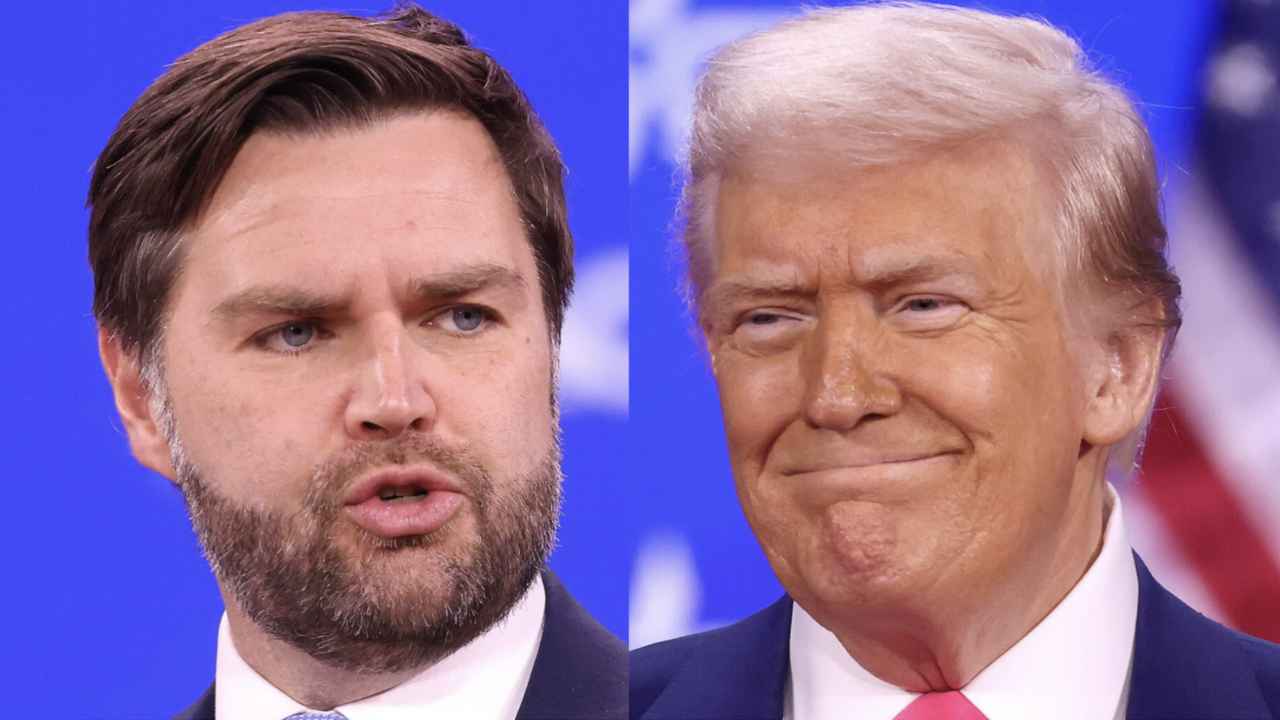
Vice President JD Vance defended President Donald Trump’s diplomatic engagement with Russian President Vladimir Putin following their meeting in China, arguing that direct communication with foreign leaders can advance American interests and create opportunities for international agreements.
In a November 19 post on X, Vance praised Trump’s willingness to negotiate with other world leaders, responding to footage of the president greeting Putin during the Asia-Pacific Economic Cooperation summit in Shenzhen.
“The president will talk to anyone, anywhere, to advocate for American interests,” Vance wrote. “It’s amazing what’s possible when you give diplomacy a real chance.”
The vice president’s statement came as Trump held discussions with Putin and Chinese President Xi Jinping during a series of high-level meetings addressing international security, Russia’s war in Ukraine and relations among the three countries.
Vance’s remarks emphasized the administration’s preference for maintaining direct diplomatic channels, including with governments whose policies have placed them at odds with the United States.
His comments did not identify a specific agreement reached during the meeting, instead presenting Trump’s willingness to engage with Putin as a potential means of advancing American diplomatic objectives.
Trump Tells Putin Their Meeting Could Produce Positive Results
Vance was responding to a video published by the White House’s Rapid Response account showing Trump greeting Putin in China.
During the encounter, Trump expressed optimism about the possibility of progress through direct discussions with the Russian president.
“We’ve known each other for a long time, and I think a lot of wonderful things can come out of this — or at least start,” Trump said, according to the White House’s published excerpt.
The president also described his relationship with Putin as longstanding and expressed anticipation about their scheduled discussions.
Trump and Putin met on November 19 on the sidelines of the APEC summit in Shenzhen, before participating in a separate meeting with Xi.
The bilateral encounter brought together American and Russian officials at a time when Washington and Moscow remained divided over the war in Ukraine and broader questions of European security.
Trump was accompanied by senior administration officials, including Secretary of State Marco Rubio and Treasury Secretary Scott Bessent. Putin was joined by Russian Foreign Minister Sergey Lavrov and other officials.
Before the talks began, Trump greeted Putin warmly, referring to him as a friend while the two leaders exchanged handshakes in front of reporters.
The encounter attracted international attention because of the continuing war in Ukraine and the longstanding disagreements between the United States and Russia over the conflict.
Ukraine War Discussed During Trump-Putin Meeting
Russia’s war against Ukraine was among the principal subjects discussed during the bilateral meeting, according to statements from both American and Russian officials.
Russian presidential aide Yuri Ushakov told reporters following the encounter that Trump and Putin had discussed bilateral relations and efforts to reach a settlement of the conflict.
Ushakov described the approximately 40-minute meeting as productive and confirmed that Ukraine had been a central topic.
The discussions took place as the Trump administration continued efforts to negotiate an end to the war, which began with Russia’s full-scale invasion of Ukraine in February 2022.
Trump has repeatedly argued that direct negotiations with Putin are necessary to explore possible terms for ending the fighting.
During the subsequent meeting involving Xi, Trump said he had held an extended discussion with Putin about the conflict and expressed hope that both Russia and Ukraine would seek an agreement.
“I think things are happening,” Trump said, referring to diplomatic efforts surrounding the war.
“I think that he — and I hope the other side — would like to see an end to that war.”
The president’s remarks indicated optimism about the possibility of negotiations but did not establish that Moscow and Kyiv had agreed on terms for ending hostilities.
Russia and Ukraine remain divided over territorial control, security guarantees and the conditions necessary for a lasting settlement.
Ukrainian President Volodymyr Zelenskyy has consistently maintained that any negotiated settlement must protect Ukraine’s sovereignty and security.
Trump’s engagement with Putin therefore remained politically sensitive, particularly as Washington continued balancing diplomatic efforts with its relationships with Ukraine and European allies.
Trump Also Holds Talks With China’s Xi Jinping
The meeting with Putin was part of a broader diplomatic schedule during Trump’s visit to China for the APEC summit.
Trump also met separately with Chinese President Xi Jinping before the three leaders participated in a joint meeting.
The trilateral gathering brought together the leaders of the United States, Russia and China for discussions involving international security and diplomatic relations among the three countries.
At the beginning of the meeting, Trump thanked Xi for hosting the summit and described the gathering as an opportunity for the three governments to address major international issues.
He characterized the meeting as an important diplomatic occasion, emphasizing the potential for cooperation despite differences among Washington, Moscow and Beijing.
Russia’s war in Ukraine was one of several international security issues discussed during the meetings, alongside nuclear arms control and broader questions involving the international order.
The three countries are permanent members of the United Nations Security Council and possess some of the world’s largest nuclear arsenals, giving their discussions particular significance for international security.
However, diplomatic engagement does not necessarily indicate agreement on the issues under discussion, and the governments continue to maintain competing interests on several major international questions.
Vance Emphasizes Diplomacy as a Tool for Advancing American Interests
Vance’s public endorsement of Trump’s meeting with Putin reflected the administration’s argument that direct engagement with foreign leaders can serve American interests even when substantial disagreements remain.
The vice president framed diplomacy as a practical instrument of foreign policy rather than an endorsement of another government’s conduct.
By stating that Trump would speak with “anyone, anywhere,” Vance presented the president’s willingness to hold discussions with Putin as part of a broader approach to international negotiations.
That approach has generated disagreement in Washington over how the United States should engage with Russia while its military campaign against Ukraine continues.
Supporters of direct negotiations argue that maintaining communication between Washington and Moscow can help reduce tensions, clarify each government’s position and identify possible areas for agreement.
Critics have raised concerns that highly visible meetings with Putin could provide diplomatic legitimacy to the Russian president without securing meaningful concessions concerning Ukraine.
Those competing views have shaped debates over American diplomacy with Moscow since Russia launched its full-scale invasion in 2022.
Vance’s statement did not address those criticisms directly. Instead, he emphasized what he described as the potential benefits of allowing diplomacy to proceed.
The vice president also did not claim that the Shenzhen meeting had produced a ceasefire, a peace agreement or a specific commitment from Putin.
His argument centered on the value of maintaining dialogue and pursuing American interests through direct negotiations.
Trump Describes Putin Talks as Positive After Returning to Washington
Speaking to reporters at the White House on November 20, Trump offered a positive assessment of his discussions with Putin, saying the two leaders had held productive talks about the war in Ukraine.
The president described the talks as “very good” and expressed his belief that Putin wanted to bring the conflict to an end.
Trump’s assessment came despite continued disagreements between Moscow and Western governments over the conditions for a settlement.
Russian officials had also publicly disputed suggestions from American negotiators that substantial progress had been made toward an agreement.
The differing assessments underscored the uncertainty surrounding the negotiations and the absence of publicly confirmed terms for ending the fighting.
Trump declined to provide detailed commitments concerning possible security guarantees for Ukraine before a broader agreement was reached.
The administration has continued to present diplomatic negotiations as a possible path toward ending the conflict, while Ukraine and its European partners have emphasized the need for enforceable security arrangements.
For Vance, the meeting represented an example of the president’s willingness to communicate directly with foreign leaders despite longstanding political and strategic disagreements.
His November 19 statement emphasized the potential of such engagement, while the outcome of the talks remained dependent on whether the governments involved could translate their discussions into concrete agreements.