
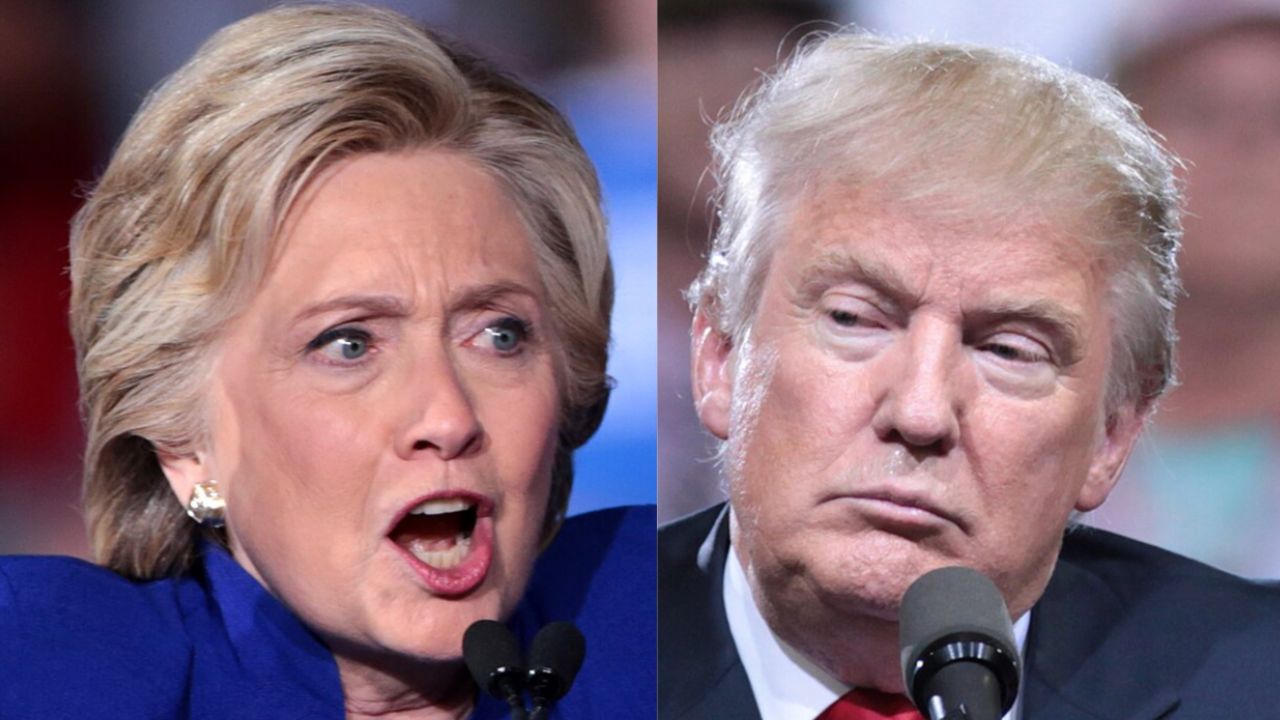
Former Secretary of State Hillary Clinton urged Americans on Monday to prepare for potential voting problems ahead of Tuesday’s midterm elections, emphasizing that every eligible voter has the right to have their ballot counted. Clinton encouraged Americans to save and share the number for the nonpartisan Election Protection hotline, which provides assistance to voters experiencing problems with registration, ballots or polling procedures. Her message comes one day before an election that could transfer control of Congress to Democrats, giving them greater authority to investigate President Donald Trump’s administration, scrutinize his Iran war and challenge aspects of his second-term agenda.
Clinton published the following message on X at 11:52 a.m. Monday:
Millions of Americans will vote tomorrow, and it is everyone’s right to see their vote counted. Save and share the number for the free Election Protection hotline now in case you or your community end up needing it.
The statement focuses on two distinct issues: the right of Americans to have their votes counted and the availability of assistance if voters encounter problems during the election process. Clinton’s instruction to save and distribute the hotline number suggests that she wants voters to prepare before problems occur rather than wait until Election Day to look for assistance. Unlike a direct candidate endorsement, the message centers on election administration, voter access and the protection of the ballot-counting process.
The hotline Clinton referenced is operated by Election Protection, a national nonpartisan coalition that provides information and assistance to voters. Its English-language number is 866-OUR-VOTE, or 866-687-8683, and voters can call or text the number with questions or concerns. The organization provides guidance on registration, absentee and mail voting, polling locations and other election-related issues. Its services are intended to help eligible voters understand the process and address difficulties that could interfere with their ability to cast a ballot.
Clinton’s emphasis on ensuring that votes are counted is consistent with her longstanding public position on voting rights. Her 2016 presidential campaign included a detailed voting-rights platform that called for restoring provisions of the Voting Rights Act, expanding early voting and making voter registration more accessible. The platform also proposed automatic voter registration for eligible Americans and supported restoring voting rights to people who had completed their criminal sentences. Those proposals established a documented record of advocating for expanded voting access and protections against restrictions on participation.
Her concerns about democracy and voting rights have also become increasingly intertwined with her criticism of Trump. In a March 2025 appearance in Berlin, Clinton warned about what she described as a rise in autocracy, saying the United States had a government that had “thrown in its lot with the autocrats.” She also argued that the erosion of shared facts and public trust posed a threat to democracy. The remarks demonstrated that her concerns extended beyond individual voting procedures to broader questions about democratic institutions, political accountability and the credibility of public information.
Clinton continued that criticism in a June 18, 2026, interview with The New Yorker. Asked whether Trump and Trumpism represented a sustained threat of authoritarianism, she answered that she believed they did. She cited what she described as deliberate cruelty and an increasingly impulsive approach to governing, arguing that the president’s behavior was concerning. Her comments provide additional context for Monday’s election message, although her X post itself did not accuse the administration of manipulating ballots or claim that votes would not be counted.
Clinton has also raised concerns specifically about election oversight in the lead-up to the midterms. On October 7, she criticized the administration’s decision not to invite international election observers to monitor the 2026 midterm elections, describing the development as worrying and encouraging followers to participate in election-protection efforts. She wrote that “anxiety is not a strategy” and urged people to join an election-protection initiative. That message, like Monday’s hotline appeal, focused on preparing for potential election-related disputes rather than simply expressing concern about the political outcome.
Her public criticism of Trump’s second term has also included concerns about the administration’s relationship with the press and constitutional restrictions on executive power. In September, Clinton described Trump’s reported efforts to restrict certain news organizations’ access to the White House as “deeply disturbing.” She argued that excluding news organizations from covering the administration sent a troubling signal about press freedom. Her criticism reflected a broader concern about the independence of institutions that provide public oversight of government activity.
On Monday, Clinton also appeared on ABC’s The View, where she discussed the midterm elections and the possibility of Democrats winning control of both chambers of Congress. She predicted that Trump could become “even more out of control” if Democrats win, arguing that he could feel cornered and respond angrily. Clinton nevertheless emphasized that a Democratic majority would provide Congress with leverage to hold the president accountable. Her comments directly connected the election outcome to the potential for increased congressional oversight of the administration.
The potential change in congressional control carries particular significance because of the administration’s ongoing military campaign against Iran. The United States began attacking Iran on February 28, 2026, without obtaining a specific congressional authorization beforehand. The administration invoked its authority under the War Powers Resolution, while members of Congress from both parties questioned the president’s ability to continue military operations without legislative approval. The conflict has generated repeated congressional efforts to restrict the campaign and has become one of the central foreign-policy issues facing voters in the midterms.
The dispute has already exposed divisions within Congress over the constitutional balance of authority between the executive and legislative branches. In June, lawmakers advanced measures challenging the administration’s continuation of hostilities, including a House resolution and a Senate procedural vote supported by several Republicans. Reuters reported that the votes represented an unusual challenge to Trump from members of his own party, alongside widespread Democratic opposition to the continuation of the war without congressional authorization. A Democratic-controlled Congress could pursue additional hearings, funding restrictions and demands for public testimony from administration officials.
The November 3 election will determine whether Republicans retain the narrow congressional majorities that have allowed them to control the legislative agenda during Trump’s second term. Republicans currently hold 218-214 seats in the House and a 53-47 majority in the Senate. Democrats need a net gain of four seats in each chamber to take control. Reuters reported Monday that Democrats are widely expected to reclaim the House, while the Senate remains highly competitive, with several Republican-held seats becoming central to the contest.
Decision Desk HQ’s November 2 forecast gave Democrats an 84% probability of winning the House and a 64% probability of taking the Senate. A Democratic victory in either chamber would change committee leadership and provide new opportunities for investigations, subpoenas and public hearings. If Democrats take both chambers, they would have significantly greater control over the congressional agenda, including the ability to investigate the administration’s handling of Iran, immigration enforcement and other second-term policies. Those powers would not eliminate Trump’s presidential authority, but they could make congressional oversight considerably more difficult for the White House to avoid.
Election integrity concerns have also become a major part of the broader midterm environment. Reuters reported Monday that election officials are preparing for possible disputes involving voter eligibility, ballot counting and certification, particularly in closely contested races. The Justice Department plans to deploy approximately 1,000 election monitors nationwide, while some local officials have expressed concerns about potential voter intimidation. The administration has rejected those concerns. Reuters also reported that Trump continues to make false claims about the 2020 election and has questioned the integrity of the upcoming midterms, creating additional political sensitivity surrounding the counting and certification process.
Clinton’s election-eve appeal therefore brings together several themes that have defined her public criticism of Trump’s second term: voting rights, democratic institutions, election oversight and congressional accountability. Her message does not allege that the 2026 election is being manipulated or that particular voters will be prevented from having their ballots counted. Instead, she is directing Americans toward an established nonpartisan resource intended to help resolve voting problems. With control of Congress at stake and the administration facing scrutiny over its conduct at home and abroad, Clinton is urging voters to prepare to exercise their rights and ensure they have access to assistance if difficulties arise.