
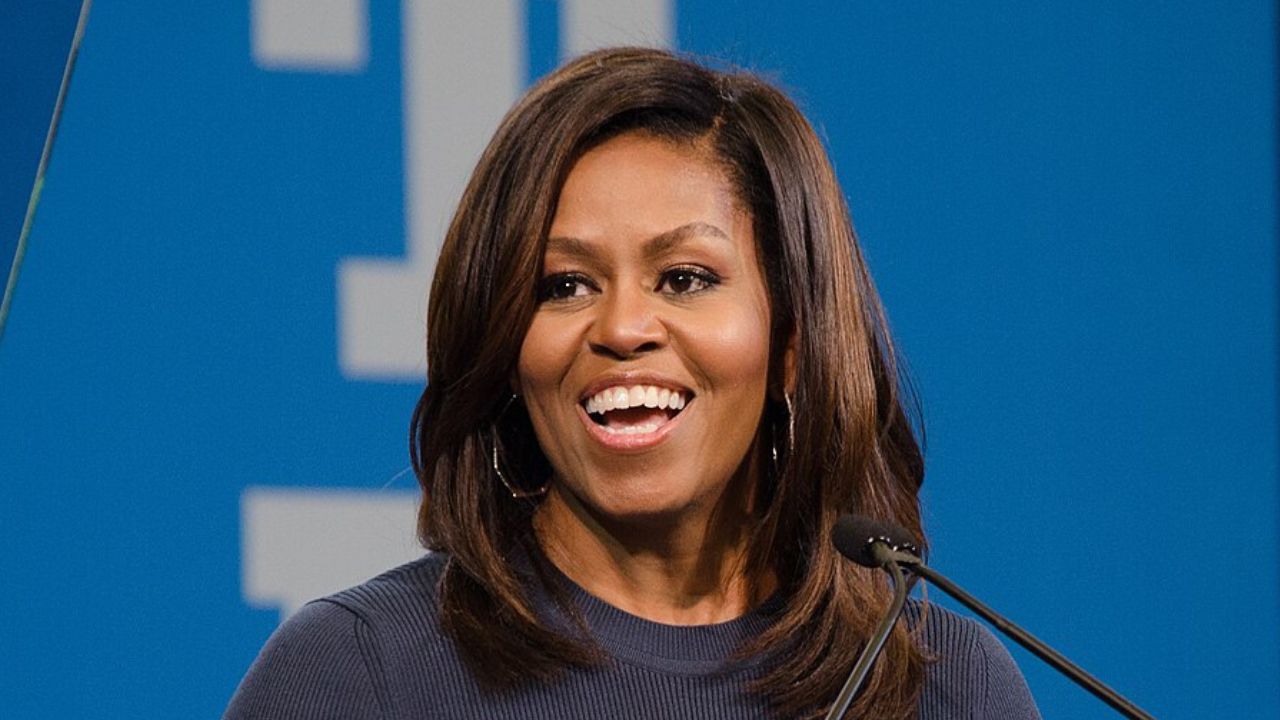
Former first lady Michelle Obama issued an election-eve appeal to Americans on Monday, urging voters to mobilize their families, friends and neighbors ahead of Tuesday’s midterm elections, which could determine whether Republicans retain control of Congress during President Donald Trump’s second term. Obama emphasized that political change depends on participation at the ballot box, telling Americans that their communities and the country need every eligible voter to cast a ballot. Her message comes as Democrats enter Election Day with strong prospects of reclaiming the House of Representatives and a competitive opportunity to take control of the Senate, potentially giving them significant leverage over Trump’s remaining two years in office.
Obama published the following message on X at 8:39 a.m. Monday:
This Election Day, you have the power to change the direction of this country. But nothing’s going to change if you don’t vote.
So I want you to reach out to everyone you know. Help your family members make a plan to vote. Drive your neighbors to the polls. Text your friends until they show you their “I Voted” sticker. And if anybody gives you any attitude, tell them Michelle told you to vote!
Your community, your state, and our entire country needs every single one of you to cast a ballot on November 3. We’re counting on you!
The message contains several distinct appeals, beginning with Obama’s assertion that voters have the ability to influence the country’s political direction. Rather than focusing on a particular candidate or explicitly criticizing Trump, she framed the election as an opportunity for Americans to exercise political influence through participation. Her warning that nothing will change without voting places responsibility on individual citizens to participate rather than assume political outcomes will change without their involvement.
Obama also called for voters to take an active role in mobilizing other people, specifically mentioning helping family members make voting plans, driving neighbors to polling places and encouraging friends to share evidence that they voted. The appeal goes beyond simply encouraging people to cast their own ballots, emphasizing community participation and efforts to increase turnout. Her closing statement, “We’re counting on you,” reinforces the collective nature of the appeal and places particular emphasis on participation in the November 3 election.
The message is consistent with Obama’s longstanding involvement in national voter-registration and participation efforts. In 2018, she founded When We All Vote to encourage greater participation in elections, particularly among younger voters and communities historically less likely to participate. The organization describes its mission as increasing participation in every election, closing voting gaps and changing the culture surrounding voting. Obama remains one of its founding co-chairs.
Her involvement continued during the 2024 election cycle. On October 29, 2024, Obama headlined a When We All Vote rally in Atlanta, Georgia, where she addressed first-time voters and emphasized the consequences of sitting out an election. The organization’s announcement described the event as an effort to mobilize voters and encourage participation, with Obama’s remarks focused on the power of individual ballots and the responsibility people have to help their communities vote. That earlier campaign provides a direct precedent for Monday’s message, particularly her emphasis on mobilizing people beyond one’s immediate circle.
Her husband, former President Barack Obama, has also made voting and democratic participation central themes of his public statements ahead of the 2026 midterms. On April 29, he criticized a Supreme Court decision affecting the Voting Rights Act, arguing that it could allow state legislatures to weaken minority voting power through redistricting. He urged Americans to respond by mobilizing and voting in record numbers, emphasizing participation not only in the upcoming midterms but in elections at every level. His statement offers a parallel to Michelle Obama’s election-eve appeal, although the two have issued separate messages and spoken in their respective public capacities.
Barack Obama intensified his political involvement as Election Day approached. On October 24, he campaigned for Democratic candidates in Ohio and criticized the Trump administration over the Iran war, economic conditions and what he characterized as political misconduct. He described the midterms as the country’s “last best chance” to rein in the administration. His remarks reflected the broader argument Democrats have been making about the importance of congressional control, particularly the possibility that a Democratic majority could increase oversight of the president and his administration.
The congressional election comes during an unusually consequential period for American foreign policy. The United States entered hostilities against Iran on February 28, 2026, without first obtaining a specific congressional authorization for the military campaign. The administration has defended its actions under the War Powers Resolution, while lawmakers have repeatedly challenged the president’s authority to continue the conflict without congressional approval. The dispute has become a major constitutional and political issue, placing Congress’s role in authorizing military force directly into the midterm debate.
Congressional efforts to restrict the conflict have already produced significant votes. In June, the Republican-led Congress backed measures challenging Trump’s continuation of the Iran campaign, with a House war powers resolution passing and a Senate measure advancing through a procedural vote. Reuters reported that the votes reflected concerns among lawmakers from both parties about the scope of presidential military authority. The dispute has continued as Democrats have argued that the president should obtain congressional authorization before continuing hostilities.
The possibility of a Democratic congressional majority is therefore significant beyond ordinary legislative disagreements. Reuters reported on October 25 that Democrats could use control of either chamber to pressure the administration over the Iran war, restrict defense spending, demand public testimony from administration officials and pursue additional oversight. A Democratic majority could also influence congressional consideration of military assistance to Ukraine, sanctions policy and foreign aid. These possibilities would not automatically end the war or override the president’s executive authority, but they could substantially change the political and legislative constraints facing the administration.
The election is also expected to serve as a nationwide assessment of Trump’s presidency. Reuters reported Monday that Democrats are widely expected to reclaim the House, while the Senate remains highly competitive. Republicans currently hold narrow majorities in both chambers, with 218-214 in the House and 53-47 in the Senate. Democrats need a net gain of four seats in each chamber to establish control, making several closely contested races especially important to the outcome.
Decision Desk HQ’s November 2 forecast placed Democrats’ probability of winning the House at 84%, compared with 16% for Republicans. Its Senate forecast gave Democrats a 64% chance of taking control, compared with 36% for Republicans. Those figures illustrate why a Democratic takeover of both chambers is a realistic possibility, although the forecast does not establish that either outcome is certain. A change in congressional control would give Democrats greater authority over committee leadership, investigations, hearings and the legislative agenda.
A Democratic victory could also lead to investigations involving the administration’s handling of the Iran war, immigration enforcement and presidential ethics. Reuters reported that a change in congressional control could trigger additional scrutiny of the administration, while a stronger Republican showing would preserve Trump’s existing congressional support and reduce pressure on the White House to change course. The stakes extend into 2027, when Congress will confront federal spending decisions, government funding and other major legislative questions.
Obama’s Monday message did not explicitly endorse Democratic candidates, mention Trump or directly reference the Iran war. Instead, it focused on the mechanics and importance of voting, continuing a public advocacy record that includes founding a national voter-participation organization and repeatedly encouraging Americans to become involved in elections. Nevertheless, the timing places her appeal within a midterm contest that could substantially alter the balance of power in Washington and determine how much congressional oversight the Trump administration faces during the remainder of its term.