
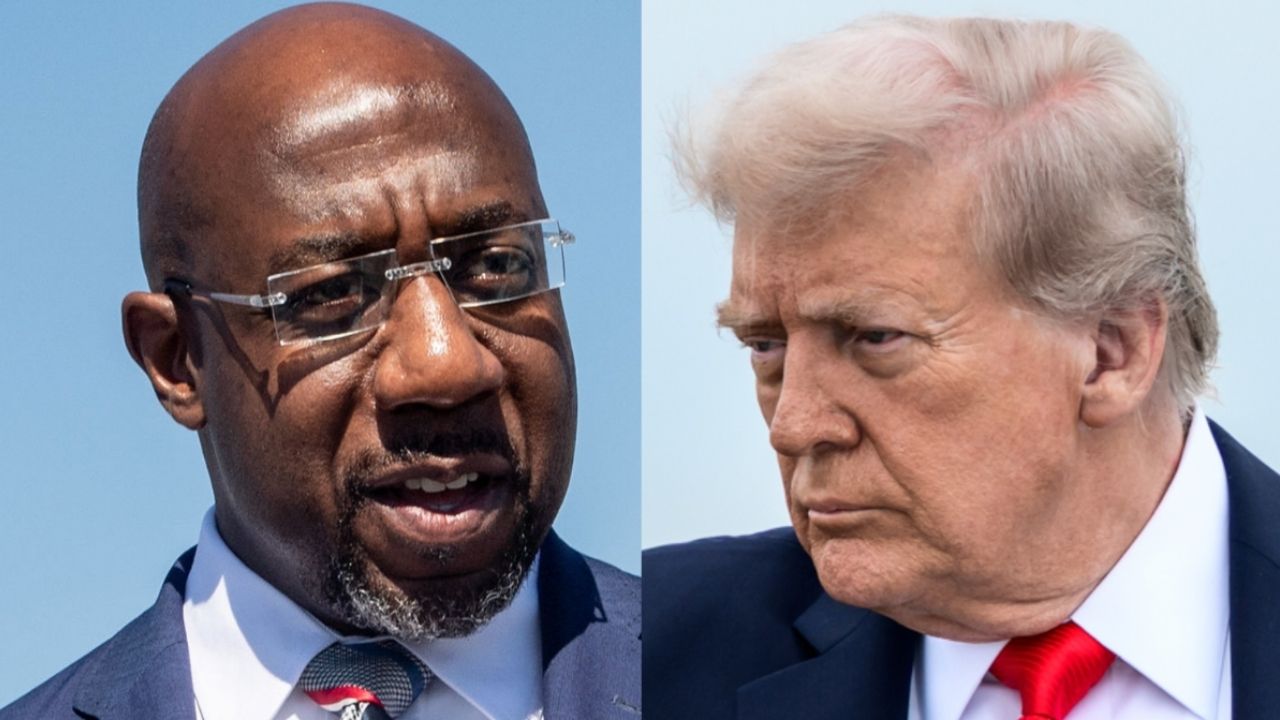
Sen. Raphael Warnock of Georgia issued a forceful election-eve message on Monday, invoking the power of ordinary Americans as voters prepare to decide control of Congress. Warnock’s statement comes after months of criticism of President Donald Trump’s policies, including the administration’s war with Iran, tariffs and economic decisions that the senator has argued are placing additional burdens on working families.
Warnock’s post does not explicitly identify a particular election outcome, but its reference to the power of the people and the phrase “He can’t stop what’s coming” comes on the eve of the November 3 midterm elections.
Warnock’s full X post reads:
“Tomorrow, we are going to remind Donald Trump that it’s not about the people in power. It’s about the power that’s in the people. He can’t stop what’s coming.”
11:41 AM · Nov 2, 2026
Warnock has repeatedly challenged Trump’s handling of the Iran war. In April, he filed a War Powers Resolution intended to force a Senate vote on whether to end the conflict. Warnock described the war as an illegal and unwise decision, arguing that the United States risked becoming trapped in another prolonged Middle Eastern conflict.
His opposition continued into the summer. On July 14, Warnock voted against the fiscal year 2027 National Defense Authorization Act, arguing that it authorized a blank check for the president’s war in Iran. He cited the lack of a justification, defined objective and exit strategy.
Warnock has also criticized Trump’s tariff policy. As the ranking member of the Senate Finance Subcommittee on International Trade, Customs and Global Competitiveness, he has worked on legislation involving presidential tariff authority. In August, his office announced a written commitment from the administration limiting certain tariff powers under a sanctions bill involving Russia and Iran.
The senator’s record demonstrates that his opposition to Trump has involved specific legislative actions, rather than solely campaign rhetoric. His work on war powers and trade policy has focused on limiting the administration’s ability to act without congressional oversight.
Warnock’s election-eve message also reflects his broader political emphasis on working-class voters and public participation. He has frequently framed political power as belonging to ordinary Americans rather than wealthy donors, elected officials or the executive branch.
The November 3 election is particularly significant because it will determine whether Democrats can gain control of one or both chambers of Congress. Republicans currently hold narrow majorities, leaving the outcome dependent on a relatively small number of competitive races.
Prediction markets were strongly favoring a Democratic House majority on November 2. Polymarket-related market data placed the probability of Democrats winning the House around 94.5%, while the Senate probability was approximately 72.5%. Those figures represent market expectations and may change.
Reuters reported Monday that Democrats were widely expected to make gains, particularly in the House, although the eventual scale of those gains remained uncertain.
A Democratic victory would give the party greater authority over congressional committees, oversight investigations and the legislative agenda. It would not, however, guarantee that Democrats could enact their preferred policies, as Trump would retain veto power and significant executive authority.
Warnock’s statement is therefore both a political message and a call to participation. His record on Iran and tariffs shows a consistent effort to challenge the administration through Senate legislation and votes, while his latest post places that opposition in the context of the upcoming election.