
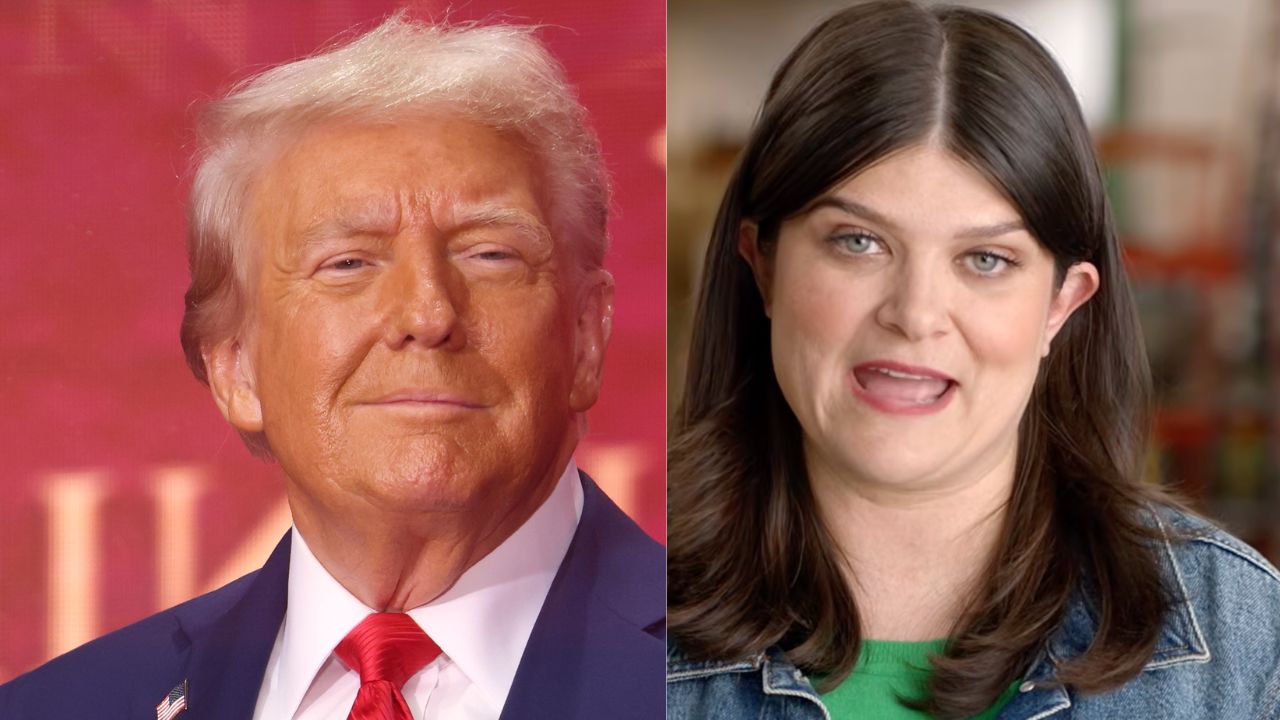
Trump Hails Stevens’ Endorsement in Truth Social Post Days Before Michigan Senate Vote
President Donald Trump publicly celebrated Rep. Haley Stevens’ Sunday endorsement of Republican Mike Rogers in Michigan’s U.S. Senate race, calling the Democratic congresswoman’s move “BIG” in a Truth Social post that arrived as his attacks on Democratic nominee Abdul El-Sayed have defined the closing weeks of the campaign.
Trump posted the message at 12:38 p.m. on Nov. 1, 2026. It reads in full:
“Wow, this is BIG! Congresswoman Haley Stevens, a Highly Respected Democrat, who narrowly lost in the Primary to Abdul Mohamed El-Sayed, and who has been breathlessly wined and dined by the Dumocrats to help in their Michigan Campaign for the United States Senate against Mike Rogers, has just ENDORSED Mike Rogers for Senate! Her following is huge, and the level of respect from the People of Michigan, especially our African American and Jewish populations, is virtually unparalleled. Haley said what few people are willing to say. She showed great and almost unprecedented loyalty to the Great People of Michigan with what she did. It’s a thing called bravery, and few people have it like just displayed by Congresswoman Haley Stevens! President DONALD J. TRUMP”
The post names El-Sayed only once, as the candidate Stevens “narrowly lost” to in the primary. Its praise is directed at Stevens, and it singles out her standing among Black and Jewish residents of Michigan, two groups Democrats are counting on in the final days of the race.
What Prompted the Post
Stevens announced her endorsement of Rogers on Sunday after attending a Detroit-area church service with him. In a video announcing the decision, she said El-Sayed had told her she was “no longer welcome” in his campaign and should stay away. The Associated Press attended both that service and a separate one where El-Sayed campaigned alongside prominent Democrats. Stevens said she was “not turning my back on Democrats,” calling the endorsement “this one vote.”
El-Sayed dismissed the development when asked by reporters, saying: “At the end of the day I actually don’t think about Haley Stevens.” Democratic leaders, including Senate Democratic Leader Chuck Schumer, condemned the endorsement. Trump’s post, however, is the president’s first public comment on the episode, and it frames the move as an act of courage.
Trump’s Record on El-Sayed: From Primary Night Forward
Trump’s public criticism of El-Sayed began within hours of the Aug. 4 primary result. On Aug. 5, after the race was called, he wrote on Truth Social that El-Sayed was a “Communist loser” who hates Jews and Israel, and he separately described Michigan’s election system as “third world” and warned the November contest would be “rigged.” In a related post, he labeled Wayne County, home to Detroit, among the “most corrupt voting areas in the United States, if not the World.”
On the Saturday after the primary, Trump posted a side-by-side image of himself and First Lady Melania Trump next to a photograph of El-Sayed and his wife, Dr. Sarah Jukaku, captioned “Two VERY DIFFERENT America’s.” Days later, at an event in Nevada, he said El-Sayed was a “man of hate.”
October: The Muslim Brotherhood Allegations
The tone sharpened in October. On the evening of Oct. 7, Trump wrote on Truth Social that El-Sayed “goes back to the days of the Jihad” and called him a “RADICAL Extremist, Terrorist Sympathizer,” adding that he was “no different from his best friend, America Hating Hasan Piker.” The post used the name “Mohammed.” At a campaign event the next day, El-Sayed replied: “My name’s Abdul, and you know it.”
On Oct. 15, Trump released a video on Truth Social addressed to “the people of Michigan.” In it, he called El-Sayed a “Muslim radical” and said he was a Muslim Brotherhood member “even though he denies it.” The same day, at a White House event, Trump said: “He’s a Muslim Brotherhood guy. One hundred percent.” El-Sayed has repeatedly denied any ties, telling one interviewer: “I have no ties. We have no ties.”
The Final Weeks
On Oct. 25, Trump told a Michigan rally he had come “to keep a jihadist Muslim Brotherhood member from becoming a United States senator.” The Associated Press reported there is no evidence El-Sayed has any affiliation with the Muslim Brotherhood. It noted that his half-sister wrote in 2012 that “my family has long been MB.” El-Sayed told supporters he does not care how Trump pronounces or misrepresents his name.
Across the roughly three months since the primary, that makes at least six separate occasions on which Trump has publicly attacked El-Sayed: the Aug. 5 post, the Aug. 8 image, the Nevada remarks, the Oct. 7 post, the Oct. 15 video and White House comments, and the Oct. 25 rally. The count is a minimum, because Trump has also referenced the race in other posts and remarks.
What the Latest Post Shows
Taken together, Trump’s statements since August show a consistent position: strong criticism of El-Sayed and open backing for Rogers. In the Oct. 15 video he urged Michigan voters to support Rogers and described him as someone who would help “make America great again.” The Nov. 1 post continues that line from a different direction. It does not repeat the earlier charges, and it praises a Democrat who chose to oppose her own party’s nominee.
Michigan is among the contests that could decide control of the Senate, where Republicans currently hold a 53-47 majority. Early voting has been underway since Oct. 24, and Election Day is Tuesday. El-Sayed denies the allegations Trump has made against him, and his campaign has called Republican attacks on his name and faith false and Islamophobic.