
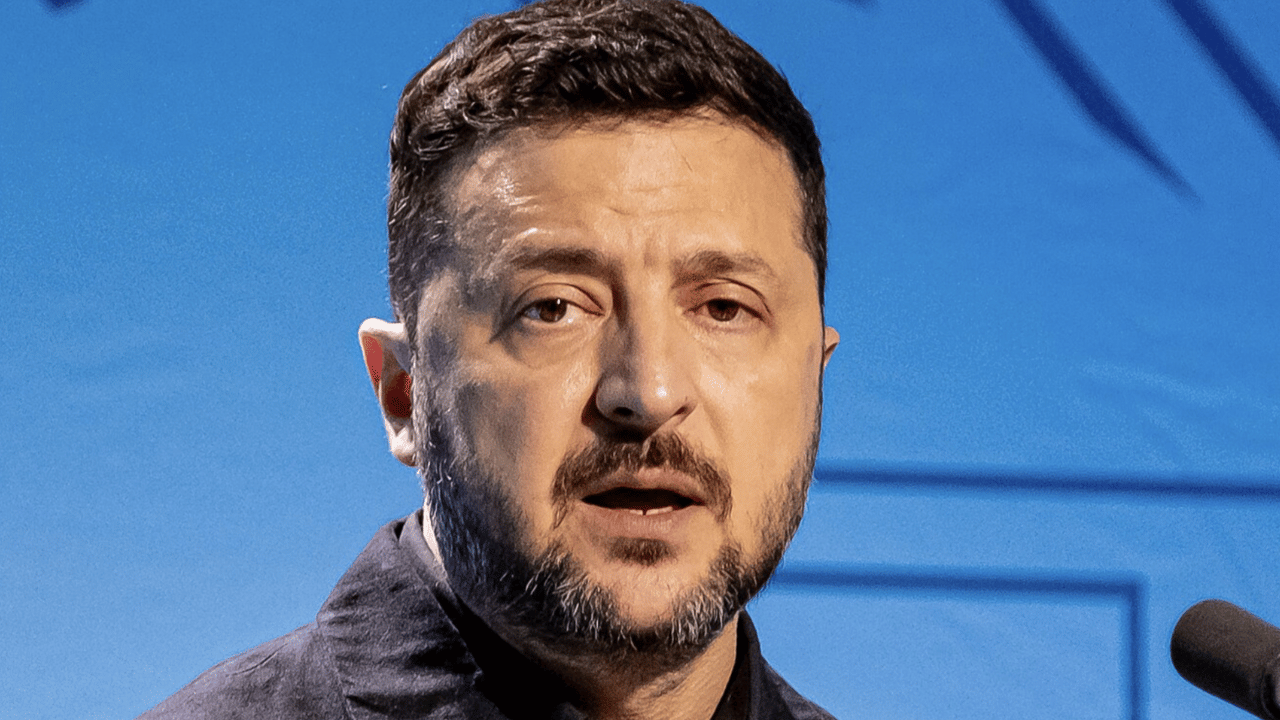
Ukrainian President Volodymyr Zelenskyy said Friday that a U.S. State Department authorization for Ukraine to buy 500 Patriot Advanced Capability-3 interceptors is “a strong decision,” but that deliveries “may begin ONLY IN A FEW YEARS,” and he asked Washington to find a way to put missiles in Ukrainian hands this winter instead, according to a statement he posted.
“Five hundred PAC-3 interceptors is a substantial number, and very soon – this winter – they COULD make for a highly effective defense package,” Zelenskyy wrote. “However, it has been stipulated that deliveries may begin ONLY IN A FEW YEARS. We are asking our American partners to find a solution for the time when there is a real danger and a real need to use PAC-3 interceptors.”
The State Department notification Zelenskyy linked says Ukraine requested to buy 500 PAC-3 Missile Segment Enhancement missiles and related parts, and names Lockheed Martin of Bethesda, Maryland, as the principal contractor. Breaking Defense, quoting the congressional notification posted Friday, reported an estimated $2.1 billion price to be paid “entirely by partners and allies,” with donations from Canada, Germany and Norway through the JUMPSTART program and national funds financed by the European Union’s Ukraine Support Loan, and with “no U.S. funds” involved. JUMPSTART is the Joint Ukrainian Multinational Program–Services, Training and Articles Rapid Timeline, established in 2022 so third-party countries can fund Ukrainian purchases of American equipment, Breaking Defense reported.
Breaking Defense noted that quantities and prices can change in contract talks and that lawmakers could delay or block a deal, though bipartisan support for Ukraine makes that less likely in this case. The State Department did not immediately respond to the outlet’s question about how Friday’s announcement would affect Ukraine’s near-term interceptor shortage. Two people briefed on the decision told The Guardian the missiles have yet to be manufactured and are not expected to be delivered until a couple of years into the 2030s; one of them said Ukraine’s Defense Ministry was urging the Pentagon to bring forward delivery, possibly by providing missiles already in the U.S. arsenal and backfilling later.
“The United States, our European partners, and other partners around the world have sufficient stocks of PAC-3 interceptors in their warehouses,” Zelenskyy wrote. “Providing them to Ukraine right now – in the winter of 2026–2027 – and replenishing our partners’ arsenals LATER, in THE FOLLOWING YEARS, through this production already contracted and paid for by Ukraine and our partners would be the right approach. And it is entirely feasible.”
He said Ukraine had asked for a winter support package of 100 Patriot interceptors per month, and that 500 missiles would cover the coming months “precisely when it is so important for Ukraine to be in a strong position in negotiations and for Russia NOT to succeed in breaking life in Ukrainian cities and communities.”
“Right now, the Russians are attacking our energy infrastructure every single day,” Zelenskyy wrote. “In just these past two weeks of October, there have already been more than 30 Russian strikes on critical parts of our power grid.” He said the targets are electricity, heating, water supplies, bridges and “life in our cities in general,” and described Putin as carrying out an operation against systems that sustain life even before winter fully arrives.
On Oct. 19, The Washington Post reported that the United States appeared to have delayed Patriot interceptor transfers amid a falling out between Trump and Zelenskyy. Days earlier, on Oct. 15, CNN reported that Kyiv had run out of interceptors. On Oct. 25, Zelenskyy said there was “progress on missiles for Patriot systems, but things are moving very slowly. More slowly than Russian missiles fly,” and that “you cannot say, ‘Yes, we will give the missiles to you,’ and then not deliver them for a month or two,” Breaking Defense recounted. In an ABC News interview earlier this month, he said Ukraine had received only 24 U.S. Patriot interceptors in the prior three months, and Breaking Defense noted he had told ABC that Ukraine would need about 350 a month.
Zelenskyy thanked President Donald Trump and said Ukraine had recently discussed PAC-3 interceptors with Secretary of State Marco Rubio. “Ukraine is grateful to the U.S. State Department and the U.S. Administration overall for granting this authorization,” he wrote. “But we are asking for decisions that can guarantee the protection of lives not the day after tomorrow or sometime later, but at the very moment the threat is there – when Russia is killing and destroying.” On Oct. 25 he said Ukraine and the United States had resolved recent disruptions in Starlink and Starshield connectivity and in U.S.-provided missile warning information, while “the issue of air defense remains,” Breaking Defense reported.
Zelenskyy’s statement that deliveries may begin “only in a few years” describes the schedule he said is stipulated under the newly authorized sale. The notification approves a potential allied-financed purchase of 500 PAC-3 Missile Segment Enhancement missiles, not an immediate transfer from existing U.S. or partner stockpiles, and people briefed on the decision told The Guardian the missiles are still to be built and may not arrive until the early 2030s. The State Department did not immediately respond to Breaking Defense’s question about Ukraine’s near-term shortage, and no U.S. decision on his request to draw down warehouse stocks this winter had been announced as of Friday.