
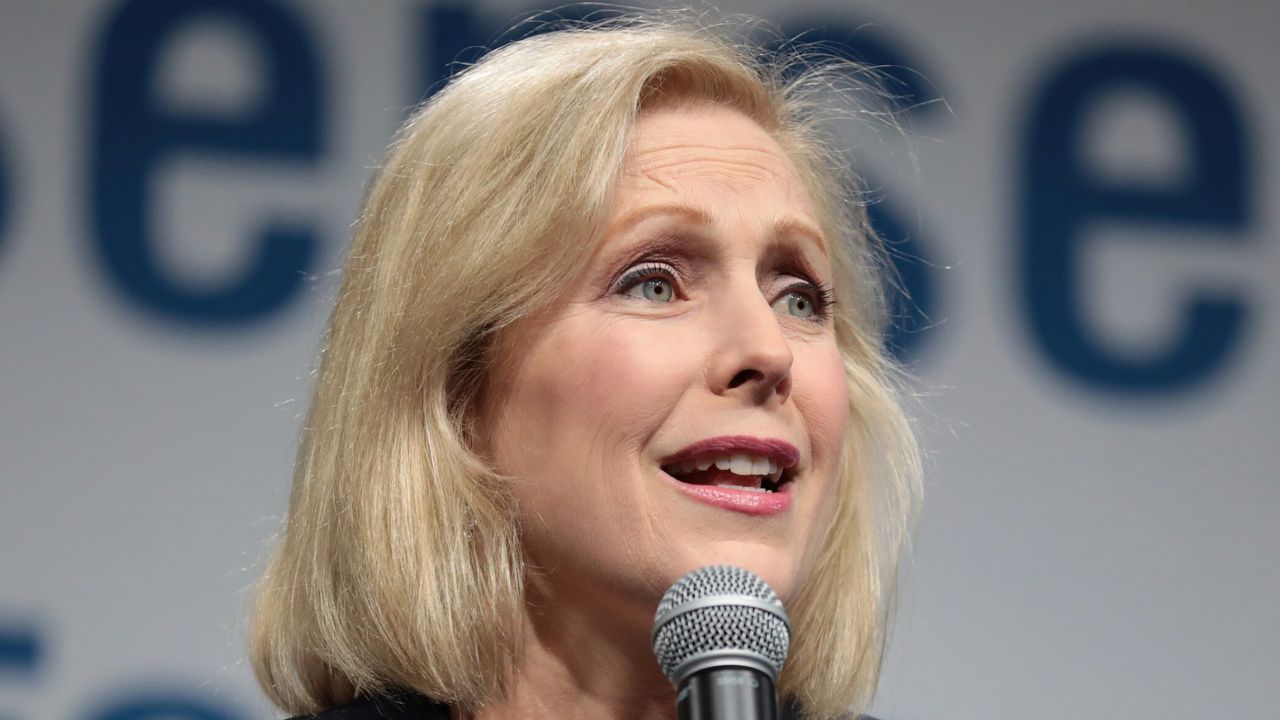
WASHINGTON — Sen. Kirsten Gillibrand (D-N.Y.) said Saturday that Republicans “picked tax breaks for billionaires over feeding children and working families.” She added that millions of Americans are now struggling to afford basic essentials. Her post came days after a report on food pantries seeing rising demand as grocery prices climb and federal food benefits shrink.
Gillibrand posted the following on X at 4:09 p.m. on Oct. 24, 2026:
Republicans picked tax breaks for billionaires over feeding children and working families.
Now millions of Americans are struggling to afford basic essentials.
The Report Behind the Post
The New York Times reported on Oct. 18 that food inflation, gas prices and cuts to federal benefits have created a “perfect storm” for food pantries. The report said rising grocery bills, driven by tariffs and war, and dwindling federal benefits, driven in part by budget cuts in President Trump’s signature tax-and-spending law, are pushing struggling families toward pantries.
The report profiled Chris Manno, 57, a volunteer at a pantry in Waynesboro, Va., who also shops there. Her federal food benefits were cut by about $300 a month this summer, and her pantry visits went from a supplement to a necessity. Jacqueline Marquez, 29, of Albuquerque, N.M., said she turned to a food distribution site for the first time this spring and now rations gas to afford food.
A survey of 48 of the largest U.S. food banks, representing 35 states and Washington, D.C., found that nearly three-quarters reported more people coming to their sites over the past year. Linda Nageotte, president of Feeding America, said food insecurity is at its highest since the Great Recession and that prices are rising faster than incomes.
Consumer prices are up 3.7 percent from a year earlier, the Bureau of Labor Statistics reported. Food costs rose 2.5 percent over the past 12 months and about 30 percent from 2019 to 2025. A Pew Research Center study found that almost half of Americans struggle to pay for at least one basic need. Nearly three-quarters of lower-income adults reported difficulty covering groceries, housing, medical care or transportation.
The Trump administration cut about $1 billion in federal aid for anti-hunger programs last year, the report said, and then trimmed SNAP funding. Agriculture Secretary Brooke Rollins said the SNAP changes were meant to cut waste and fraud. SNAP participation fell by about 5 million people from July 2025 to June 2026, according to an analysis by the Center on Budget and Policy Priorities. The administration also stopped tracking hunger a year ago. The last federal report found about 48 million Americans experienced food insecurity at some point in 2024.
Gillibrand’s Record on SNAP, School Meals and the Tax Law
On July 1, 2025, the day the Senate passed Trump’s One Big Beautiful Bill Act, Gillibrand called it “a big, beautiful betrayal of the American people.” She said Republicans were cutting health care and food assistance to give massive tax cuts to the wealthiest Americans, and promised to keep fighting. The bill passed with Vice President JD Vance casting the tie-breaking vote.
In a later statement, Gillibrand responded to federal data showing SNAP enrollment had fallen more than 13 percent nationwide since May 2025. She said more than 200,000 New Yorkers had been pushed off food assistance. She accused Trump of kicking families off assistance “to fund tax cuts for the richest people in the country.” She noted that SNAP cost-shifting provisions in the law begin in October 2026 and October 2027.
On May 20, 2026, Gillibrand held a press conference calling for passage of her Universal School Meals Program Act. It would provide free breakfast, lunch, dinner and a snack to all schoolchildren. Her release said the Trump administration and congressional Republicans have enacted the deepest cuts to federal nutrition programs in history.
Her opposition to SNAP cuts goes back more than a decade. In May 2013, she voted against a Senate farm bill in the Agriculture Committee that cut SNAP by $4.1 billion, calling those “the wrong priorities.” She also voted against the final farm bill in 2014, citing its SNAP reductions. In 2015, she announced bipartisan Summer Meals Act legislation that would have expanded eligibility to 3.2 million children.
Affordability and the Midterms
Gillibrand has made grocery costs a theme of her recent public events. Her office reported press conferences in Latham, Utica and Riverhead on rising grocery and household prices. At a July 21 Senate hearing, she told Rollins that more than 160,000 New Yorkers had been cut from SNAP and that prices are higher than when the administration took office.
The Oct. 18 report said the rise in food pantry traffic coincides with midterm elections that could prove to be a referendum on Trump’s economic stewardship. Gillibrand’s post did not cite specific figures or legislation. It framed the pantry surge as the result of a choice Republicans made.