
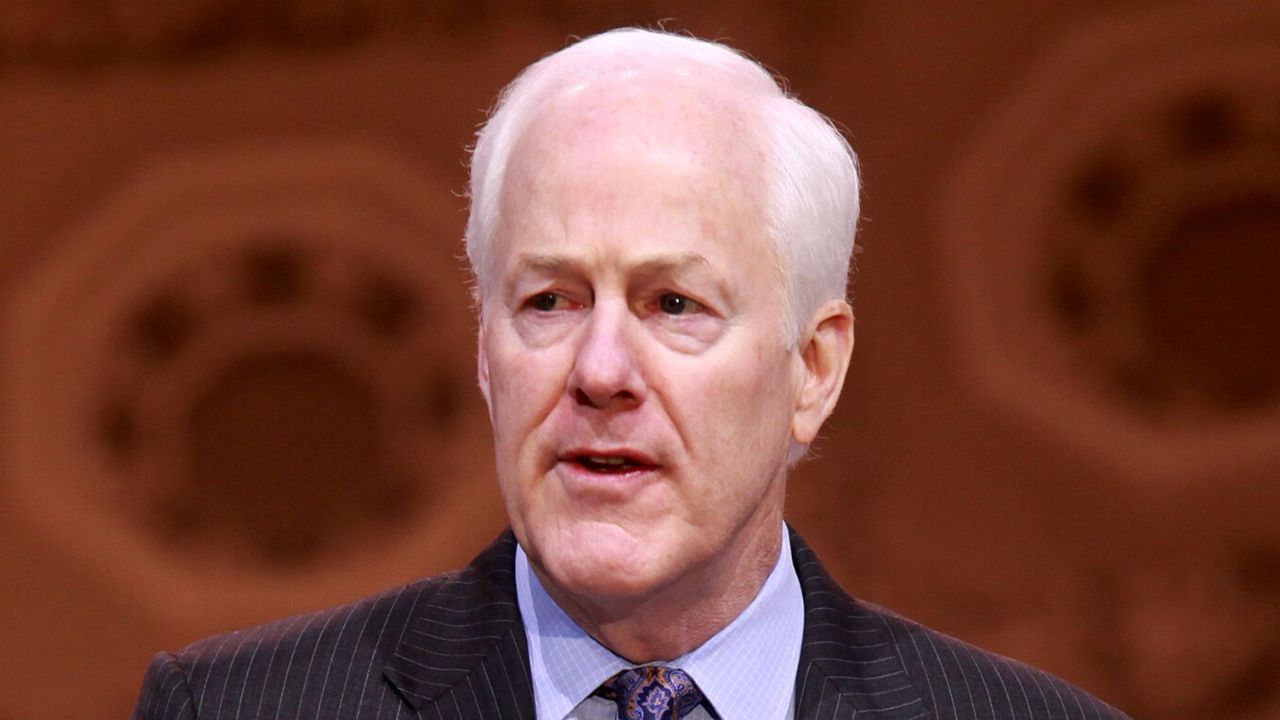
Sen. John Cornyn (R-Texas) welcomed reports Saturday that Ukraine’s military Starlink service was working normally again. He called the development “Good” in a post on X. The outage was a 10-day disruption of the country’s satellite internet service by SpaceX. Cornyn has signed two recent bipartisan Senate letters on Russia and Ukraine.
Cornyn’s full post, published at 8:23 a.m. on Oct. 24, 2026, read:
Good: Ukraine’s military Starlink system was working normally again on Saturday morning, raising hopes that the 10-day disruption of the country’s vital satellite internet service by SpaceX was ending
The post tracks the opening sentence of a Wall Street Journal report published Oct. 24 under the headline “Ukraine’s Military Starlink Is Working Again, Kyiv Says.” It reports that Ukraine’s defense minister said the service was working normally Saturday morning. It also says higher-speed tests were continuing and that one Ukrainian official said Kyiv still had received no explanation from the U.S. for the speed limits.
The report says speed restrictions on Starshield in Ukraine began Oct. 14. Drones lost connectivity at around 160 kilometers an hour, or about 100 mph, or slower. Ukrainian forces either lost contact with drones or had to fly slowly, making the drones easier for Russian forces to shoot down.
The consequences were operational, the report says. Interceptor drones could not fly fast enough to shoot down Russia’s jet-powered Geran drones, which have been bombarding Kyiv and other cities. The restrictions also threatened Ukraine’s medium-range drone strikes behind Russian lines. Ukrainian drone units and Russian military bloggers both said the disruption gave Russian forces a reprieve.
On who was responsible, the report says Trump called Musk on Wednesday and asked him to restore service, according to U.S. officials, and that Musk authorized the speed limits. SpaceX did not immediately respond, and Musk has not publicly explained the disruption. The limits took effect amid a political dispute between Trump and Ukrainian President Volodymyr Zelensky that began after Oct. 9, when Trump criticized Ukraine’s strikes on Russian oil refineries and called for Zelensky’s removal.
The report notes that the restrictions drew criticism from U.S. lawmakers, including a number of Republicans. Ukraine’s Starshield service is based on contracts between SpaceX and the Pentagon.
Cornyn’s record on Russia sanctions and Ukraine
Cornyn has backed the main Russia sanctions legislation of the year. On July 20, 2026, he joined more than 60 colleagues in introducing the bipartisan bill, which targets major purchasers of Russian oil and gas. After the Senate passed it Aug. 7, Cornyn said he could think of few better ways to honor the late Sen. Lindsey Graham than “imposing strict sanctions on the bad actors who have supported Russia’s war against Ukraine”.
The legislation’s terms are specific. It imposes primary and secondary sanctions on Russian officials, oligarchs, banks and the shadow fleet, and directs the president to impose tariffs on goods from the five largest importers of Russian crude oil or natural gas and the five largest facilitators of sanctions evasion. The Senate passed the Lindsey O. Graham Sanctioning Russia and Iran Act by an 86-11 vote. Trump signed it in September.
On Oct. 13, Cornyn was one of six Republicans and six Democrats who wrote to Trump about his diesel agreement with Russian President Vladimir Putin. The Republican signers were Susan Collins, Lisa Murkowski, Thom Tillis, Alan Armstrong, Cornyn and Mitch McConnell. The letter called the deal “a gift to our adversary and a betrayal of our allies” and urged that it be rescinded.
On Starshield itself, Cornyn signed the letter led by Sen. Jeanne Shaheen asking the Defense Department’s inspector general to determine whether the administration or its contractors were responsible for the disruptions. The letter was published Oct. 15 on the Senate Foreign Relations Committee website. It urged the inspector general to preserve official correspondence, contract documents and technical orders. It is a request for a review, not notice that an investigation has been opened.
The administration has denied directing any restriction. Hegseth told reporters the Pentagon had not made any directives, and Secretary of State Marco Rubio and Trump both said the administration had nothing to do with it. The Journal reports that Musk authorized the speed limits.
Cornyn posted at 8:23 a.m. Saturday. The Journal’s report was published about four hours earlier. It says tests at higher speeds were still underway, which the post does not address.