
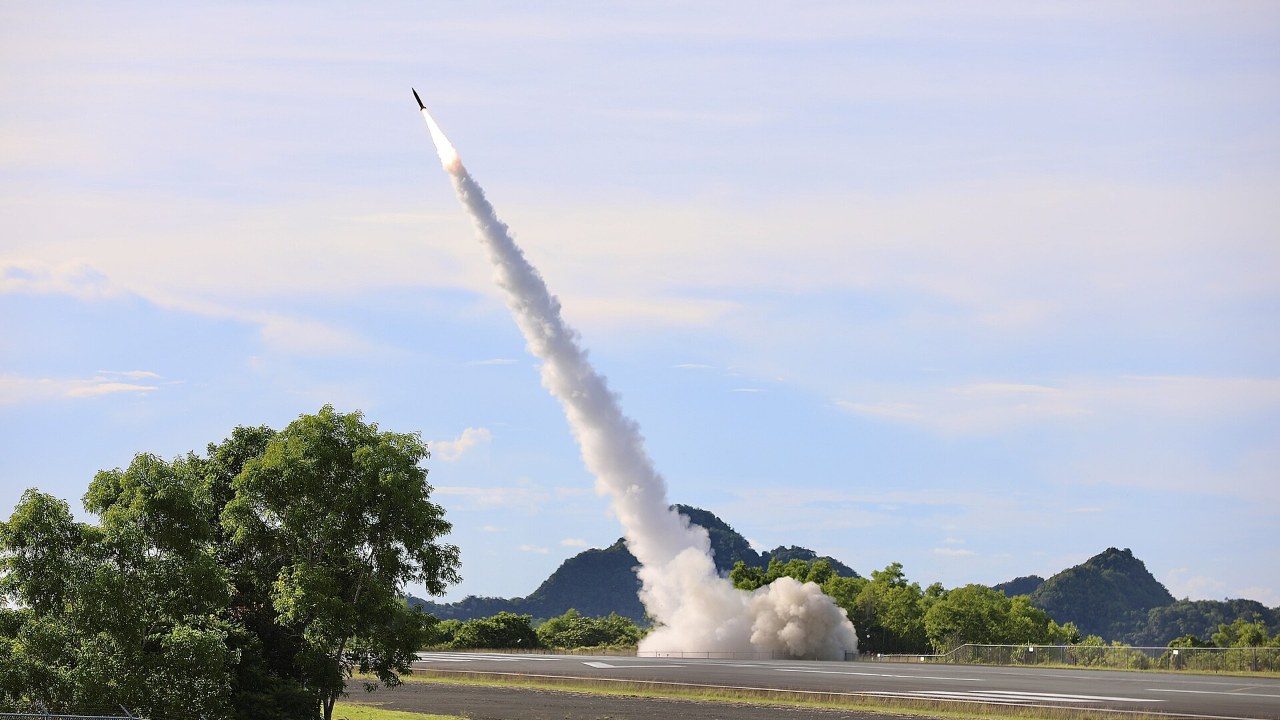
A missile fired from a HIMARS launcher, flying 1,000 kilometers or more and hitting a ship that is under way: that is the requirement behind the Precision Strike Missile Increment 4, and the U.S. Army now has five companies competing to build it. Anduril, Castelion, Lockheed Martin, Mach Industries and RTX each received an agreement on Sept. 29, 2026, to develop prototypes.
The agreements are for prototypes, not production. The prototypes will be flown against each other, with the first competitive fly-off and down-select scheduled for fiscal year 2027.
The Army announced the selections in a Sept. 29 release from Redstone Arsenal, Alabama, written by Darrell Ames. It states that the service “awarded five separate Other Transaction Authority (OTA) agreements on Sept. 29, 2026, to develop prototype systems for the Precision Strike Missile (PrSM) Increment 4.” The release does not disclose the value of any of the five agreements.
A 1,000-kilometer requirement for moving targets
The Army’s release sets out what each design must do: “each company will develop prototype missiles capable of launching from the M142 High Mobility Artillery Rocket System (HIMARS) and striking moving maritime and relocatable land targets at ranges of 1,000 kilometers or greater.”
The five selected are Anduril, Castelion, Lockheed Martin Missiles and Fire Control, Mach Industries and RTX, according to the release.
What came before Increment 4
The new requirement is a long step beyond the PrSM now in service. Lockheed Martin’s PrSM product page describes the existing missile as covering “ranges from 60 to 499+ kilometers” and built to “achieve the Army’s 400+ requirement,” with “two PrSM rounds per launch pod,” compatible with both the M270 and HIMARS families of launchers.
The ability to hit ships arrives first in Increment 2. On Sept. 21, 2026, Lockheed Martin announced an Army contract for that version after a second maritime flight test in August, stating that “Increment 2 adds a multimode seeker designed to enable the missile to engage moving land and maritime targets.” Combat Rated covered that award separately. Increment 4 asks for the same kind of moving-target capability at roughly double the range of the current missile.
Increment 2’s record shows what the newer competitors will be measured against. Lockheed Martin’s release says that version “completed its first flight test in March and its second flight test in August – obtaining critical data during flight, launching from a HIMARS, deploying protective covers and engaging the target.” Those are the company’s own test results; the Army has not published separate findings.
Lockheed Martin, one of the five, already builds PrSM. The same release states that the company “is expanding capacity to quadruple PrSM production while continuing to develop additional PrSM increments.” Dave Griser, the company’s vice president of Precision Fires Launchers and Missile, said the Increment 2 award meant Lockheed was “ready to move from flight testing into production.”
Fly-offs in fiscal 2027 and 2028
The Army’s release lays out a two-stage competition. In fiscal 2027, “initial prototype development will culminate in a competitive fly-off and down-select.” In fiscal 2028, “vendors demonstrating mature, successful designs will be eligible for follow-on agreements and a final competitive fly-off.”
Trade press coverage adds little beyond the release. Defense Daily, reporting Sept. 30, described the agreements as covering extended-range prototypes “intended to fire at ranges of 1,000 kilometers or more,” and the publicly available portion of its report gives no dollar figures either.
For now, the 1,000-kilometer range and the moving-ship capability are Army requirements, not demonstrated results. The five designs are scheduled to be tested against them in the fiscal 2027 fly-off that will decide which of them continue.
Top image: A Precision Strike Missile with a maritime seeker launches during a U.S. Army test in Palau. Image Credit: U.S. Army photo by Sgt. Perla Alfaro — Public domain / Wikimedia Commons
This article was produced with the assistance of AI and reviewed by Combat Rated editors prior to publication.