
Britain’s newest RAF squadron exists to act in orbit rather than watch it. No. III Space Effects Squadron, announced Sept. 23, 2026, is the Royal Air Force’s first unit dedicated to disrupting, degrading and denying hostile activity aimed at the satellites the UK depends on. It joins two existing RAF space squadrons that observe and warn, and adds a third that is meant to respond.
Air Chief Marshal Sir Harv Smyth, Chief of the Air Staff, made the announcement at the first UK Space Power Conference in London. The squadron will draw specialist personnel from across the armed forces to counter hostile activity in orbit and defend British satellites, according to the Ministry of Defence.
The Ministry of Defence’s Sept. 23 announcement says the squadron will protect satellites that support ship navigation, mobile connectivity and missile warning, and that it will use advanced technology including electronic warfare. The release frames the squadron as the delivery of the Control of Space requirement set out in the UK Space Strategy.
What No. III Space Effects Squadron is for
Smyth set out the unit’s purpose in his conference speech. The Ministry of Defence published it as a transcript “exactly as it was delivered” on Sept. 23, 2026:
“I am incredibly proud today to announce that we are forming No. 3 Space Effects Squadron, UK defence’s first dedicated squadron to deliver operations in support of the UK’s Control of Space mission.”
He then gave the mission in one line: “No. 3 SES will disrupt, degrade and deny hostile activity to defend UK space interests and gain operational advantage for the integrated force.” The speech uses Arabic numerals for the squadron; the Ministry of Defence and the RAF use Roman numerals in their releases.
The RAF’s squadron page states that the unit formed in September 2026, sits under UK Space Command, and is the RAF’s first squadron to deliver operations in support of the Control of Space requirement. Neither the page nor the Sept. 23 releases name a home station, a commanding officer or a personnel figure.
Three numbered squadrons, three jobs
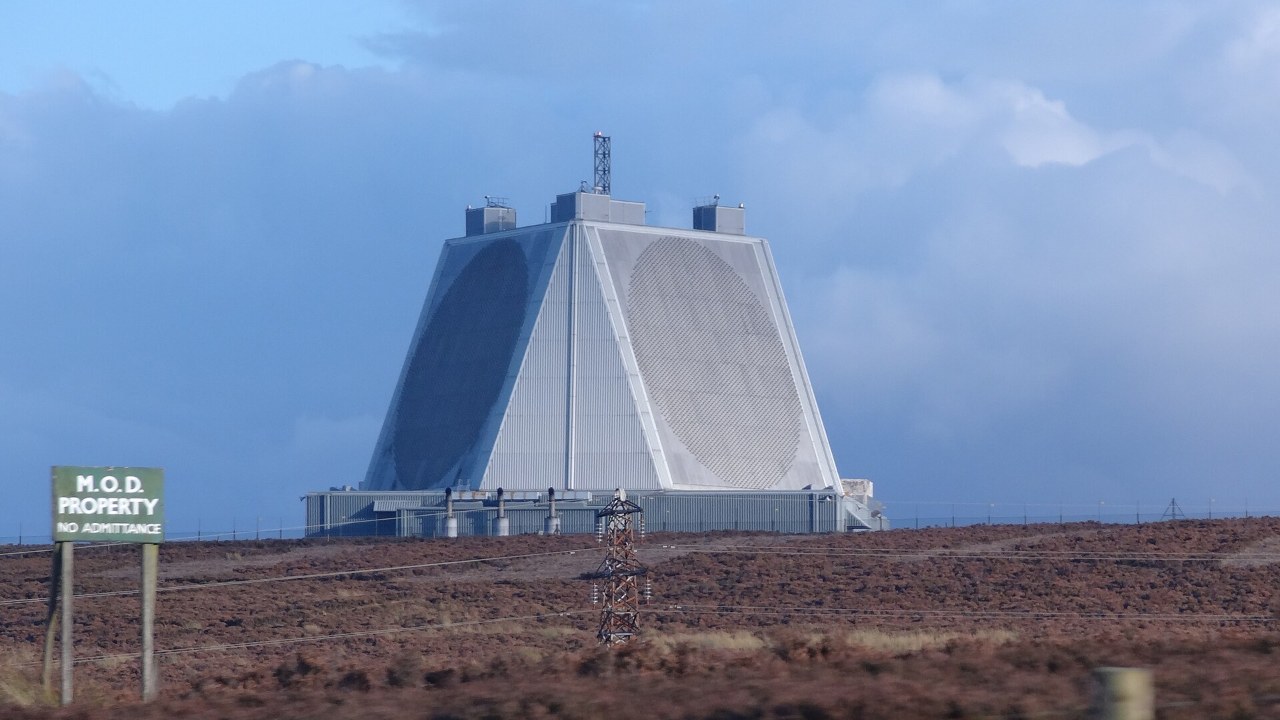
The new unit completes a set. In his speech, Smyth said No. 1 Space Operations Squadron already works as part of the National Space Operations Centre, and No. 2 Space Warning Squadron delivers the operational activity carried out at RAF Fylingdales.
The RAF’s own news release of Sept. 23 describes the division of labor: No. I Space Operations Squadron provides observation capacity and No. II Space Warning Squadron provides threat detection. No. III adds the ability to take action. The distinction matters: the first two squadrons see and report; the third is the first RAF unit whose stated task is to deny an adversary’s activity in space.
Smyth also pointed to progress on the sensing side. He said NOCTIS 2, which he described as the first sovereign UK sensor for the National Space Operations Centre, had declared full operational capability in 2026.
£880 million and a line on anti-satellite tests
The Ministry of Defence tied the announcement to money already planned. Its Sept. 23 release cites an £880 million investment between the 2026/27 and 2029/30 financial years in space-based intelligence, surveillance and reconnaissance and in space control activities. The release does not break out how much of that goes to No. III Space Effects Squadron.
The same release sets a boundary on method. The UK has formally ruled out destructive anti-satellite missile testing, the Ministry of Defence says, and supports responsible behavior in space through the United Nations. The squadron’s stated tools, electronic warfare among them, sit inside that line.
What has been announced is a formed unit with a defined mission. What has not been published is the equipment list, the station or the date the squadron will be declared ready for operations. None of the Sept. 23 documents give an initial operating capability date.
The setting for the announcement was an institutional one. The UK Space Power Conference ran Sept. 23–24, 2026, at IET London, Savoy Place, and its organisers describe it as owned and delivered by UK Space Command in partnership with the Freeman Air & Space Institute. The next verified marker for the squadron is its declaration of operational capability, which the RAF has yet to date.
Top image: The solid-state phased-array radar at RAF Fylingdales, North Yorkshire. Image Credit: Cherubino — CC BY-SA 3.0 / Wikimedia Commons
This article was produced with the assistance of AI and reviewed by Combat Rated editors prior to publication.